Asphalt vs Concrete Driveway: Which Is Best for Your Home
Most homeowners replacing a driveway ask the same question within the first five minutes of the conversation. Asphalt or concrete? The honest answer depends on your budget, your timeline, how long you plan to stay, and how much winter salt your driveway sees.
Both materials work well on Long Island. They just fail in different ways and cost money at different points in their life.
The Short Version
If you want lower upfront cost, fast installation, and a surface that shrugs off road salt, asphalt is the practical pick. If you want a longer service life, more design options, and you're willing to pay more now to do less later, concrete makes sense.
Neither is a mistake. The rest of this comes down to which set of trade-offs suits your property.
Asphalt vs Concrete at a Glance
| Factor | Asphalt | Concrete |
|---|---|---|
| Upfront cost | Lower, often around half | Higher |
| Typical lifespan | 15 to 20 years with upkeep | 25 to 40 years |
| Ready to use | 2 to 3 days | 7 to 10 days |
| Salt resistance | Excellent | Poor without sealing |
| Heat response | Softens on hot days | Unaffected |
| Routine upkeep | Sealcoat every 2 to 3 years | Seal every 3 to 5 years |
| Repair appearance | Patches blend in well | Patches stay visible |
| Color and pattern options | Limited to black | Stains, stamps, finishes |
Cost and What Actually Drives It
Asphalt typically runs close to half the installed price of concrete for the same square footage. The gap comes from material and labor. Asphalt goes down hot, gets compacted, and is done. Concrete requires forming, reinforcement, finishing, and curing time.
What moves the number on either material:
- Removal of the existing surface, especially if it sits on a failing base
- Excavation depth needed to reach stable subgrade
- Drainage work if water currently runs toward the house or garage
- Access for equipment and material trucks
- Square footage, since mobilization costs spread across larger jobs
Look at the 10-year figure rather than the install price alone. Asphalt costs less at the start and asks for periodic sealcoating. Concrete costs more once and asks for very little until it doesn't.
How Each Handles a Long Island Winter
This is where the local answer separates from the national one.
Concrete keeps gaining strength for years after the pour as its chemistry continues reacting. Asphalt does the opposite. Its petroleum binder begins oxidizing and stiffening from the day it's laid. That single difference explains most of what follows.
Asphalt in winter: Road salt has no effect on it. The surface flexes slightly with frost heave rather than cracking, which suits Suffolk County's freeze and thaw swings. Its weak point is water reaching the base through unsealed cracks.
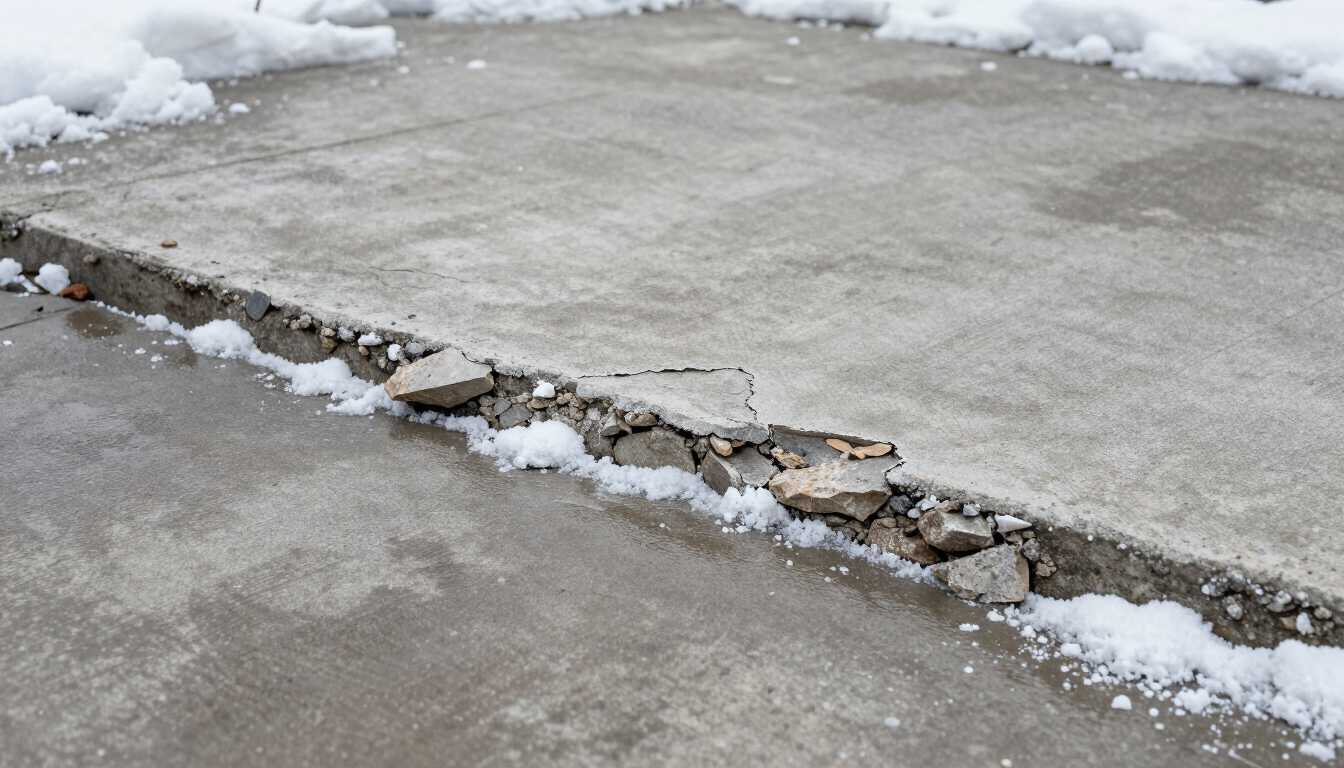
Concrete in winter: Structurally strong, but deicing salts attack the surface and cause scaling, where thin layers flake off and expose the aggregate. Sealing helps. Using calcium chloride sparingly helps more. New concrete should get through its first winter without any salt at all.
Summer flips the comparison. Asphalt softens on hot afternoons, which is why kickstands and trailer jacks leave dents in August. Our post on why your driveway looks different in July covers what's normal and what isn't.
Maintenance Each One Asks For
Neither material is maintenance-free. The schedules just look different.
Asphalt:
- First sealcoat 6 to 12 months after installation, then every 2 to 3 years
- Crack filling as hairline cracks appear
- Prompt cleanup of gasoline and oil, which dissolve the binder
- Edge support so the unsupported shoulder doesn't crumble
Concrete:
- Penetrating sealer every 3 to 5 years, sooner in salted areas
- Joint sealant maintained so water stays out of control joints
- Careful deicer choice, avoiding rock salt on newer slabs
- Stain treatment, since concrete shows oil marks that asphalt hides
Appearance and Design Options
Asphalt comes in one color. It looks sharp when fresh and fades to gray as it oxidizes, which sealcoating restores.
Concrete opens up more choices: broom finish, exposed aggregate, integral color, stamped patterns that imitate stone or brick. That flexibility lets a driveway coordinate with patios, walkways, and front entry work.
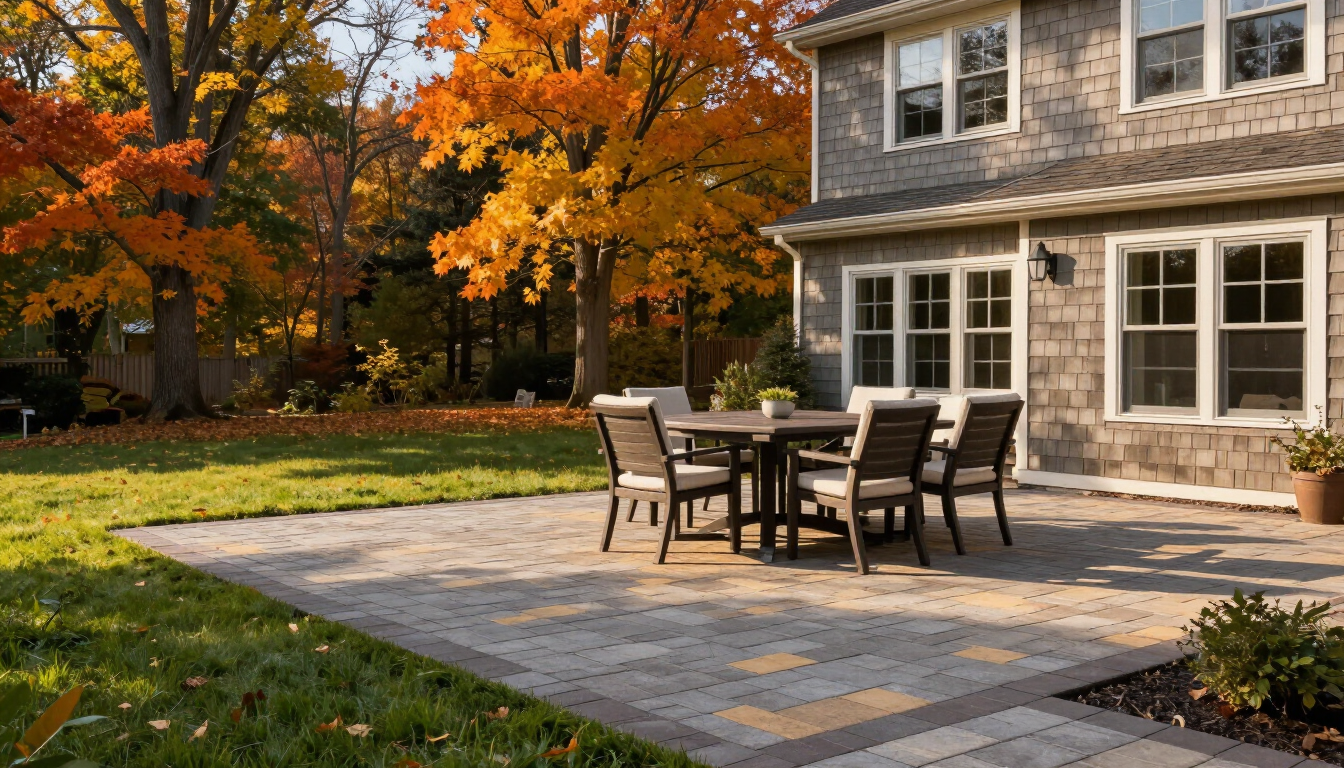
There's a third option worth knowing about. Paver driveways cost more than either material but offer the widest design range and the easiest repairs, since individual units lift out and go back in.
When Repairs Come Around
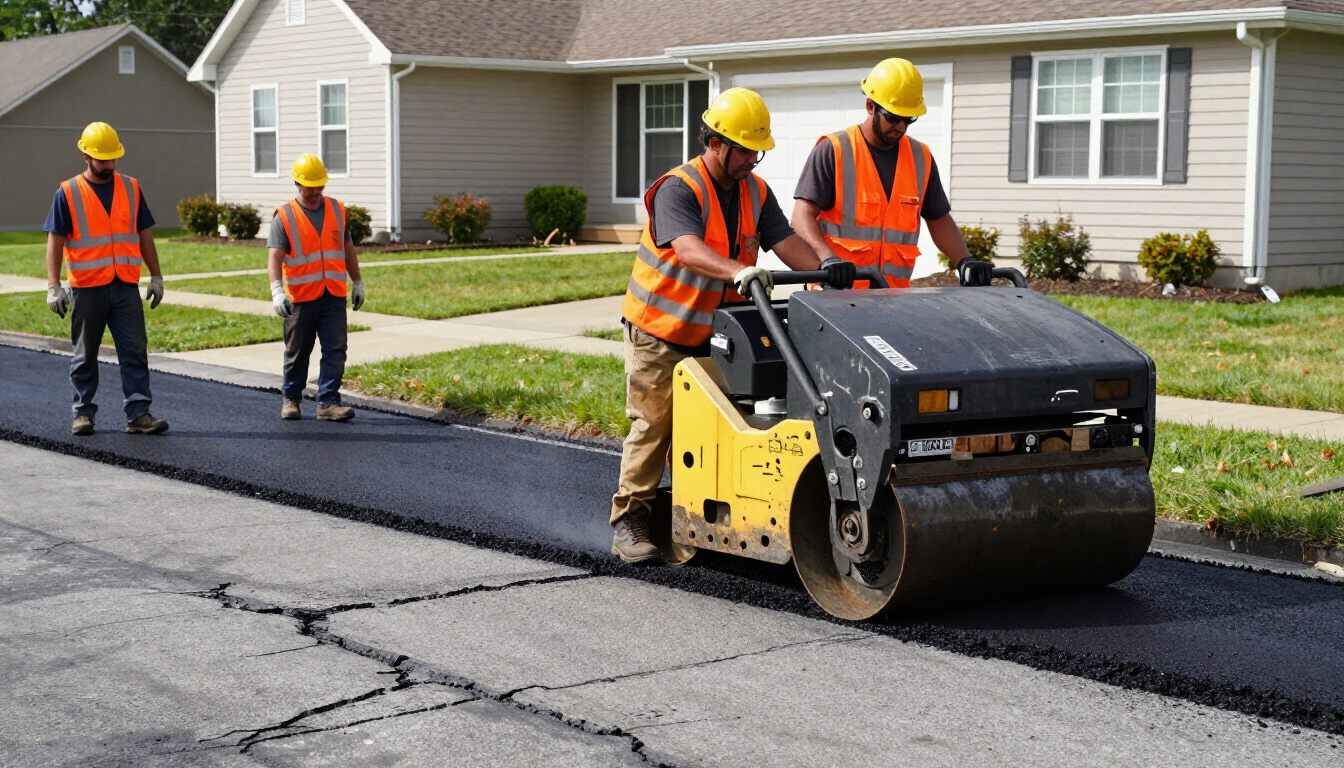
Every driveway eventually needs work. How gracefully it accepts that work matters more than most people realize.
- Asphalt repairs blend. Patches, crack filling, and overlays all disappear reasonably well, and sealcoating evens out the appearance afterward.
- Concrete repairs show. New concrete rarely matches old concrete in color or texture, so a patch stays visible for the life of the slab.
- Resurfacing is an asphalt advantage. A worn asphalt driveway with a sound base can often take a new layer instead of a full replacement. Our guide on when to repair versus resurface explains where that line falls.
Which One Fits Your Property
Lean asphalt if:
- Budget is the deciding factor
- You need the driveway back in service quickly
- Your driveway is long, since square footage magnifies the cost gap
- The property sees heavy winter salting
- You're preparing to sell within a few years
Lean concrete if:
- You plan to stay in the home long term
- You want stamped, stained, or textured finishes
- The driveway is short and highly visible from the street
- You'd rather pay once than maintain on a cycle
Either way, the base underneath decides how long the surface lasts. A four-inch asphalt mat on a properly compacted stone base outlives a thicker one poured over soft fill, and the same rule applies to concrete.
Get a Straight Answer for Your Driveway
Photos and price ranges only go so far. Grade, drainage, soil, tree roots, and existing base conditions all shape the right recommendation, and those show up on a site visit.
Stonerock Paving & Masonry installs both asphalt driveways and concrete work across Farmingville and Suffolk County, and has for more than 30 years. We'll walk the property, explain what your specific site calls for, and quote both options if that helps you decide.
Request your free quote or call (631) 920-3618 to schedule an on-site estimate.
Related Articles
Frequently Asked Questions
Which driveway material lasts longer in Suffolk County?
Concrete generally lasts 25 to 40 years versus 15 to 20 for asphalt. Asphalt closes some of that gap when sealcoated on schedule, and it tolerates road salt far better than unsealed concrete does.
How soon can I park on a new driveway?
Asphalt accepts vehicle traffic after roughly two to three days, longer in hot weather. Concrete needs about seven to ten days before cars, and reaches full design strength closer to 28 days.
Can concrete be poured over an existing asphalt driveway?
That approach is not recommended. Asphalt flexes and concrete does not, so the slab cracks as the layer beneath it moves. The existing surface should be removed and the base properly prepared first.
Does asphalt or concrete add more resale value?
Both improve curb appeal when in good condition. Buyers respond more to a surface without cracks, stains, or ponding than to the material itself, so condition matters more than the choice between them.
Is a paver driveway worth the extra cost?
Pavers cost more upfront but offer the longest appearance life, the widest design range, and simple spot repairs. They suit homeowners prioritizing looks and long-term flexibility over the lowest installation price.
Our Recent Articles