Why Your Driveway Looks Different in July: How Summer Heat Affects Asphalt and Concrete
Summer is when your asphalt driveway works the hardest. It supports parked vehicles under direct sunlight, handles repeated expansion and contraction, and often faces sudden downpours after days of extreme heat. By July, many homeowners begin noticing changes that were not obvious during spring.
Some of these changes are completely normal. Others can signal that your driveway needs attention before small issues become expensive repairs.
Understanding how summer temperatures affect asphalt and concrete helps you separate expected seasonal changes from signs of damage. It also gives you a better idea of when maintenance or repairs should be scheduled.
Why July Is Tough on Driveways
July usually brings the highest pavement temperatures of the year. Even when the air temperature is around 90°F, dark pavement can become much hotter after hours of direct sunlight.
Both asphalt and concrete respond to heat, but they do so in different ways because they are made from different materials.
Heat affects driveways by causing:
- Expansion of paving materials
- Surface softening
- Moisture loss
- Color fading
- Increased stress from vehicle weight
These changes happen gradually throughout the season rather than overnight.
How Summer Heat Affects Asphalt
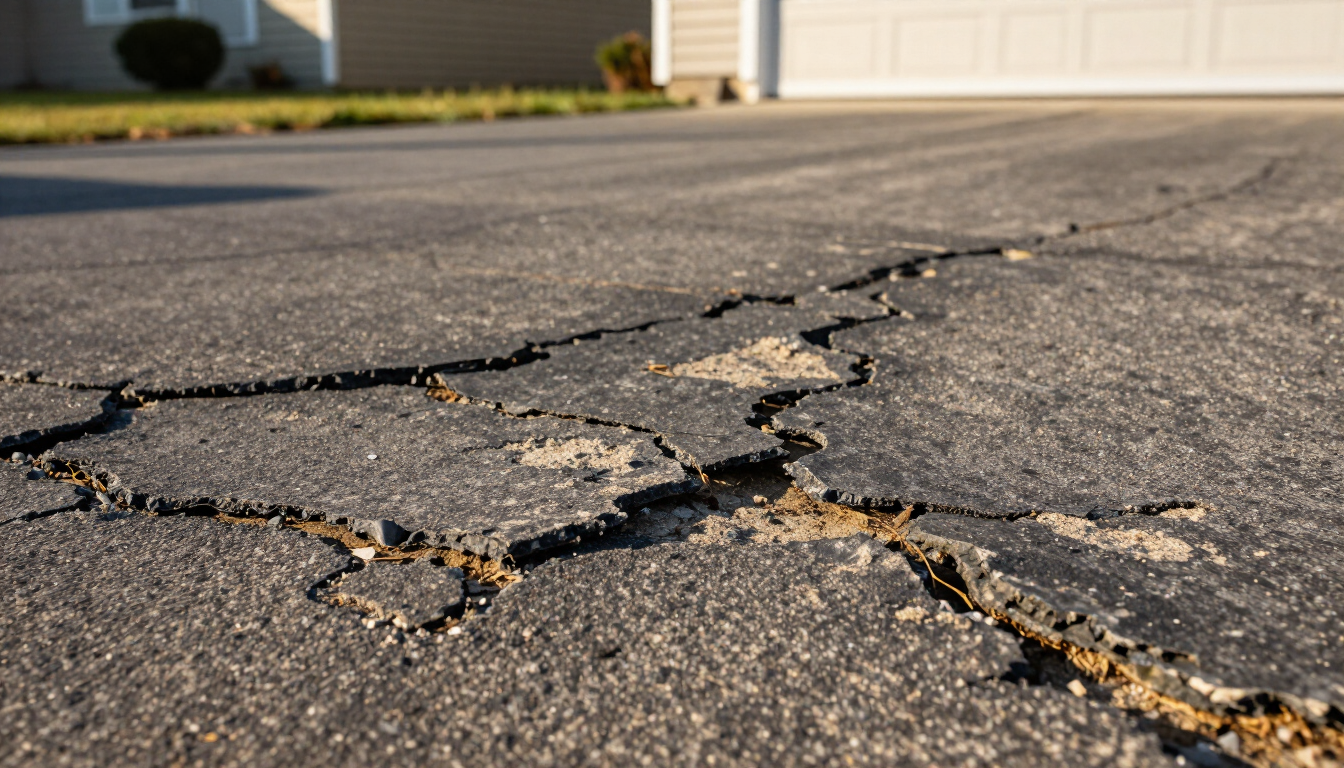
Asphalt contains bitumen, a petroleum-based binder that becomes more flexible as temperatures rise. This flexibility helps asphalt handle movement, but excessive heat can temporarily soften the surface.
Homeowners may notice several changes during July.
Slight Surface Softening
A driveway may feel softer during the hottest part of the afternoon than it does in the morning.
This is normal for asphalt, especially during prolonged heat waves. Newly installed asphalt is even more susceptible because it continues curing for several months after installation.
Softening does not necessarily mean the driveway is failing.
Tire Marks and Scuffing
When asphalt softens, parked vehicles can leave slight impressions, particularly if the vehicle remains stationary for long periods.
Sharp steering while the vehicle is not moving can also create dark scuff marks or minor surface distortion.
These marks are more likely when:
- Heavy trucks are parked regularly
- Temperatures remain high for several days
- The driveway receives full sun throughout the day
Faster Surface Aging
Constant UV exposure gradually breaks down the binder that holds asphalt together.
Over time, homeowners may notice:
- A faded gray appearance
- Reduced flexibility
- Small surface cracks
- Rougher texture
This aging process happens slowly, but summer accelerates it.
How Summer Heat Affects Concrete
Concrete reacts differently because it is much more rigid than asphalt.
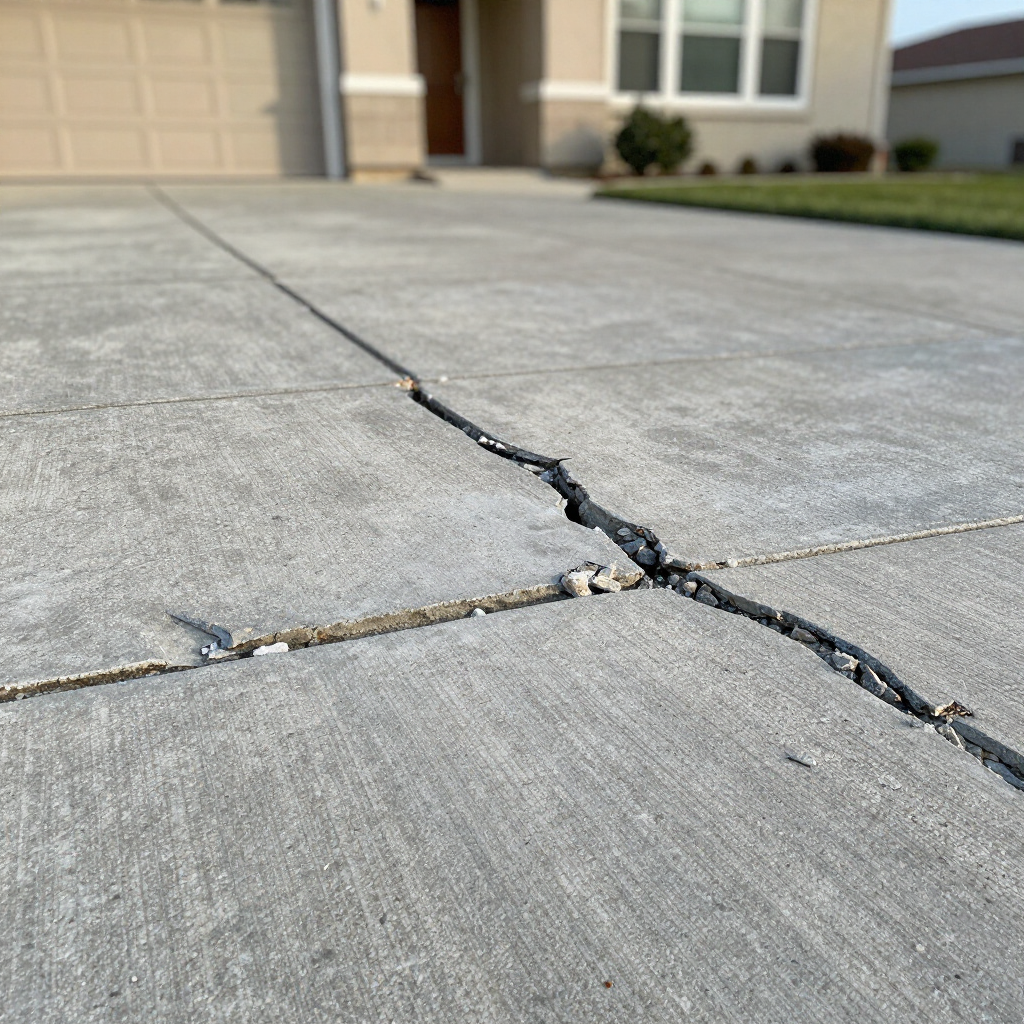
Instead of softening, concrete expands slightly as temperatures rise. Properly installed expansion joints allow the material to move without causing damage.
Even so, July conditions can reveal existing weaknesses.
Expansion and Joint Movement
Concrete naturally expands in warm weather.
Expansion joints absorb this movement and reduce pressure across the slab. If joints become clogged with dirt or deteriorated sealant, stress may build up over time.
Keeping joints clean helps them perform as intended.
Surface Discoloration
Bright sunlight gradually changes the appearance of concrete.
You may notice:
- Uneven coloring
- Light staining
- Faded decorative finishes
- Slight color variation between slabs
Most of these changes are cosmetic rather than structural.
Small Surface Cracks
Hairline cracks often become easier to see during dry summer weather.
Some cracks result from normal curing and seasonal movement, while others may indicate settlement or drainage issues.
Monitoring crack size over time is more important than reacting to every visible line.
Why Dark Driveways Feel Much Hotter
Color plays a surprisingly large role in pavement temperature.
Dark asphalt absorbs more solar energy than light-colored concrete. As a result, asphalt surfaces often become significantly hotter during sunny afternoons.
Imagine wearing a black T-shirt on a sunny day instead of a white one. Both fabrics receive the same sunlight, but the darker material absorbs more heat. Driveways behave in much the same way.
Because asphalt reaches higher temperatures, it is more vulnerable to temporary softening during midsummer.
Changes That Are Usually Normal
Many seasonal changes do not require immediate repairs.
These include:
- Slight asphalt softness during extreme heat
- Minor tire impressions
- Gradual color fading
- Small hairline concrete cracks
- Expansion joint movement
- Temporary surface warmth
These are expected responses to high temperatures and generally improve as weather conditions change.
Warning Signs That Should Not Be Ignored
Some symptoms deserve closer attention because they may indicate underlying damage.
Contact a paving professional if you notice:
- Deep cracks that continue growing.
- Areas where water collects after rainfall.
- Sections that sink or become uneven.
- Loose asphalt pieces or crumbling edges.
- Concrete slabs shifting in height.
- Widespread cracking across large areas.
Problems like these rarely improve on their own. Early repairs usually cost less than replacing an entire driveway.
Simple Ways to Protect Your Driveway During Summer
A few preventive habits can help reduce unnecessary wear throughout the hottest months.
Consider the following tips:
- Avoid turning the steering wheel while the vehicle is stationary on hot asphalt.
- Move parked vehicles occasionally to distribute weight.
- Clean oil and chemical spills promptly.
- Keep drainage areas free of debris.
- Remove weeds growing along edges or joints.
- Schedule routine inspections if your driveway is several years old.
These simple practices help extend the life of both asphalt and concrete surfaces.
When Is the Best Time for Repairs?
Summer is often an excellent time for many paving projects because warm temperatures help asphalt compact properly and support curing.
However, waiting until severe damage develops can make repairs more extensive.
Small cracks, deteriorating joints, and isolated surface problems are generally easier and less expensive to address than widespread structural damage.
If you notice changes that continue after periods of cooler weather or worsen over several weeks, it is worth having the driveway professionally evaluated.
Upgrade Before Summer Use Peaks
July heat changes the appearance and behavior of nearly every driveway. Asphalt may soften temporarily, while concrete expands and reveals existing wear more clearly. In many cases, these seasonal changes are perfectly normal.
The key is knowing which signs reflect ordinary summer conditions and which point to developing problems.
Routine inspections and timely maintenance help preserve your driveway's appearance, improve safety, and extend its lifespan for years to come.
Get a free quote for your driveway project.
Frequently Asked Questions
Why does my asphalt driveway feel soft during hot weather?
High temperatures temporarily soften the asphalt binder, making the surface more flexible. This is normal during summer, especially on newer driveways. Persistent rutting or deep impressions, however, should be inspected by a paving professional.
Is it normal for concrete to crack during summer?
Small hairline cracks can appear more visible during hot, dry weather because concrete expands and moisture evaporates. Larger cracks, uneven slabs, or widening gaps may indicate settlement or drainage problems requiring professional evaluation.
Can hot weather permanently damage my driveway?
Heat alone rarely causes permanent damage to a properly installed driveway. However, prolonged UV exposure, poor drainage, heavy vehicle loads, and existing weaknesses can accelerate wear and make repairs necessary sooner than expected.
Should I avoid parking on my driveway during a heat wave?
You can continue using your driveway normally. On very hot days, avoid leaving extremely heavy vehicles in one spot for long periods and avoid turning the steering wheel while the vehicle is stationary on softened asphalt.
When should I have my driveway inspected?
An inspection is recommended if you notice growing cracks, standing water, sinking areas, crumbling edges, or uneven concrete slabs. Addressing these issues early often prevents more costly repairs and helps extend your driveway's service life.
Our Recent Articles