Why August Is the Best Time to Sealcoat Your Driveway in Farmingville NY
Your driveway takes its worst beating between June and August, and late summer is when Long Island homeowners can finally do something about it. Warm pavement, mild nights, and long dry stretches give sealer the conditions it needs to bond and cure the way the manufacturer intended. Push the same job to late October and it cures slower, wears thinner, and often gets bumped to spring.
Why August Hits the Sealcoating Sweet Spot
Sealcoat is a water-based coating that has to dry, bond, and harden before it can protect anything. Temperature and moisture control all three.
Most manufacturers ask for air and pavement temperatures above 50°F and climbing, with no rain expected for at least 24 hours. August in Suffolk County clears that bar with room to spare.
- Pavement runs hotter than air. Dark asphalt absorbs sunlight and can sit 20 to 40 degrees above the ambient temperature on a clear afternoon, which speeds up the cure from below as well as above.
- Overnight lows stay mild. Curing doesn't stall after sunset in August the way it does once September nights drop into the low 50s.
- Daylight lasts longer. Crews get more usable hours, so a full driveway can be cleaned, crack-filled, and coated in a single day.
- Dew is light. Heavy morning moisture on a fresh coat can leave a chalky, streaked finish.
Here's what you're protecting against. The binder that holds asphalt together is a petroleum product, and like cooking oil left open on the counter, it reacts with oxygen and slowly turns hard and brittle. Sealcoat is the lid on the bottle.
What Sealcoating Actually Does for Your Driveway
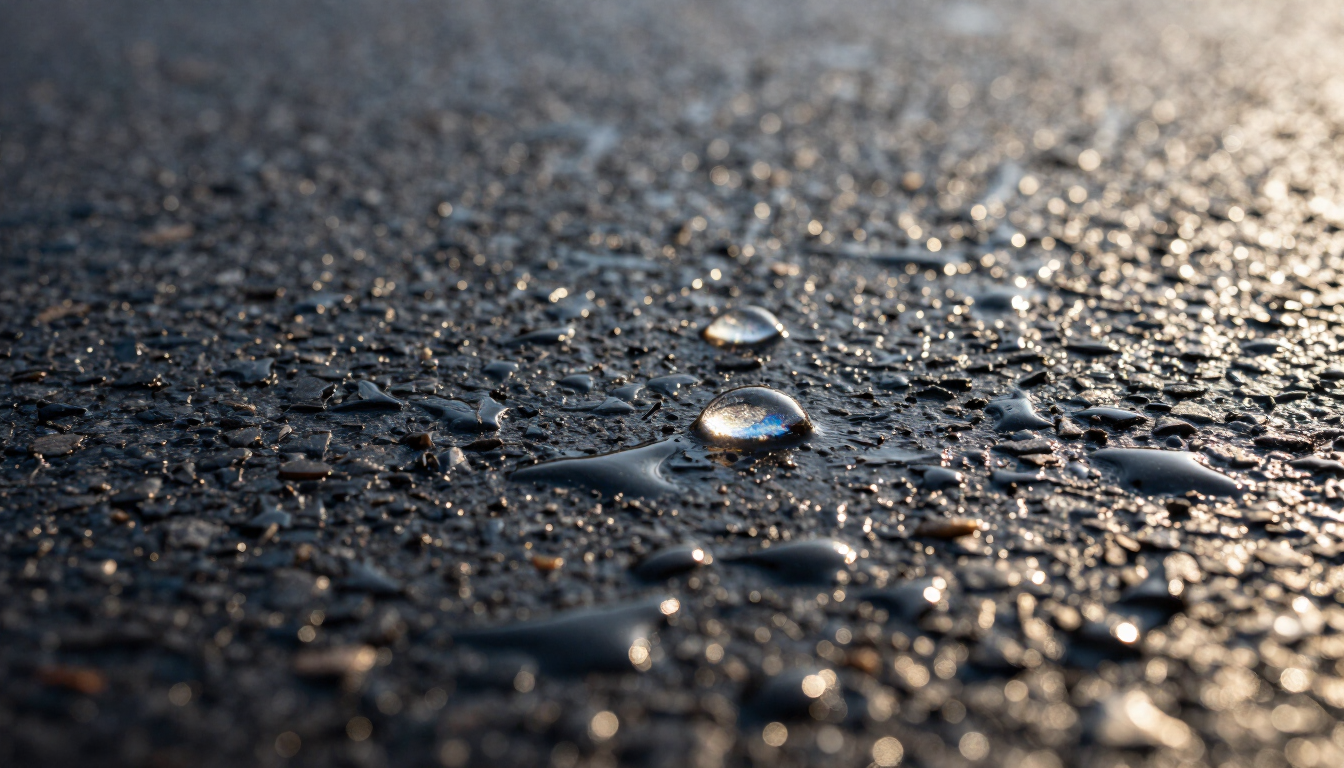
It isn't cosmetic, though the fresh black finish is a nice side effect. A properly applied coat gives an asphalt driveway a working layer of protection:
- Blocks UV and oxidation so the binder stays flexible instead of drying into a gray, crumbling surface.
- Sheds water that would otherwise soak into surface pores, freeze in January, and pry the pavement apart.
- Resists gasoline and oil drips that dissolve asphalt binder on contact.
- Smooths the surface so leaves, dirt, and snow clear off with less effort.
- Fills hairline surface pores, though it is not a crack filler and should never be sold to you as one.
The Fall Deadline Long Island Homeowners Forget
Sealcoating season on Long Island has a hard back edge, and it arrives sooner than most people expect.
By mid-September, overnight temperatures start falling and morning dew hangs on the pavement past sunrise. By mid-October, many days no longer stay warm long enough for a full cure. Crews across Suffolk County typically stop taking sealcoat work somewhere in that window, and anything unfinished waits until spring.
That's a long gamble. A driveway that spends a Long Island winter unsealed absorbs meltwater, freezes, thaws, and repeats the cycle dozens of times before March. Small surface cracks become wide ones, and wide ones become the kind of repair that costs real money.
Signs Your Driveway Is Ready for Sealcoat
You don't need a contractor to spot most of these. Walk the surface on a dry afternoon and look for:
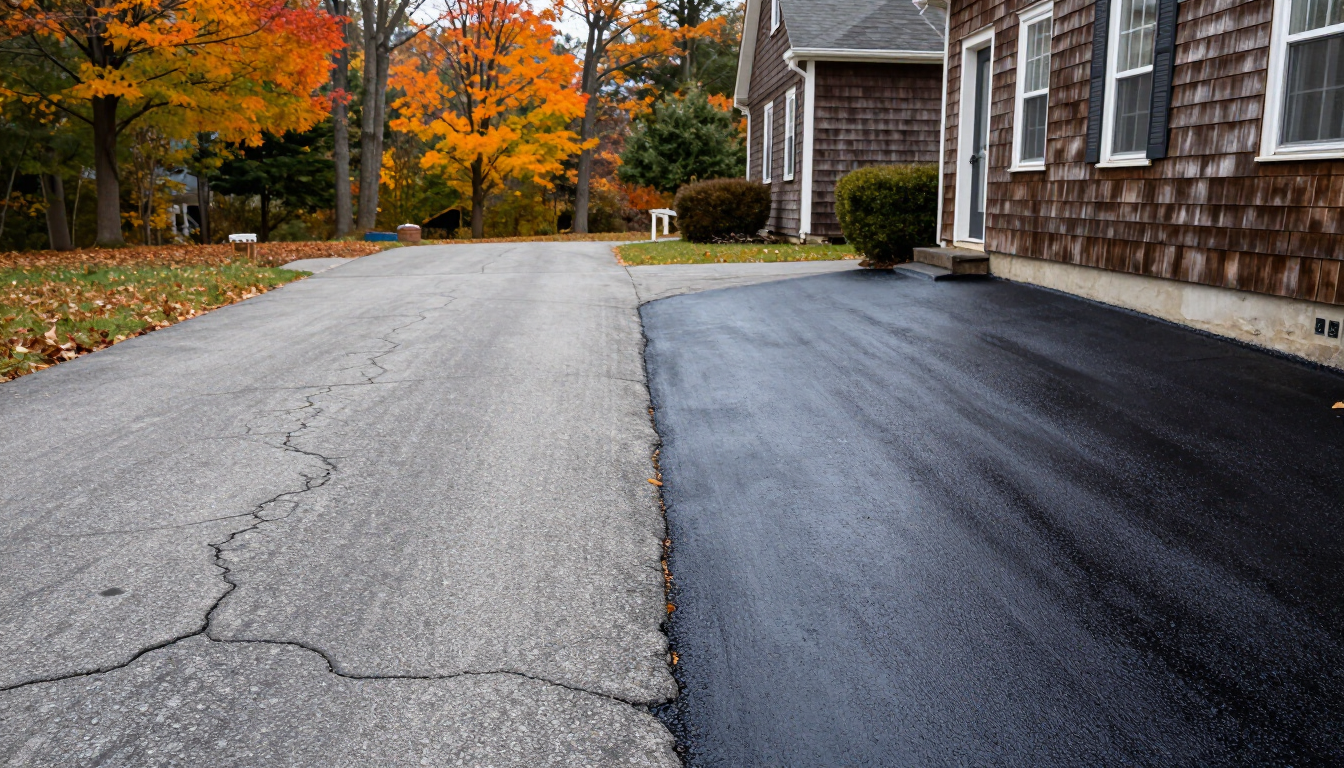
- A faded gray or bone-colored surface instead of dark charcoal
- Small stones sitting loose or exposed across the top layer
- Water soaking straight in rather than beading after a hose test
- Fine hairline cracks starting to spread from the edges
- Three or more years since the last application
New pavement is a different story. Fresh asphalt needs roughly six to twelve months to cure and release its surface oils before the first coat goes on. Seal it too early and the coating never bonds.
When Sealcoating Is the Wrong Call
Sealer is a thin protective film, not a structural repair. Applied over a failing driveway, it hides the problem for a season and then peels away with it.
Hold off and get an inspection instead if you see:
- Cracking in interconnected patterns across large sections
- Potholes or soft spots that dip under a car tire
- Standing water that sits for hours after rain
- Edges crumbling away into the lawn
These point to base or drainage trouble underneath the surface. Our guide on when to repair versus resurface your asphalt driveway walks through where the line sits, and in some cases full driveway paving in Farmingville is the more economical answer over a ten-year span.
How to Prepare for Sealcoating Day
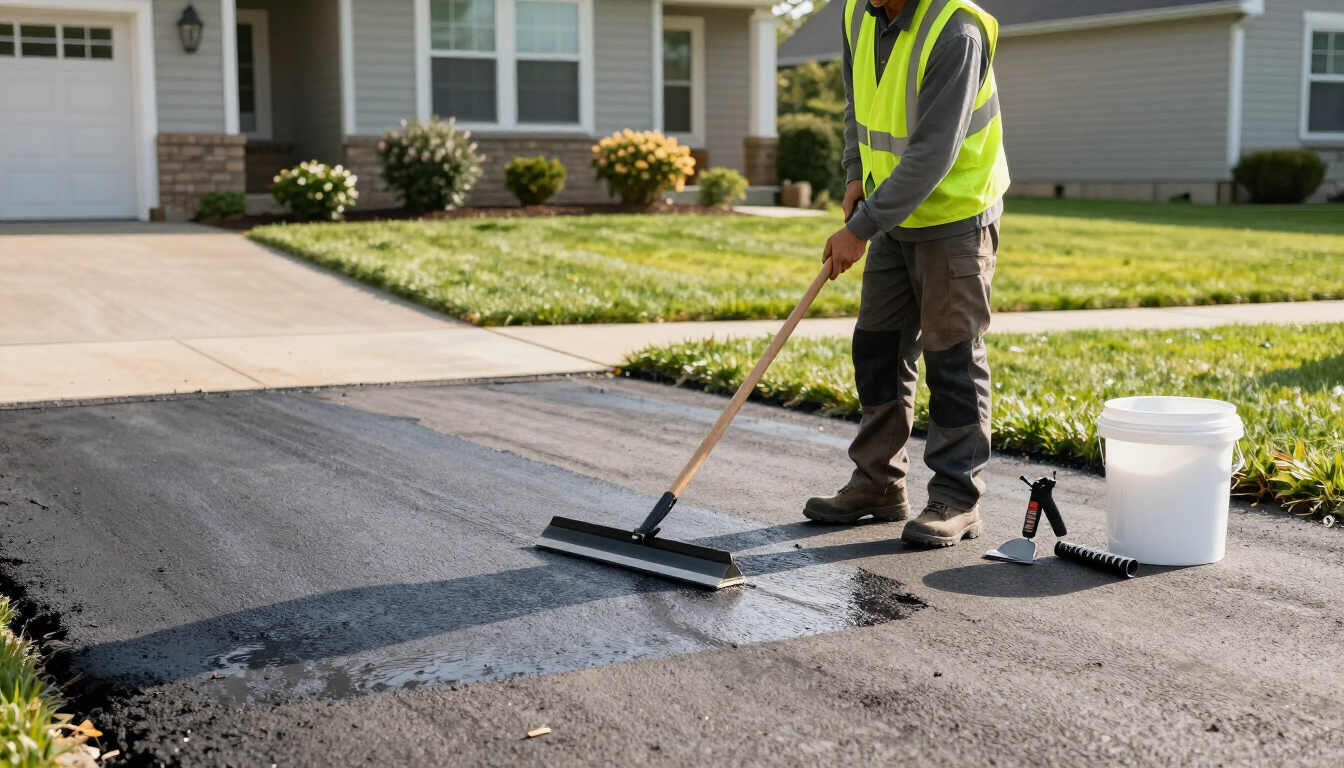
The work goes faster and comes out better when the surface is ready before the crew arrives.
- Trim back grass and edging that has crept over the driveway border.
- Treat oil and transmission stains a few days ahead so they don't repel the sealer.
- Move vehicles, trailers, and basketball hoops off the surface the night before.
- Skip the sprinklers for 24 hours before and 48 hours after.
- Plan your parking. The surface is usually dry to the touch within a few hours, ready for foot traffic after about 24, and ready for vehicles after 24 to 48 depending on shade and humidity.
Keep cars off the fresh coat a little longer than the minimum if your driveway sits under heavy tree cover. Shaded sections always cure last.
Protect the Rest of Your Hardscape While You're at It
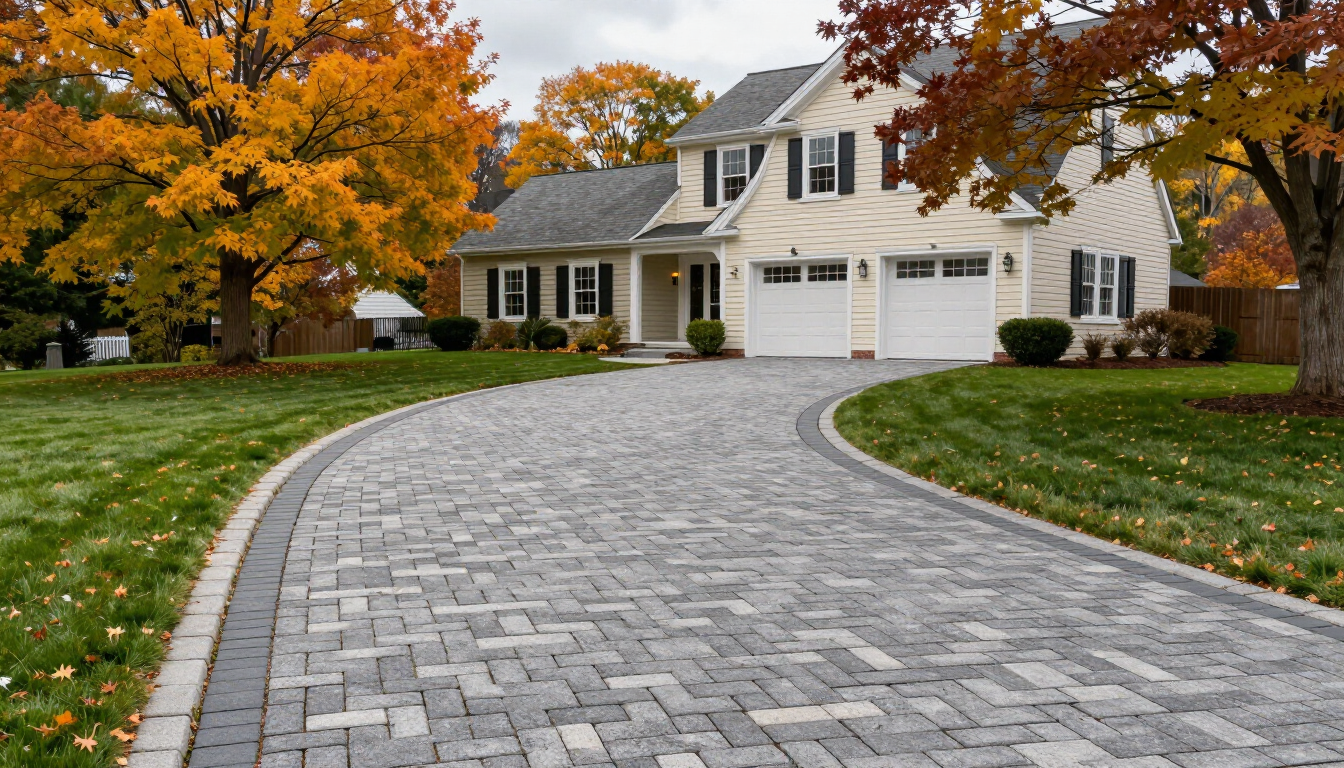
August is a practical month for the surfaces around the driveway too. Sealed patios, swept and re-sanded paver driveways, and repointed stoops and walkways all benefit from the same dry, warm stretch. Handling them together saves a second mobilization and a second round of scheduling.
Book Your Farmingville Sealcoating Before Fall Arrives
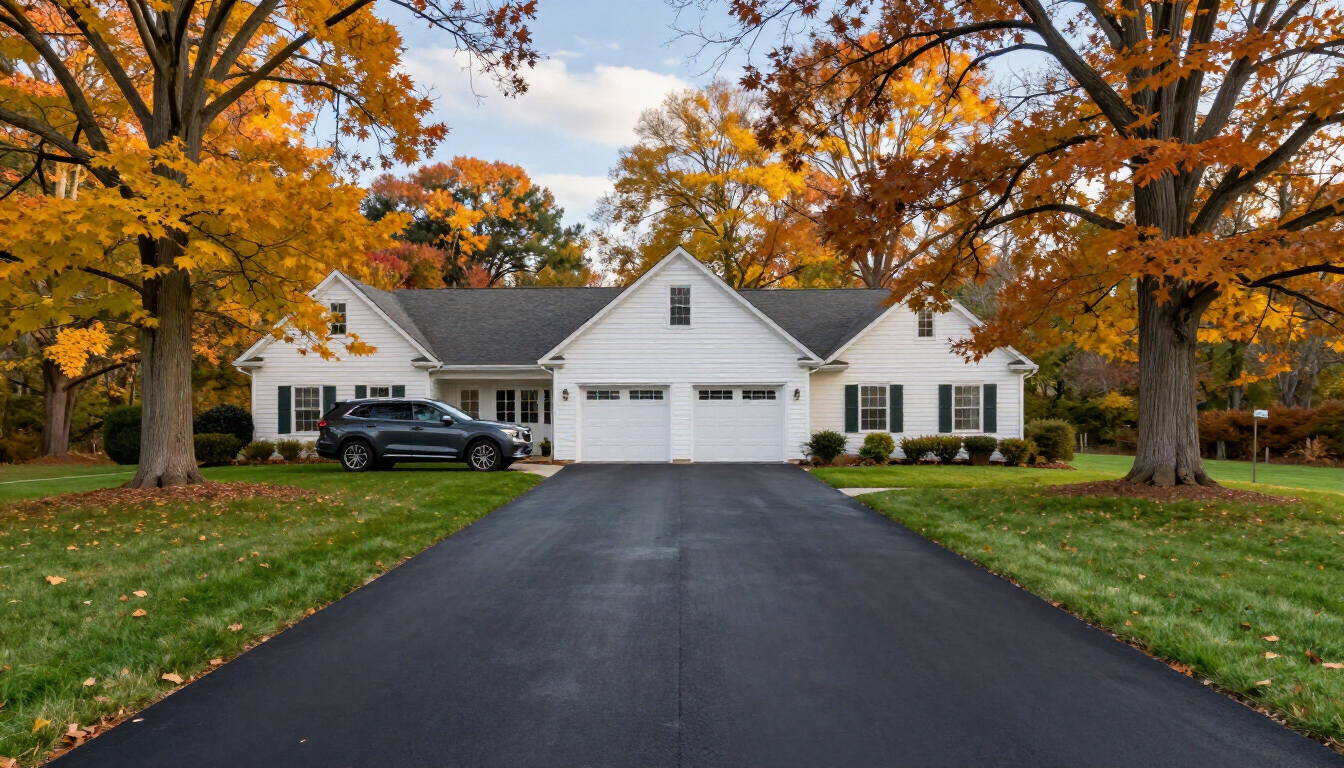
Every year the phones light up in October with homeowners hoping to squeeze a coat in before the first freeze, and every year some of those calls come too late. August gives you choice of dates, faster cure times, and a driveway that heads into winter with a full layer of protection.
Stonerock Paving & Masonry has served Farmingville and the surrounding Suffolk and Nassau communities for more than 30 years. We'll look at your driveway, tell you honestly whether sealcoating is the right move, and quote the work with no pressure attached.
Request your free quote or call (631) 920-3618 to get on the August schedule.
Related Articles
Frequently Asked Questions
How often should a Long Island driveway be sealcoated?
Most asphalt driveways in Suffolk County do well with a fresh coat every two to three years. Heavy traffic, full sun exposure, and frequent oil drips can shorten that interval to roughly every other summer.
Can sealcoat be applied over cracks in the driveway?
Hairline surface cracks are filled during prep with hot or cold crack sealant before coating. Wider cracks, alligator patterns, and potholes need repair first, since sealer alone will split again within a season.
How long does a driveway sealcoating job take?
Most residential driveways are cleaned, crack-filled, and coated within a single day. Cure time matters more than work time: expect foot traffic after about 24 hours and vehicle traffic after 24 to 48 hours.
Is August too hot for sealcoating in Farmingville?
No. Heat helps sealer cure faster and harder. Crews adjust by working earlier in the day on extreme afternoons, and only pause when pavement temperatures climb high enough to dry the coating unevenly.
Does sealcoating work on concrete or paver driveways?
Asphalt sealer is formulated for asphalt only. Concrete and pavers use different sealers with separate prep steps, so tell your contractor which surface you have before scheduling any protective coating work.
Our Recent Articles