Pool Deck Repairs to Handle Before the First Hard Freeze
Closing the pool is the one day each year when homeowners actually look at the deck instead of walking across it. For the rest of the season it is a surface between the back door and the water, noticed only when someone stubs a toe on a raised edge.
That makes early fall the right moment for an honest inspection. Damage around a pool behaves differently from damage anywhere else on a property, and the months between closing and opening are exactly when small problems become expensive ones.
Why Pool Decks Wear Faster Than Other Surfaces
A pool deck takes a combination of stresses that a patio twenty feet away never experiences.
- Constant wetting and drying. Splashout soaks the surface repeatedly through the season, then it dries, then it soaks again. Few outdoor surfaces cycle this often.
- Treated water. Chlorinated water, and saltier water on systems using a salt chlorine generator, is harder on masonry and mortar than rainwater.
- Sunscreen, oils, and organic residue. These soak into porous surfaces and stain in ways plain dirt does not.
- Furniture dragged across it daily. Chair legs scrape, chip, and wear specific paths into the finish.
- Backfill that settles. The ground immediately around a pool shell was excavated and refilled during installation, and refilled ground settles for years afterward.
That last point explains most of the movement homeowners see. It is also why a deck can look fine for several seasons and then develop problems all at once.
The Closing-Day Inspection
Walk the full perimeter slowly, ideally in daylight after the cover is on. Work through this sequence.
- Look along the surface at a low angle. Raised edges and settled sections show up in a sideways glance that you miss looking straight down.
- Check the joint between the coping and the deck. This is the most important item on the list, and the next section explains why.
- Inspect the coping pieces themselves. Look for cracks, movement, loose pieces, and failed mortar beneath them.
- Press on anything that looks suspect. A coping stone that shifts underfoot is not attached the way it should be.
- Tap concrete sections. A hollow sound suggests the surface has separated from what is beneath it.
- Note where water sits. Standing water on a pool deck after rain points to settlement or grading problems that worsen over winter.
- Check the cover anchors. Anchors set into the deck can crack the surrounding material when corroded or when ice works into the recess.
- Look at the steps and the path leading to the deck. These see the same traffic and often the same settlement.
Photograph anything you find. Comparing images at opening next spring tells you whether something is actively moving or holding steady.
The Gap Most Homeowners Mistake for a Crack
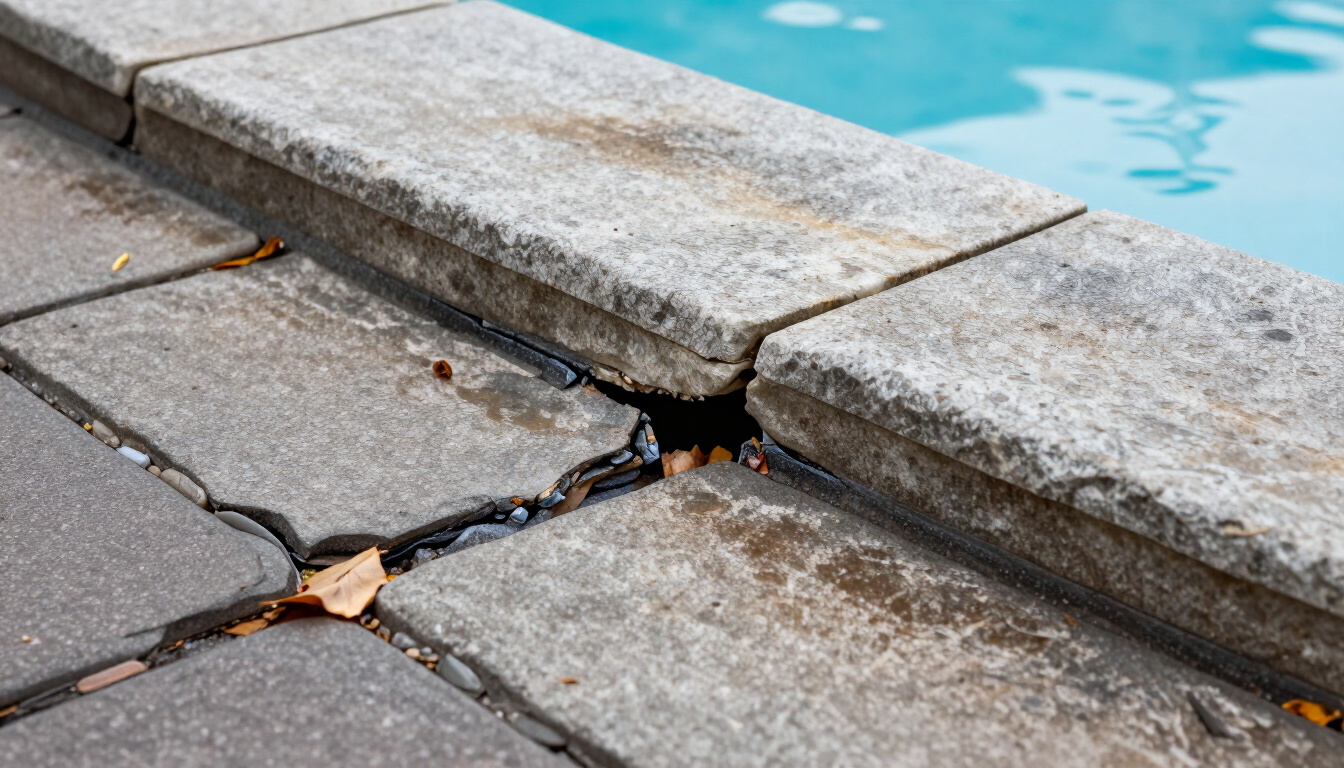
Running between the coping at the pool edge and the deck surface is a narrow joint filled with flexible sealant. It looks like a crack that somebody filled badly, and it is routinely treated as one.
What That Joint Is Doing
Pool decks and pool structures move independently. The deck sits on backfilled ground that settles and shifts with frost. The pool shell does not move the same way. Without a deliberate gap between them, that difference in movement has to go somewhere, and it goes into cracked coping, damaged tile at the waterline, or stress on the pool structure itself.
The joint absorbs that movement. It is supposed to be there.
What Happens When It Fails
Sealant in that joint has a service life and degrades with sun and chemical exposure. Once it cracks, splits, or pulls away, the gap starts collecting water and debris.
Water sitting in the joint through winter freezes and expands with nowhere to go. That force pushes directly against the coping and against the pool structure, which is the opposite of what the joint was built to prevent. Water entering there can also work down behind the pool wall and wash out backfill, which produces the settlement visible the following spring.
Replacing failed sealant in that joint is inexpensive and quick, and it is probably the highest-value item on this entire list. Filling the joint with mortar or concrete, which looks like a tidy permanent fix, removes the flexibility the joint existed to provide.
Coping Damage and Why It Matters
Coping is the capping course at the pool edge, and it does more than finish the look. It covers the top of the pool structure and sheds water away from it.
Signs worth acting on:
- Cracks running through a coping stone rather than along a joint
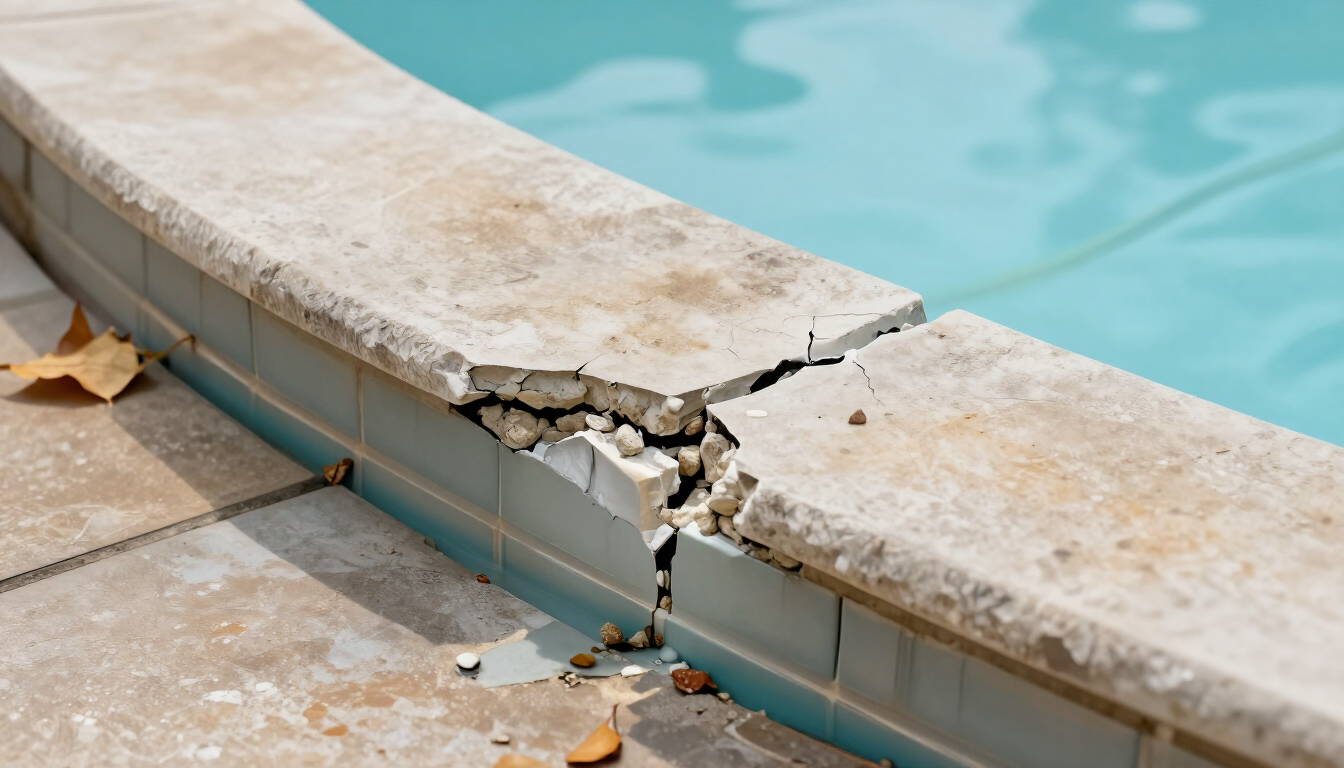
- Pieces that rock, shift, or sound hollow when tapped
- Mortar crumbling out from under or between coping units
- A coping piece sitting noticeably lower or higher than its neighbors
- Gaps opening where coping meets the deck surface
Damaged coping lets water reach places it was meant to keep it out of. Through a freeze-thaw winter, water that gets under a loose coping stone will lift it further, and what began as one piece becomes a run of three or four.
Individual coping pieces can usually be reset or replaced without touching the rest of the deck, which makes this a repair worth catching early.
Settling, Lifting, and Trip Hazards
Movement in a pool deck shows up as height differences between adjacent sections, and the ground around a pool is more prone to this than ground anywhere else on the property.
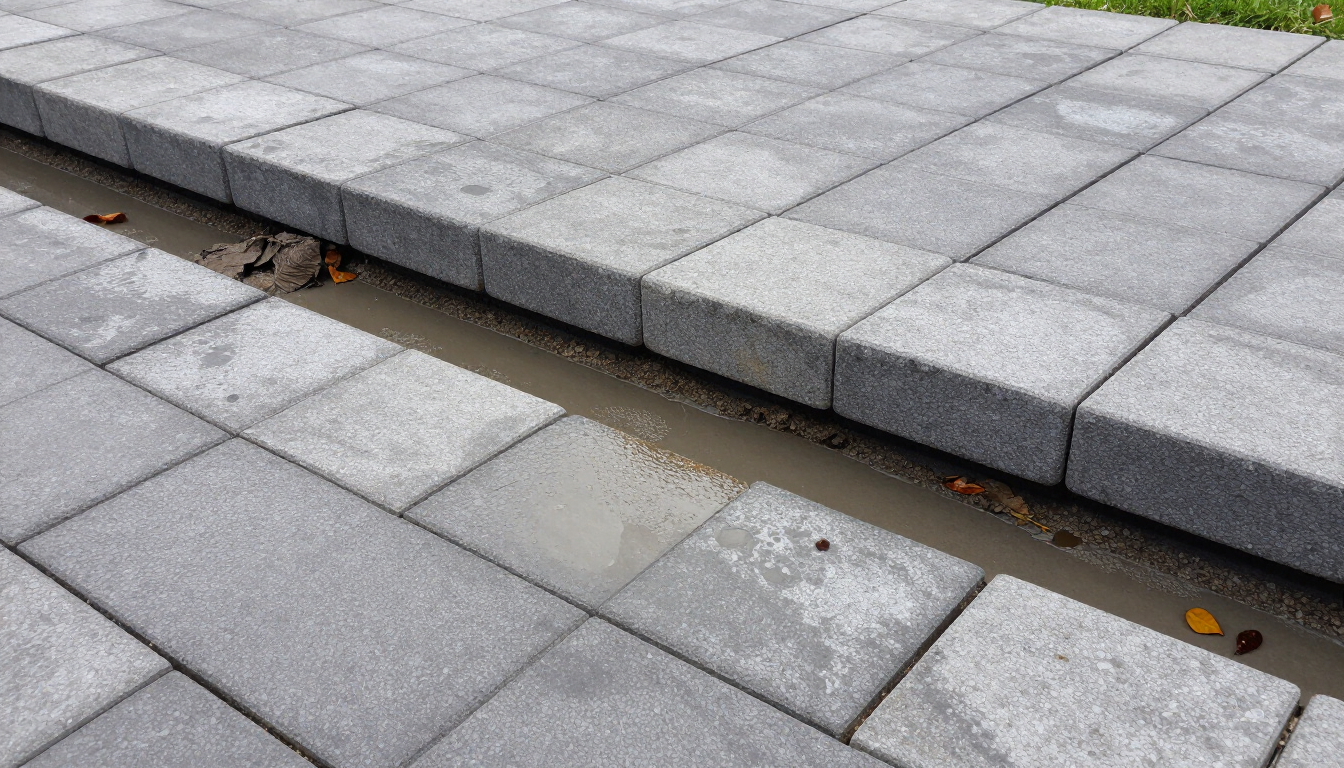
Paver decks tend to settle in sections, producing a visible lip where one area has dropped. Joint sand washes out of those areas faster, which accelerates the movement. Concrete decks crack and then settle unevenly across the crack, leaving one side proud of the other.
A raised edge beside a pool is a different safety matter from a raised edge on a walkway, given wet feet and bare skin. Any lip large enough to catch a toe deserves attention before it is covered by snow and forgotten until May.
Where pavers are involved, lifting and resetting the affected section is straightforward provided the cause is identified. Where the same area settles repeatedly, the backfill or drainage beneath needs addressing rather than the surface.
Repairs Worth Doing Before It Freezes
Several jobs lose their window once temperatures drop, since sealant, mortar, and concrete all need warmth to cure properly.
- Replacing failed expansion joint sealant
- Resetting or replacing loose and cracked coping
- Repointing mortar joints in masonry surrounds
- Resetting settled pavers that create trip hazards
- Filling cracks that would otherwise collect and freeze water
- Clearing and correcting spots where water stands against the deck
None of these are large projects. All of them prevent larger ones.
What Can Reasonably Wait Until Spring
Not everything needs doing now, and knowing the difference keeps the fall budget sensible.
Full deck replacement, resurfacing a large concrete area, extending the deck, or converting a worn concrete surround to pavers are all better planned over winter and built in spring. These are projects where design decisions benefit from time, and where spring scheduling is easier to secure if the conversation starts in the off season.
The dividing line is straightforward. Anything letting water into places it should not go gets handled now. Anything purely about appearance or layout can wait.
Book the Small Repairs While the Weather Still Allows
Stonerock Paving & Masonry has been building and repairing pool surrounds across Suffolk and Nassau County, including Smithtown and nearby communities, for more than 30 years. Our team can walk the deck with you, separate what needs attention before freezing from what is better scheduled for spring, and give you a plan rather than a single quote for everything at once.
Call (631) 920-3618 or ask for a free pool deck estimate before the cold sets in.
Frequently Asked Questions
What is the gap between my pool coping and the deck for?
It allows the deck and the pool structure to move independently, which they do at different rates. Filling it with mortar removes that flexibility and transfers movement into the coping, tile, or pool structure instead.
Can coping be replaced without redoing the whole deck?
Usually yes. Individual damaged pieces can be lifted, re-bedded, and reset while the surrounding deck stays untouched. Matching older stones exactly can be difficult, so replacements sometimes vary slightly in tone.
Why do pavers around a pool lift more than elsewhere?
The ground around a pool shell was excavated and backfilled during installation, and backfilled soil continues settling for years. Add repeated wetting and freeze-thaw cycles, and movement shows up there before anywhere else.
Is it too late in the year to repair a pool deck?
It depends on the work. Sealant, mortar, and concrete all need temperatures above freezing to cure, so the window narrows through late fall. Resetting pavers stays workable longer than anything involving wet materials.
Should repairs happen before or after closing the pool?
After closing is generally easier. The water level drops, the cover goes on, and the perimeter is clear of furniture and swimmers, which gives better access to coping and the joint running alongside it.
Our Recent Articles