When to Repair vs Resurface Your Asphalt Driveway
Your asphalt driveway takes a beating every year on Long Island. Summer heat softens the surface, winter freeze-thaw cycles pry it apart, and road salt chews away at the top layer.
Eventually you face a choice: patch the problem spots or lay a fresh surface over the whole thing. Pick wrong and you either throw money at a driveway that needed replacing anyway, or tear up one that only needed a simple fix.
Here is how to tell the two apart.
Repair vs Resurfacing: What's the Difference?
These terms get used interchangeably, but they solve different problems.
A repair targets specific damage. Think crack filling, patching a pothole, or sealcoating to protect a surface that is still in good shape. It leaves most of your existing driveway in place.
Resurfacing, sometimes called blacktop resurfacing, removes or covers the top 1.5 to 2 inches of asphalt and lays a new layer over the existing base. Your foundation stays; the worn skin goes. It costs more than a repair and less than a full replacement, which makes it the middle option most homeowners weigh.
Signs Your Driveway Needs a Repair
Repairs make sense when the damage is limited and the surface is mostly sound. Watch for:
- A few isolated cracks narrower than a quarter inch
- One or two small potholes in an otherwise smooth surface
- Fading or minor surface wear with no structural cracking
- A firm, level base underneath with no soft or sunken spots
Caught early, these problems are inexpensive to correct. A sealed crack today keeps water out, and water is what turns a hairline gap into a crater by March.
Signs It's Time to Resurface
Once damage spreads across the driveway rather than sitting in a few spots, patching becomes a losing game. Resurfacing is the smarter call when you see:
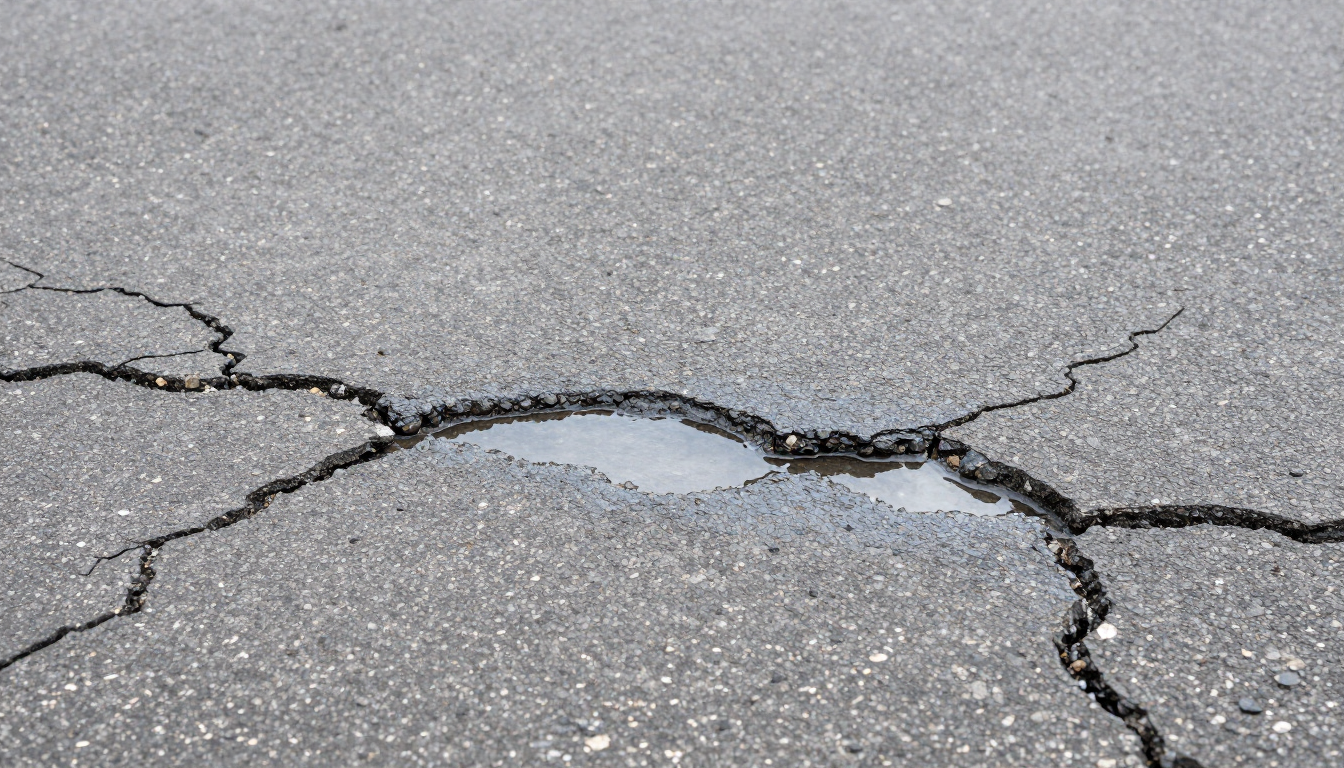
- Alligator cracking, where interconnected cracks form a scaly pattern across large sections
- Multiple potholes or crumbling edges that keep coming back after repairs
- A brittle, gray, faded surface that has lost its flexibility and oils
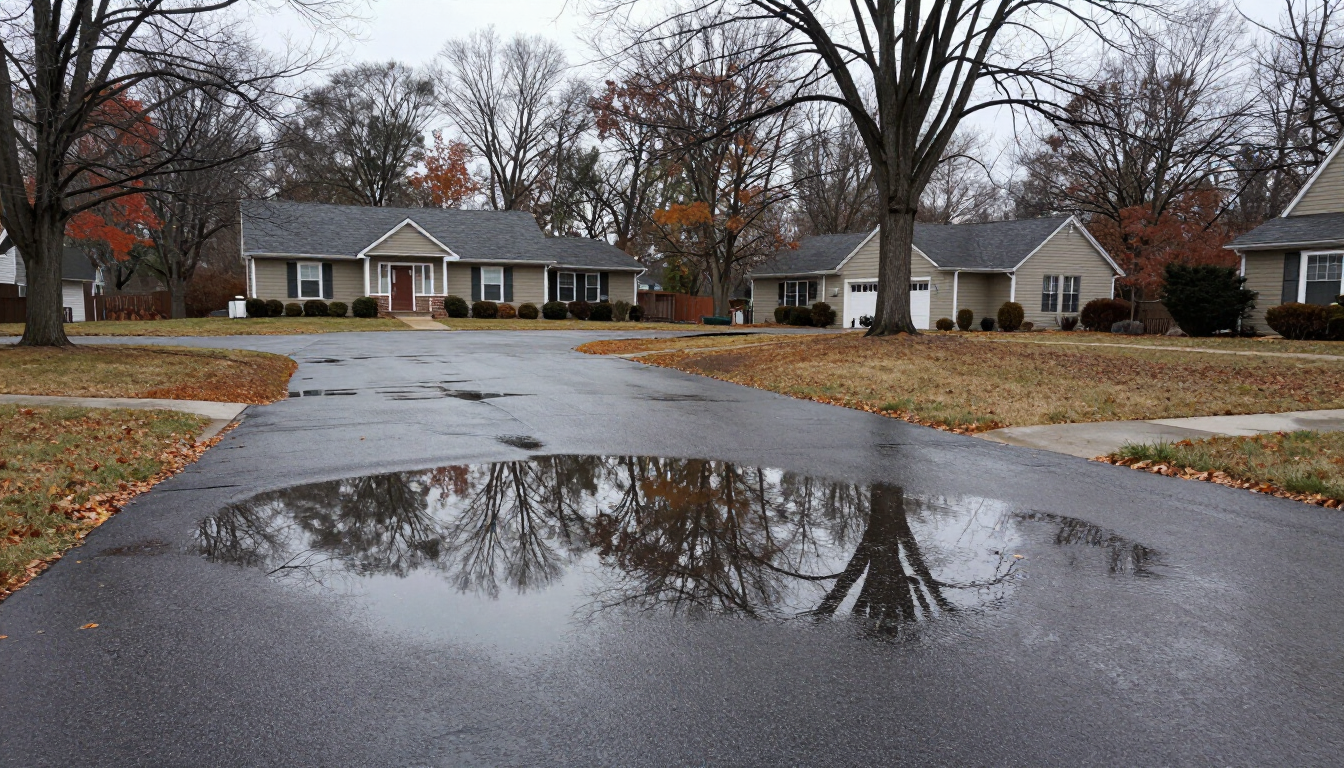
- Water pooling in low areas after rain, which points to a surface that no longer drains
- Age of 15 to 20 years, if the base is still solid but the top has simply worn out
If more than a quarter of the surface is damaged, resurfacing usually costs less over time than repeatedly chasing new cracks.
What Long Island Weather Does to Your Blacktop
Farmingville sits in a climate that is hard on asphalt. We swing above freezing and back below it dozens of times each winter. Water seeps into small cracks, freezes, expands, and widens the gap a little more with every cycle. By spring, a crack you could have sealed for a small fee has become a structural problem.
Here is a detail most people never think about: asphalt never fully stops moving. The University of Queensland's pitch drop experiment, running since 1927, shows tar-like pitch behaving as an extremely slow liquid, releasing a single drop roughly once a decade at room temperature.
Your driveway does a quieter version of the same thing under heat and the weight of your cars. That slow creep is one reason even well-built asphalt eventually shifts, dips, and cracks. It also explains why timing your maintenance well matters so much.
When Repair and Resurfacing Both Fall Short
Sometimes the answer is neither. If the base beneath the asphalt has failed, no surface work will hold. Telltale signs include large sunken areas, sections that feel spongy underfoot, or potholes that reopen within weeks of being filled.
When the foundation is gone, full replacement is the only fix that lasts. A resurface over a failing base just buys you a year or two before the same problems return.
Cost and Timing Considerations
Money usually drives the decision, so it helps to see the options in order:
- Repairs are the cheapest and can often be done in a day.
- Resurfacing runs higher but delivers a like-new surface for a fraction of a full rebuild.
- Replacement is the largest investment and the right one only when the base is compromised.
Spring and fall are ideal windows for this work on Long Island. Fresh asphalt needs mild, dry conditions to cure properly, so scheduling around our weather protects your investment.
Why a Professional Assessment Matters
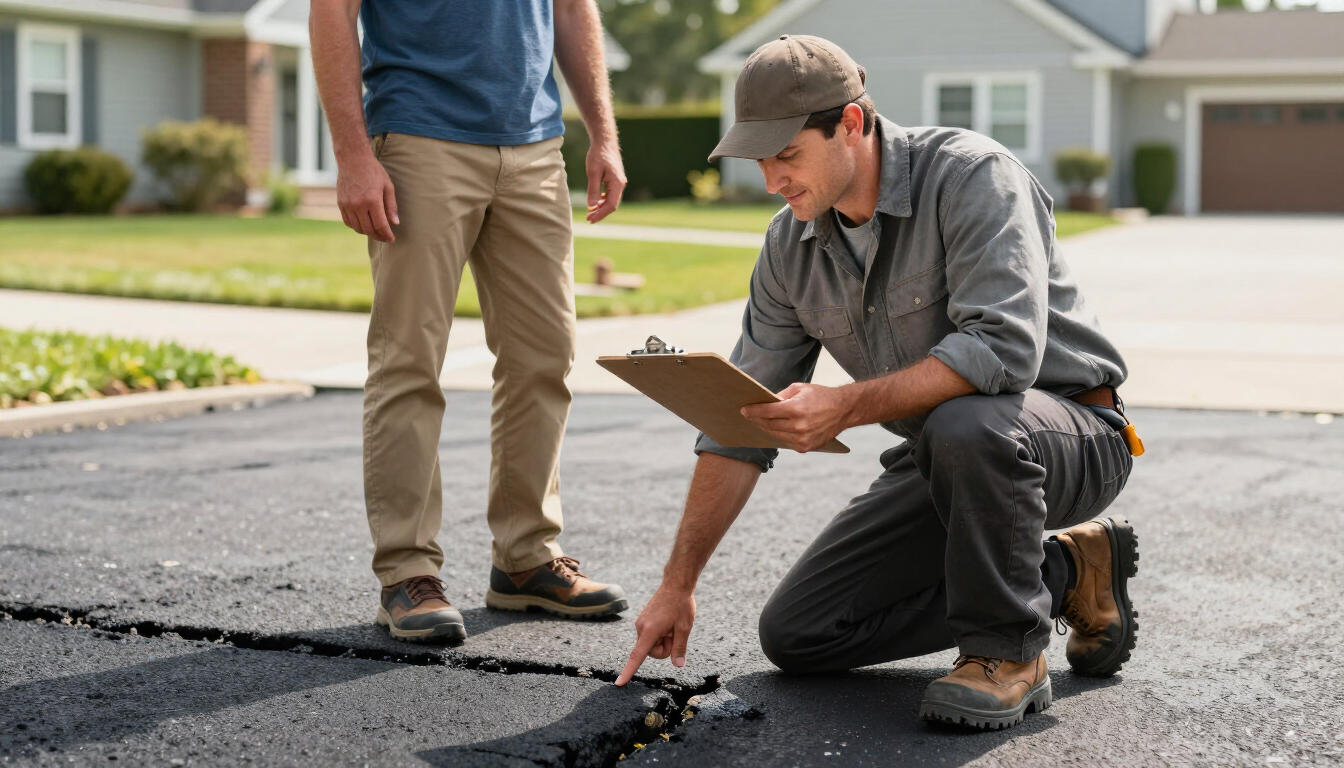
The hardest part of this decision is reading what is happening below the surface. Alligator cracking can mean a worn top layer or a dying base, and only a trained eye can tell which. Guessing wrong is expensive.
The team at Stonerock Paving & Masonry has spent over 30 years working on driveways across Suffolk and Nassau Counties. We inspect the surface and the base, explain what we find in plain terms, and recommend the option that fits your driveway and your budget rather than the most expensive job on the menu. That honest read is what keeps our neighbors coming back.
Not sure whether your driveway needs a repair or a full resurface? Contact Stonerock today for a free, no-pressure quote and get a clear answer from people who do this work every day.
Frequently Asked Questions
How long does a resurfaced asphalt driveway last?
A properly resurfaced driveway in the Farmingville area typically lasts 8 to 15 years. Lifespan depends on the base condition, installation quality, drainage, and how well you keep up with sealing and minor repairs over time.
Can you resurface a driveway with lots of potholes?
Only if the base is still solid. Potholes are patched first, then the new surface goes on top. If potholes keep returning or the base is failing, full replacement becomes the better long-term choice.
Is sealcoating the same as resurfacing?
No. Sealcoating is a thin protective coat that shields a healthy surface from water and sun. Resurfacing adds a new structural asphalt layer. Sealcoating maintains a good driveway; resurfacing restores a worn one.
How soon can I drive on a newly resurfaced driveway?
Wait at least 24 to 48 hours before driving on fresh asphalt, and longer in hot weather. Avoid parking heavy vehicles or turning sharp for the first few weeks while the surface fully cures and hardens.
When is the best time to resurface in Farmingville?
Late spring through early fall works best. Asphalt needs warm, dry conditions to cure correctly, so scheduling before winter freeze-thaw cycles arrive protects your new surface and helps it last for years.
Our Recent Articles