Snow, Salt, and Plow Damage: Protecting Driveways and Masonry This Winter
Most winter damage to driveways and masonry is self-inflicted. Not through neglect, but through the ordinary business of keeping a property safe and passable. The salt that stops someone slipping on the front steps is also working on the concrete beneath it. The plow that clears the driveway in ten minutes is dragging a steel edge across a surface that cost thousands.
None of that means leaving snow where it falls. It means knowing which products and methods do the least harm, and spending an hour in October setting things up properly.
What Winter Actually Does to Paved Surfaces
Two mechanisms cause nearly all cold-weather deterioration, and they work together.
Freeze-Thaw Is the Main Culprit
Water finds its way into cracks, joints, and the pores of concrete and asphalt. When it freezes it expands by roughly nine percent, pushing outward against whatever surrounds it. When it thaws, the slightly enlarged space fills with more water than before.
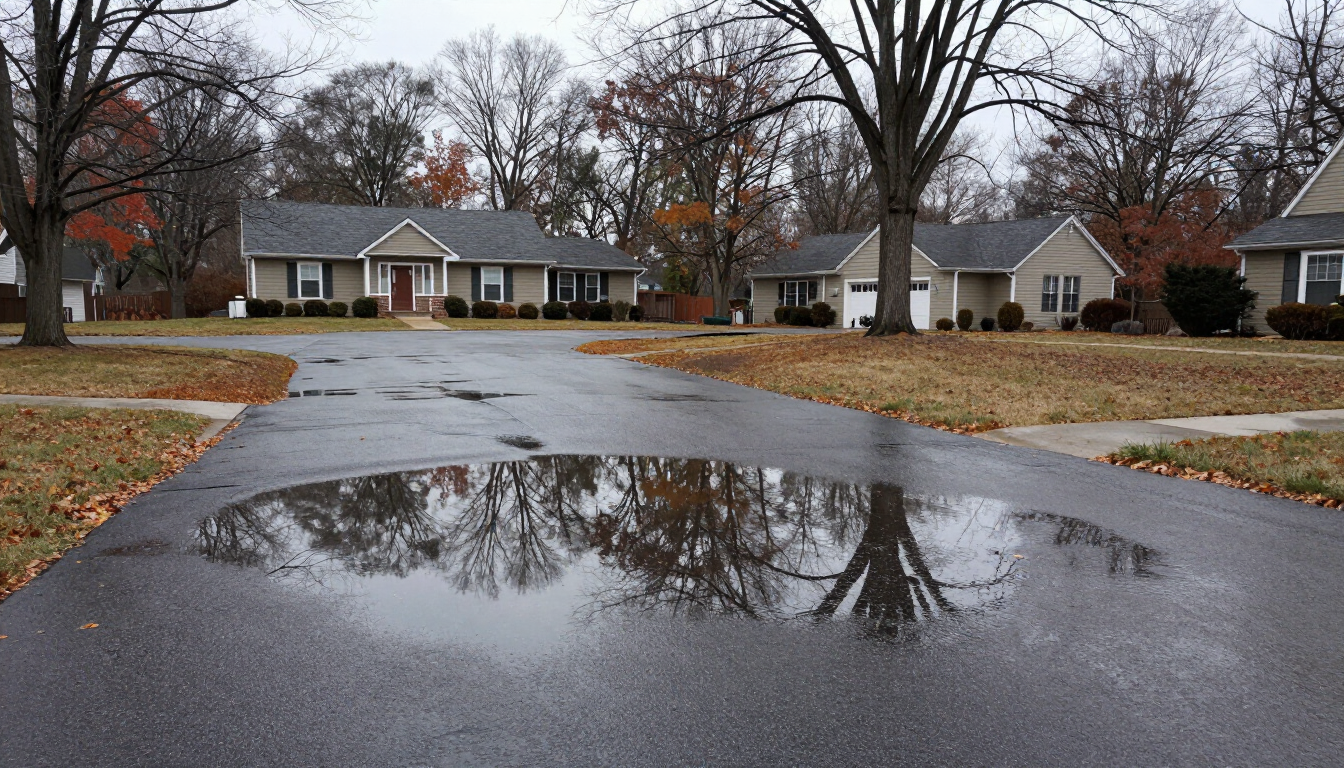
Long Island runs through this cycle repeatedly, since coastal temperatures hover around freezing far more often than they sit deep below it. That produces more cycles across a season than a colder inland climate would, and the number of cycles matters more than how cold it gets.
Why Salt Makes It Worse Instead of Better
This surprises people. De-icing salt does not simply sit on a surface doing its job.
Salt lowers the freezing point of water, which is exactly why it melts ice. The side effect is that a surface treated with salt passes through the freezing point more times per season than an untreated one, because meltwater refreezes as temperatures drop again. More cycles mean more expansion damage.
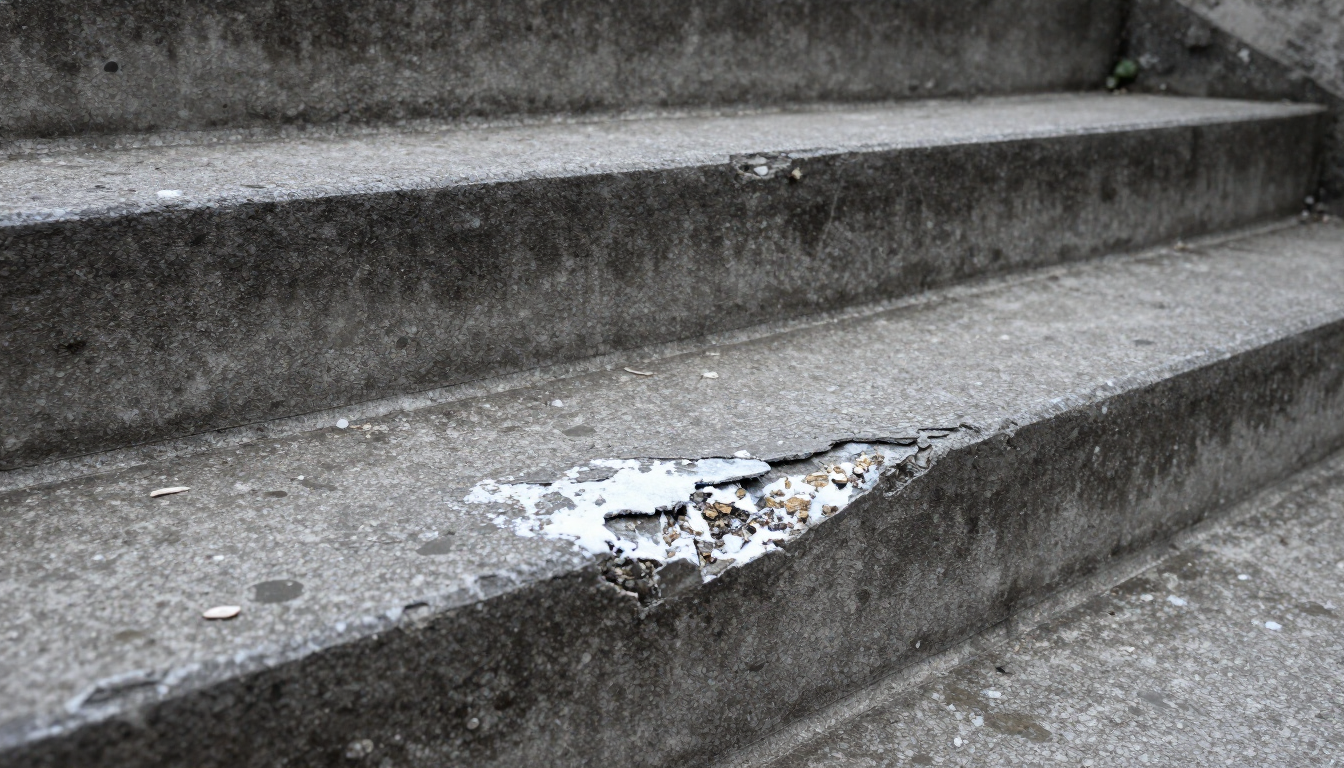
Chloride-based products also contribute to surface scaling on concrete, where the top layer flakes away and exposes the aggregate beneath. Where steel reinforcement exists, chlorides reaching it accelerate corrosion.
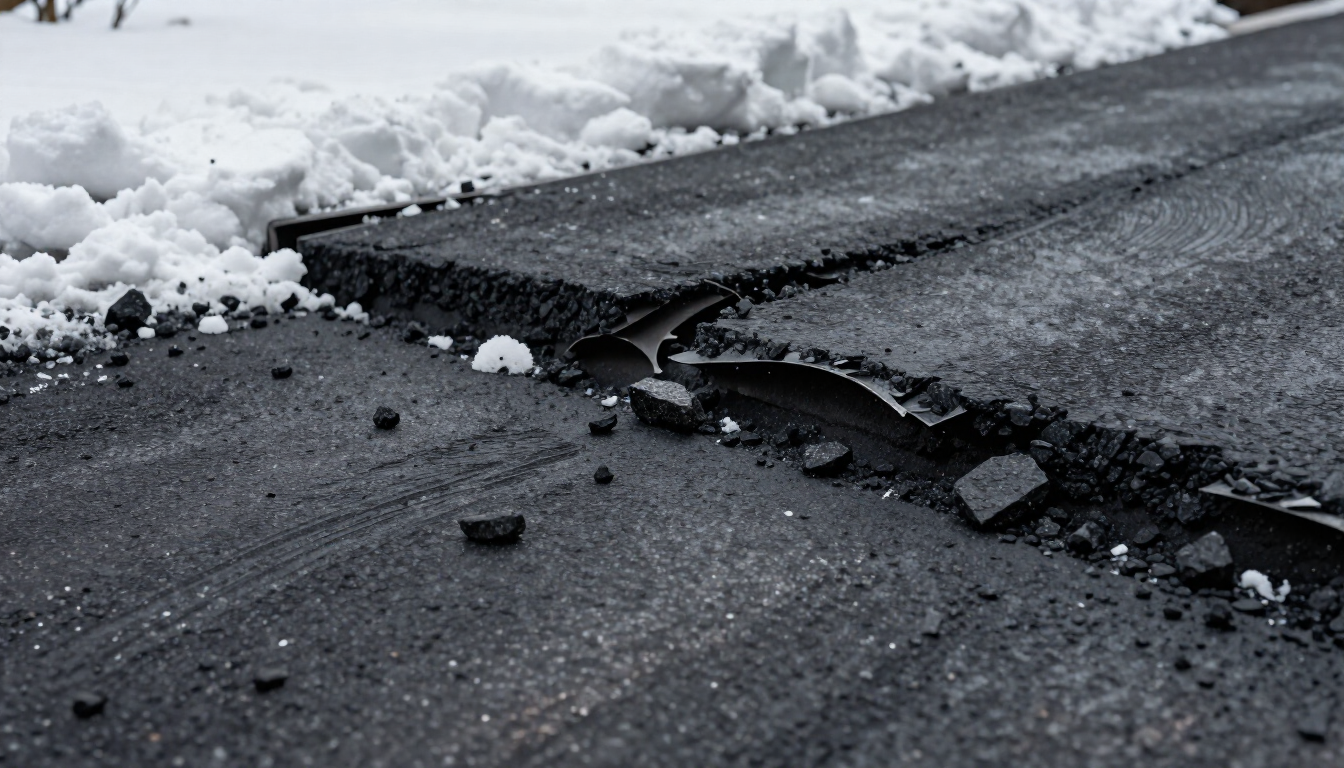
Asphalt is less chemically vulnerable than concrete, but it suffers the same freeze-thaw acceleration, and salt-laden meltwater running into open cracks does its damage below the surface.
Choosing a De-Icer That Will Not Wreck Your Surfaces
Products vary considerably in both working temperature and how hard they are on masonry. Matching the product to the actual conditions prevents most of the harm.
| Product | Works down roughly | Risk to surface | Other considerations |
|---|---|---|---|
| Rock salt (sodium chloride) | 15 to 20°F | High on concrete and masonry | Cheapest, hardest on plants and metal |
| Calcium chloride | Below zero | Moderate to high with repeated use | Fast acting, can irritate paws |
| Magnesium chloride | Around 0°F | Moderate, gentler than rock salt | Still a chloride, use sparingly |
| Calcium magnesium acetate | Around 20°F | Low, chloride free | Costs more, less effective in deep cold |
| Sand | No melting action | None | Traction only, needs sweeping up later |
A practical approach is to use the gentlest product that works for the temperature you actually have. Rock salt stops working around 15°F anyway, so scattering more of it in deep cold damages the surface without melting anything.
Applying less also helps more than people expect. De-icer is meant to break the bond between ice and the surface so it can be removed, not to melt a storm away entirely.
Surfaces That Should See No De-Icer At All
- Concrete poured within the past year, which has not reached full strength and scales readily
- Masonry repointed or rebuilt during the current season
- New concrete pavers in their first winter
- Natural stone treads and steps, where surface flaking is difficult to repair invisibly
Sand gives traction on all of these without the chemistry.
Snow Removal Without Scarring the Surface
How snow comes off matters as much as what goes down on the ice.
- Clear early rather than thoroughly. Snow left to be driven over compacts into ice bonded to the surface, which then requires chipping or heavier salting.
- Fit a rubber or polyurethane cutting edge. A steel blade finds every joint, lip, and raised paver. Plow shoes raised slightly keep the blade off the surface entirely.
- Mark the edges before the first snow. Driveway markers along both sides prevent the plow from catching the shoulder and tearing up edges and lawn.
- Use plastic shovels on pavers and masonry. Metal edges chip paver chamfers and scrape joint material out.
- Set snowblower skid shoes higher on pavers. The auger housing riding directly on an uneven paver surface will catch a raised unit.
- Never chip ice with metal tools. A spade or pick removes surface material along with the ice.
- Pile snow downslope. Snow heaped uphill of a driveway drains straight back across it and refreezes overnight.
- Keep piles off masonry. Salt-laden snow pushed against walls, steps, and veneer holds chlorides against the material for weeks.
Protecting Steps, Walkways, and Masonry
Steps take the heaviest salting on any property, because that is where a fall has the worst consequences. They are also the most expensive square footage to repair.
Treat them with sand first and a chloride-free product only when genuinely needed. Clear them promptly so ice has less chance to bond, and sweep residue off once conditions improve rather than leaving it in contact with the stone through to spring.
Mortar joints deserve particular attention. Mortar is softer than the stone or brick around it and deteriorates first, so a joint that was already crumbling in October will be noticeably worse by March. Dealing with front step and walkway repair before the season starts prevents water from entering those joints at all.
Before the First Storm
An hour of preparation prevents most of the damage described above.
- Mark driveway edges and the ends of walls with visible stakes while you can still see where everything is.
- Clear leaves and debris from drains, low spots, and any catch basin on the property.
- Fill open cracks in asphalt, concrete, and masonry so water cannot enter and freeze inside them.
- Stock sand and a surface-appropriate de-icer now rather than buying whatever remains on the shelf after a storm.
- Fit the rubber edge, check plow shoe height, and adjust snowblower skid shoes.
- Confirm downspouts discharge away from paved surfaces rather than onto them.
- If you use a plow service, tell them where the edges, drains, and raised features are.
What Spring Damage Is Telling You
Damage appearing in March is a diagnosis as much as a repair job.
- Surface flaking or pitting generally points to de-icer exposure, often on concrete that was too new or treated too heavily.
- Potholes and wide cracks indicate water reached the base and worked on it through the winter.
- Crumbling edges suggest the shoulder has no support, frequently made worse by plow contact.
- Heaved or rocking pavers mean water collected beneath the surface and froze there.
- Ice forming in the same place every year is a grading problem rather than a winter problem, and it will keep happening until the slope is corrected.
Catching these in early spring keeps repairs small. Left through a second winter, the same issues move from surface work into base work.
Get Winter Damage Looked At Early
Stonerock Paving & Masonry repairs winter damage to driveways, walkways, and masonry across Suffolk and Nassau County, and has done so for more than 30 years. The team can tell you whether scaling and cracking are cosmetic or whether water has reached the base, which determines whether you are facing a repair or something larger.
The company handles work from asphalt driveway contractors through to paver driveway surfaces, with projects throughout Medford and the surrounding area.
Call (631) 920-3618 or request a free surface repair quote before damage has another season to spread.
Frequently Asked Questions
Is rock salt safe to use on an asphalt driveway?
Asphalt resists chlorides better than concrete does, so occasional use causes limited direct harm. The real damage comes from salt-laden meltwater entering existing cracks and accelerating freeze-thaw activity in the base below.
Which de-icer is gentlest on concrete and pavers?
Calcium magnesium acetate, since it contains no chlorides. It costs more and stops working around 20 degrees, so many homeowners combine it with sand for traction and reserve it for genuinely icy conditions.
Can I use de-icer on a driveway installed this year?
Avoid it entirely through the first winter. New concrete and new pavers have not reached full strength and scale easily under chloride exposure. Use sand for traction until the surface has a full season behind it.
Does sand actually do anything on ice?
It provides traction but does not melt anything. That makes it ideal for surfaces you want to protect, and it works at any temperature. Sweep it up afterward so it does not wash into drains.
How do I stop a plow from damaging my driveway edges?
Mark both sides with driveway stakes before the first snowfall, fit a rubber cutting edge, and raise the plow shoes slightly. If a service clears your property, walk the layout with them beforehand.
Our Recent Articles