Why Asphalt Driveways Crack in Medford, NY
Cracks in an asphalt driveway can look minor at first. A thin line near the edge or a small gap by the garage may not seem urgent, but asphalt damage often spreads once water gets into the surface.
In Medford, NY, driveways deal with hot summers, cold weather, rain, snow, and daily vehicle traffic. That mix can expose weak spots in the asphalt, especially if the driveway has poor drainage or a weak base underneath.
Some cracks can be repaired. Others are signs that the driveway needs resurfacing or replacement. The difference depends on the shape of the crack, the condition of the base, the age of the driveway, and how water moves across the property.
If your driveway is already cracking, sinking, or holding water, professional asphalt paving in Medford, NY can help you decide whether repair, resurfacing, or replacement makes the most sense.
Why Asphalt Driveways Crack After Winter
Winter is one of the main reasons asphalt driveways start to break down. The damage often begins small, then becomes more visible after repeated freeze and thaw cycles.
When water enters a small crack, it can freeze during cold weather. Frozen water expands, which puts pressure on the asphalt from inside the opening. When the ice melts, the gap may be slightly larger. If this happens several times through the season, a thin crack can widen or connect with other weak areas.
This is why many homeowners notice new driveway damage after winter. The surface may have looked fine in fall, then showed cracks, low spots, or loose edges by spring.
Snow removal can add extra stress, especially if the asphalt is already weak. Salt, moisture, and plow contact can make damaged sections wear faster. Still, water is usually the main issue. Once it gets below the asphalt, the driveway becomes much easier to damage.
Poor Base Preparation Causes Bigger Problems
The asphalt layer is only the part you see. Under the surface, the driveway needs a strong base to support vehicle weight and keep the asphalt stable.
If the base is weak, the driveway may crack even if the top layer was installed neatly. Asphalt needs firm support underneath it. Without that support, the surface can bend, sink, or break apart under pressure.
Base problems can happen when:
- The driveway was not excavated deeply enough
- The stone base was too thin
- The base was not compacted properly
- Soft soil was left underneath
- Water was allowed to sit below the asphalt
These problems do not always show right away. A new driveway may look clean at first, then begin to dip or crack after months of use. Heavy vehicles, turning tires, and rain can speed up the damage.
If the same section keeps cracking after repairs, the problem may not be the asphalt itself. It may be the structure below it.
Drainage Problems Can Shorten Driveway Life
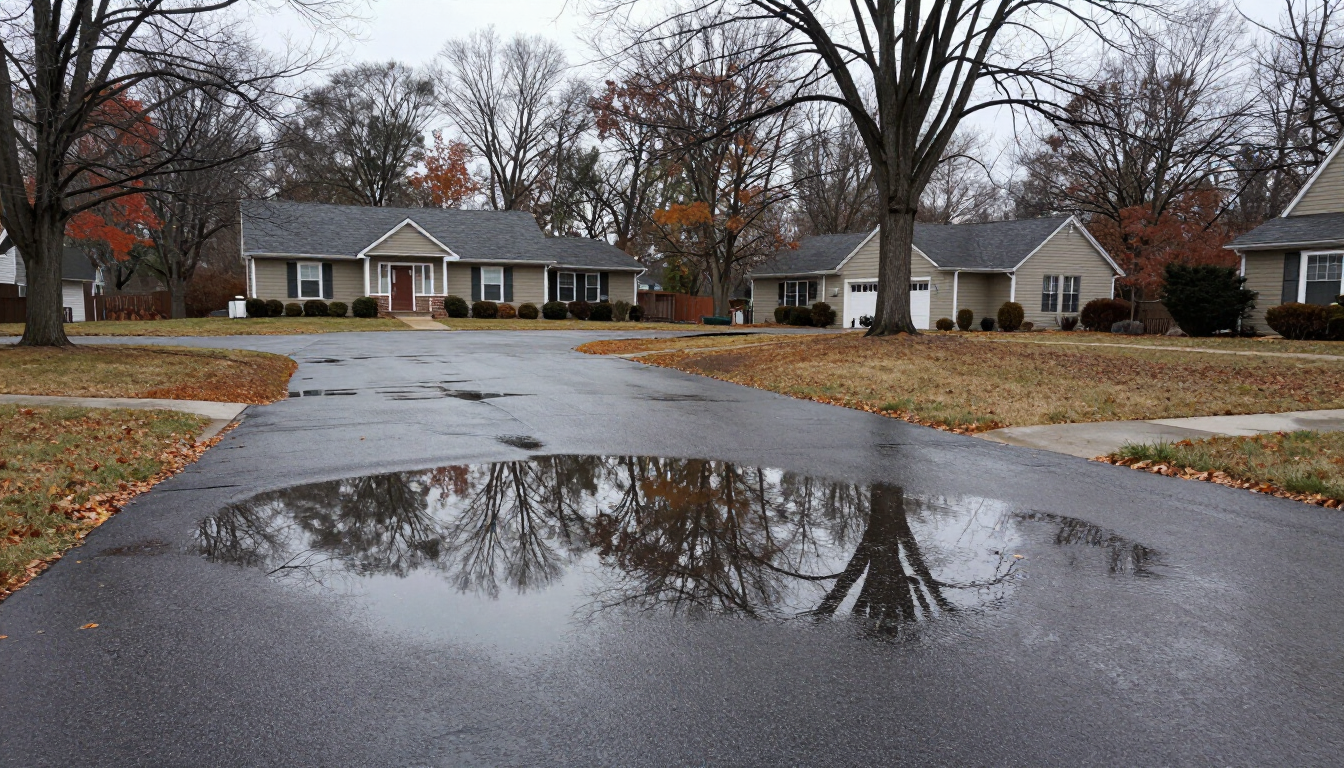
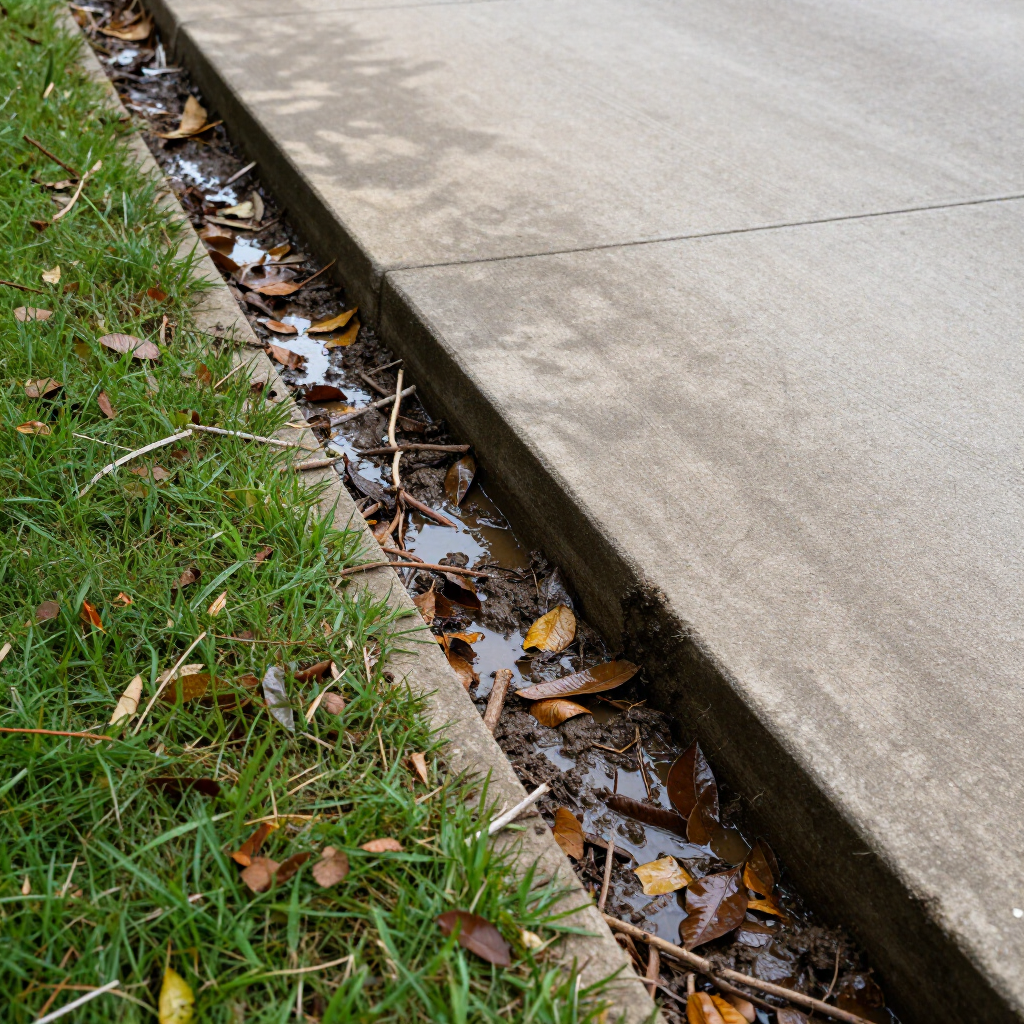
Asphalt lasts longer when water moves away from it properly. If water sits on the surface after rain, runs back to the garage, or collects along the edges, the driveway may have a grading issue.
A driveway should have a slight slope so water can drain to a safe area. The slope does not need to look steep. Even a small fall can help prevent puddles and reduce moisture damage.
Standing water is a warning sign. It can soften weak areas, enter open cracks, and wash away support near the edges. Over time, the same low spot may keep getting worse.
Drainage problems often show up in simple ways. You may notice puddles that stay long after the rain stops. Water may gather near the house. The edges may crumble faster than the middle of the driveway. In some cases, the surface may sink where water keeps collecting.
If drainage has been a repeated issue, resurfacing alone may not solve it. The new layer may look better at first, but the same water problem can return if the grade is not corrected.
Small Cracks Are Not Always Small Problems
A crack is not always a reason to replace the whole driveway. The type of crack matters. Some cracks are surface-level. Others show that the asphalt has lost support underneath.
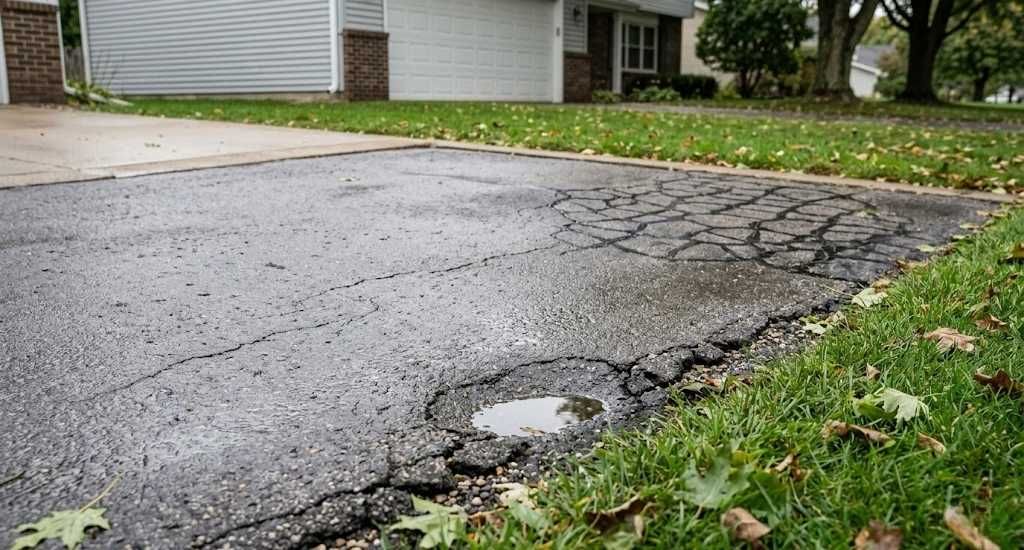
- Hairline cracks are thin and often shallow. These may be manageable if they are sealed early. If they are ignored, water can enter and make them wider.
- Alligator cracking looks like connected cracks across the surface. This pattern often means the base is weak or the asphalt is no longer properly supported.
- Edge cracking usually forms along the sides of the driveway. It can happen when the edges are not supported, when water sits along the sides, or when vehicles drive too close to the border.
- Potholes are more serious because they usually mean the surface has already broken apart. Water has often entered the driveway, weakened the material, and allowed traffic to loosen the asphalt.
- The size of the crack matters, but the pattern matters more. A small crack in one area may be simple. A group of connected cracks can point to a larger problem.
When Asphalt Repair Is Enough
Repair can be the right choice when the driveway is still mostly stable. If the cracks are limited and the base is solid, fixing the damaged areas can help extend the life of the driveway.
A contractor may recommend crack filling, patching, or sealcoating depending on the condition of the surface. These options are most useful when the damage is caught early.
Repair may be enough if the driveway is still level, water drains properly, and the cracks are not spread across most of the surface. A few isolated cracks or small worn areas do not always call for replacement.
The timing matters. A small repair before winter can prevent water from entering the driveway. Waiting too long can allow the same damage to grow into potholes or sunken sections.
When Resurfacing Makes Sense
Resurfacing is a middle option between repair and full replacement. It can work when the top layer is worn, but the base underneath is still in good condition.
During resurfacing, the existing asphalt is prepared and a new layer is installed over it. This can improve the appearance of the driveway and give it a smoother, cleaner surface.
Resurfacing may make sense when the driveway has:
- Surface wear without deep damage
- Minor cracks that do not point to base failure
- Fading or rough texture
- No major drainage issue
- No large sunken areas
The base is the deciding factor. If the driveway is sinking, holding water, or breaking apart in several places, resurfacing may only cover the issue for a short time.
A proper inspection helps prevent the wrong choice. Resurfacing a failed driveway can lead to wasted money because the new layer may crack in the same places.
When Full Asphalt Replacement Is Better
Replacement is usually better when the driveway has structural damage. This means the problem is deeper than the surface.
A new asphalt driveway allows the contractor to remove the failed material, correct the base, adjust the grade, and install a fresh surface. This is often the cleaner option when repairs no longer last.
Replacement may be the smarter choice if the driveway has widespread cracking, deep potholes, sinking, soft spots, or repeated drainage problems. It may also make sense if older repairs have started to fail again.
The goal is not just to make the driveway look better. The goal is to fix the reason the driveway failed in the first place. If the base is weak or water keeps collecting, surface repairs will not solve the whole problem.
How to Help Your Asphalt Driveway Last Longer
Start by watching how the driveway behaves after rain. Puddles, wet edges, and slow-draining areas can help you spot problems early. Keep leaves, dirt, and debris off the surface so moisture does not sit longer than necessary.
Small cracks should be handled before winter. Once cold weather arrives, water can enter those openings and make them worse.
Sealcoating can also help protect asphalt when the driveway is still in good condition. It can help guard the surface from moisture, sunlight, and regular wear. It should not be used as a fix for major cracks, potholes, or base failure.
The most practical rule is simple: do not keep patching the same damaged area without asking why it keeps failing. Repeated damage usually has a cause.
Get Your Cracked Asphalt Driveway Checked in Medford
A cracked asphalt driveway does not always need replacement, but it should not be ignored. Small cracks can often be repaired, while deeper damage may require resurfacing or a full rebuild.
The right choice depends on the age of the driveway, the base, the drainage, and how far the damage has spread. Looking only at the surface can lead to short-term repairs that do not last.
Stonerock Paving & Masonry can inspect cracked, worn, or uneven asphalt driveways and explain the best next step for your property. If you are planning asphalt driveway repair, resurfacing, or asphalt paving in Medford, NY, contact the team before the damage becomes more expensive to fix.
Why does my asphalt driveway crack after winter?
Asphalt cracks after winter when water enters small openings, freezes, expands, and pushes against the surface. If the base is weak or drainage is poor, the damage can spread faster and turn small cracks into potholes or uneven areas quickly.
Can cracked asphalt be repaired?
Yes, cracked asphalt can often be repaired if the damage is limited and the base is still stable. Crack filling, patching, or sealcoating may help protect the surface. Widespread cracks, sinking, or potholes may need full driveway replacement instead later.
Is resurfacing better than replacing an asphalt driveway?
Resurfacing is better when the surface is worn but the base is still solid. Replacement is better when there are potholes, sinking, drainage issues, or alligator cracking. The base should be inspected before choosing either option for your driveway first.
How do I know if my driveway has base failure?
Possible signs of base failure include sunken areas, repeated potholes, wide cracking, soft spots, and water pooling in the same place. These issues usually mean the problem is below the surface, not just in the visible asphalt driveway layer itself.
When should I call an asphalt contractor in Medford?
Call an asphalt contractor when cracks keep spreading, potholes appear, water pools after rain, or the surface becomes uneven. Early inspection can help you avoid unnecessary replacement if repairs are still enough to protect the driveway properly right now safely.
Our Recent Articles