What Should You Consider Before Building a Patio in Farmingville, NY?
A new patio can change how you use your backyard. It can give you a place to eat outside, relax after work, host family, add a firepit, or connect different parts of your outdoor space. But a good patio does not start with the pavers, concrete, or decorative finish. It starts with planning.
For homeowners in Farmingville, patio planning needs to account for yard shape, drainage, Long Island weather, soil conditions, daily use, and the materials that make sense for the property.
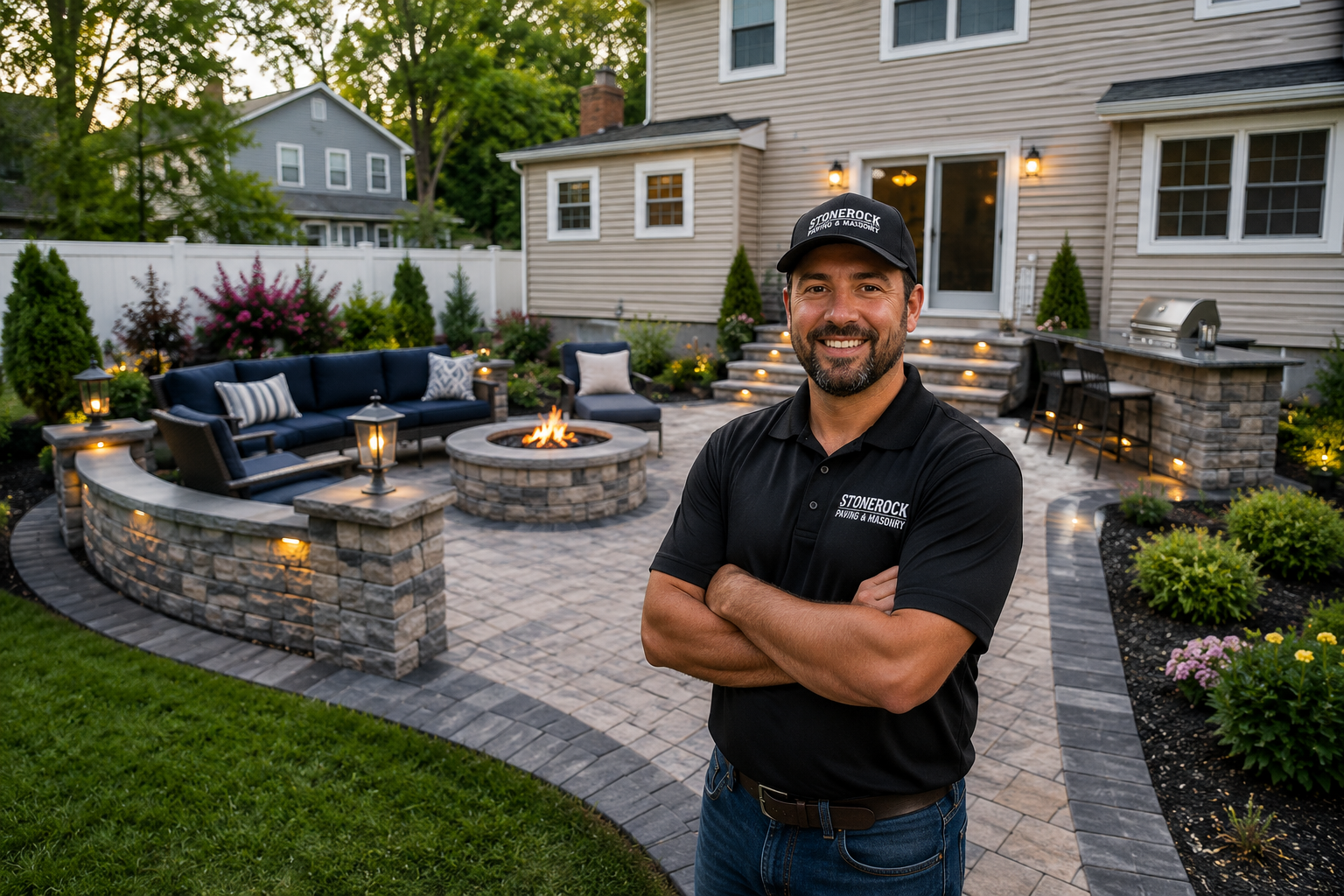
If you are ready to move from planning to installation, Stonerock Paving & Masonry offers patio installation in Farmingville, NY, including paver patios, concrete patios, stamped concrete patios, multi-level patio designs, firepits, retaining walls, steps, walkways, and outdoor living features.
Start With How You Want to Use the Patio
The best patio layout depends on how you want to live outside. A small seating area needs a different layout than a large entertaining space. A patio used for quiet morning coffee does not need the same structure as one built for outdoor dining, grilling, or family gatherings.
Before choosing materials, think about the main purpose of the space. You may want:
- A dining area close to the kitchen
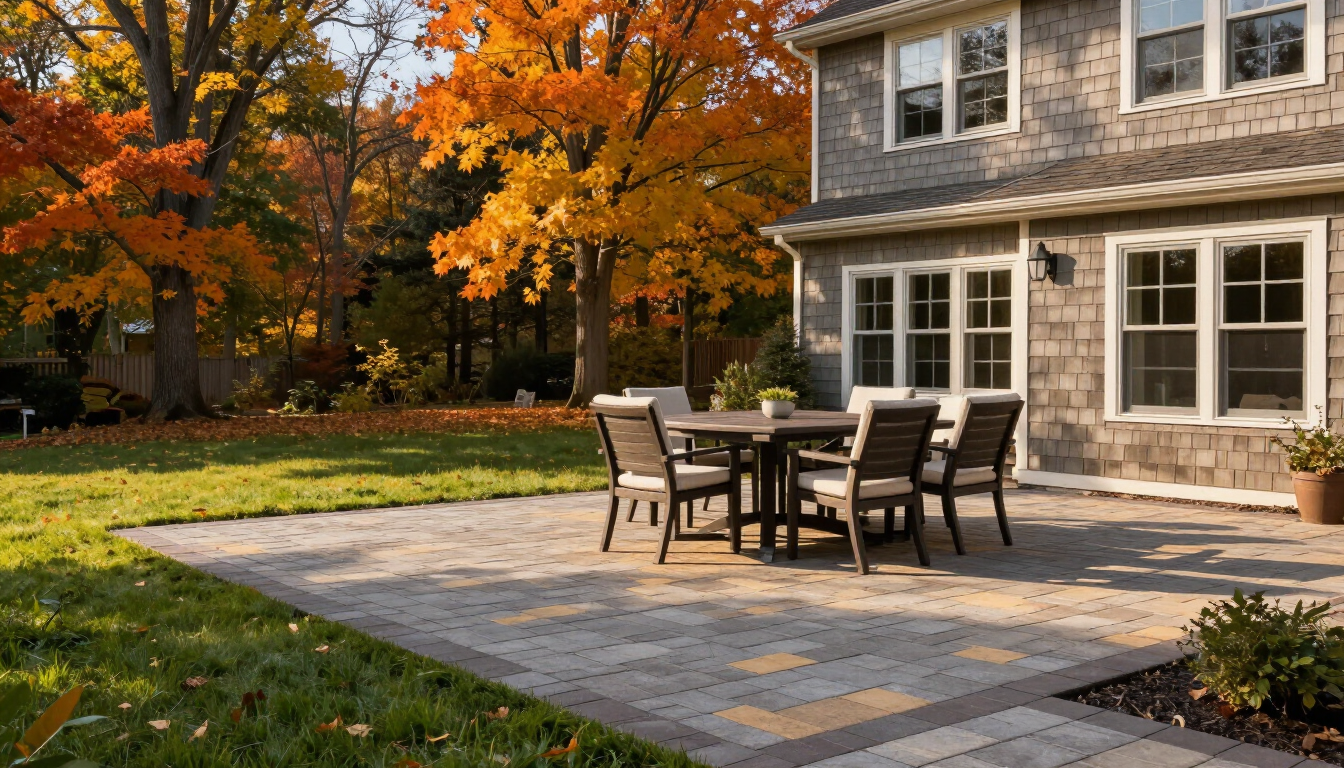
- A paver patio with room for furniture
- A firepit area for cooler evenings
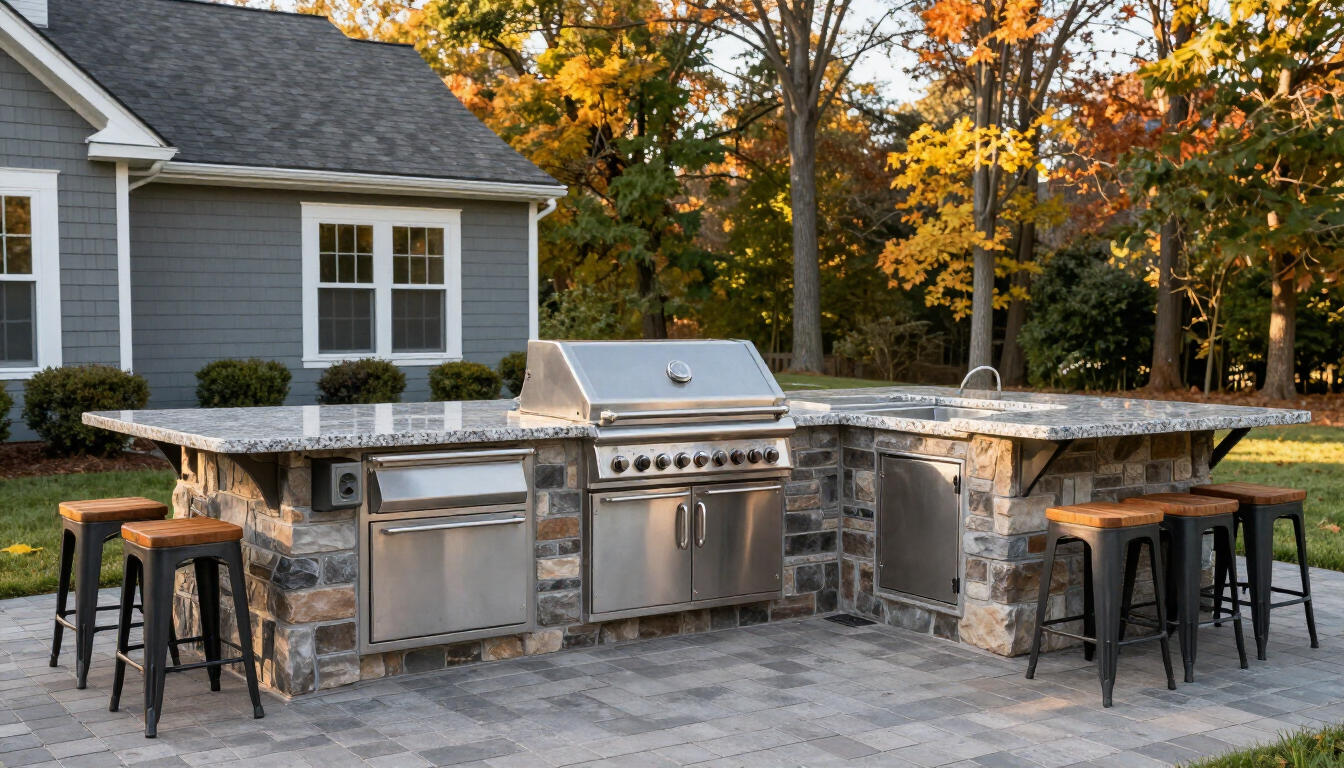
- A grill or outdoor kitchen zone
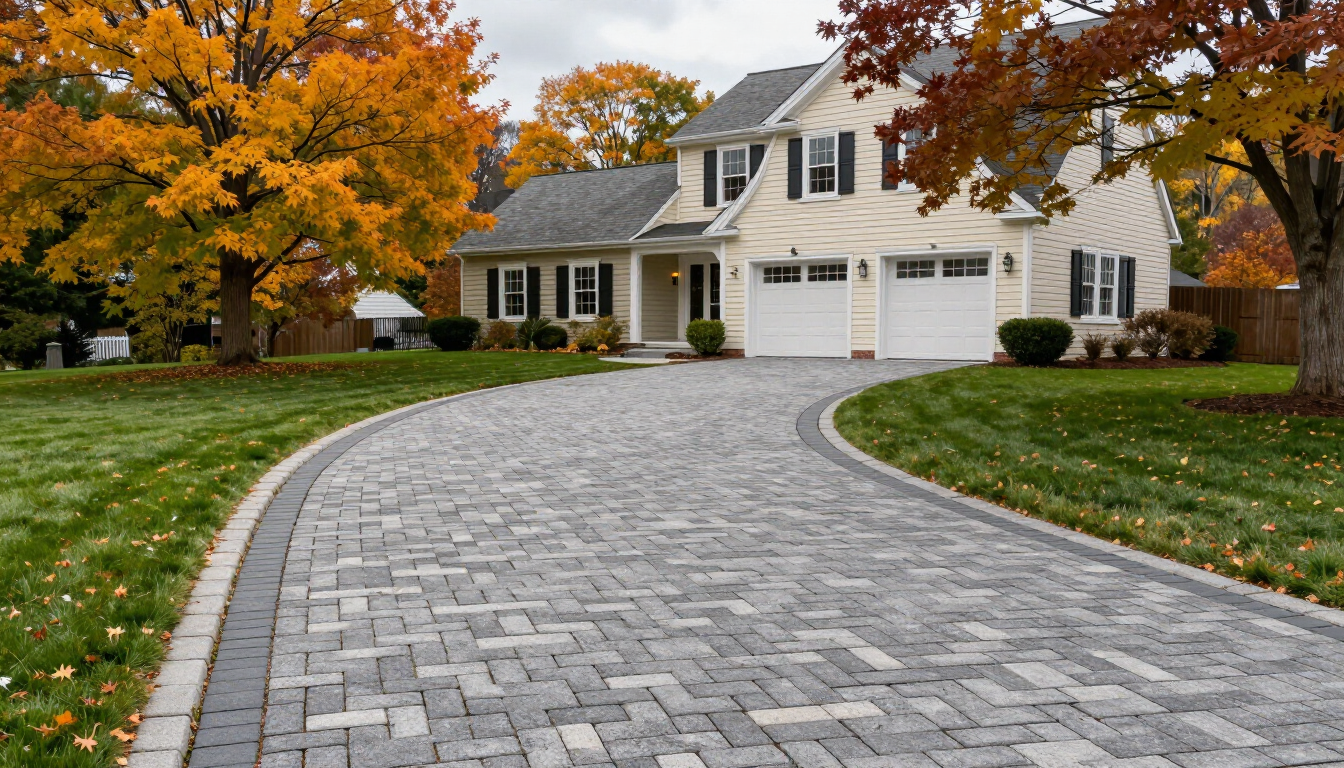
- A walkway connecting the patio to the driveway, pool, or garden
- A multi-level layout for a sloped backyard
- A low-maintenance outdoor living space
This step helps avoid overspending on features you will not use. It also helps prevent a patio that looks attractive but feels awkward once furniture, people, and everyday movement are added.
For example, a family that regularly hosts guests may need wider walkways, more open space, and a layout that separates cooking from seating. A homeowner who wants a simple backyard retreat may prefer a smaller patio with clean edging, privacy planting, and enough room for a table or lounge chairs.
Look at the Shape and Grade of Your Yard
Not every backyard in Farmingville is flat or simple to build on. Some yards slope away from the house, hold water after storms, or have uneven ground from older landscaping. These conditions do not mean a patio is impossible, but they do affect the design.
A proper site evaluation should look at:
- The slope of the yard
- Existing soil and drainage issues
- Access for excavation equipment
- Nearby trees and roots
- The distance from the house
- Existing steps, stoops, fences, or walkways
- How water moves across the property
A sloped yard may need patio steps, retaining walls, raised edges, or a multi-level patio design. These features help the space feel intentional instead of forced. They can also make the patio safer and more comfortable to use.
This is where a local patio contractor matters. Farmingville properties can vary from open backyards to tight side access and older surfaces that need removal. Planning around those details early can prevent delays once the project starts.
Choose Patio Materials That Suit the Property
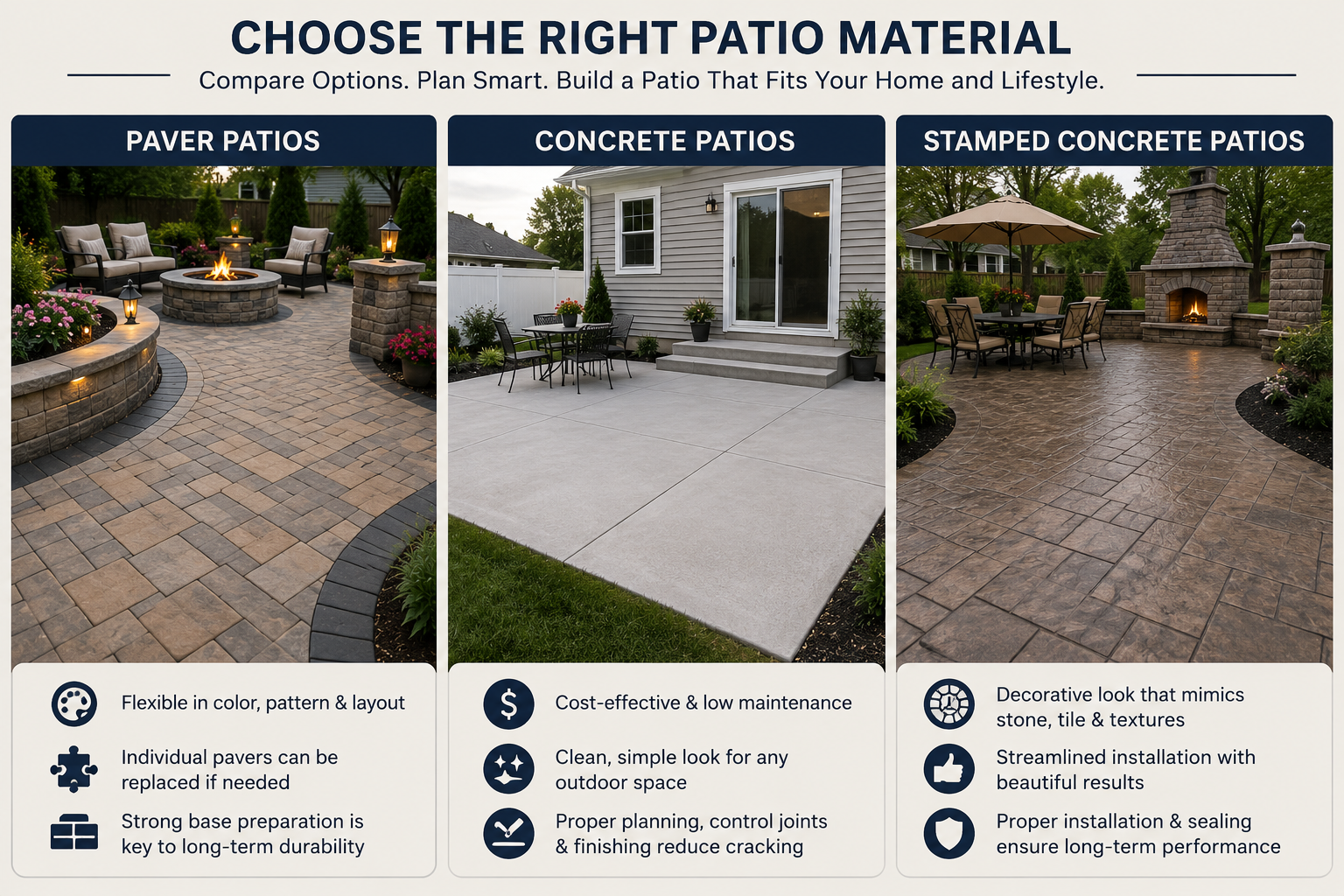
Material choice affects the appearance, cost, maintenance, and long-term performance of the patio. There is no single best option for every home. The right choice depends on budget, design goals, weather exposure, and how much maintenance you want to manage.
Paver Patios
Paver patios are popular because they offer flexibility in color, pattern, and layout. They work well for traditional and modern homes, and individual pavers can often be replaced if one becomes damaged or uneven.
A paver patio also allows more design variation. Borders, patterns, curves, and contrasting colors can help the patio feel connected to the house and landscape. The key is proper base preparation. Without a strong compacted base, even quality pavers can settle or shift.
Concrete Patios
Concrete patios are often chosen for clean, practical outdoor spaces. They can be cost-effective and low maintenance when installed correctly. A standard concrete patio may suit homeowners who want a simple surface for seating, dining, or general backyard use.
Concrete needs careful planning because it is a poured surface. Control joints, base preparation, and proper finishing help reduce cracking and improve durability.
Stamped Concrete Patios
Stamped concrete patios give homeowners a more decorative look. They can mimic stone, tile, or textured finishes while keeping the installation more streamlined than some higher-end materials.
Stamped concrete can be a good choice when you want visual detail, but it should be installed by a contractor who understands finishing, sealing, and proper surface preparation. Poor installation can lead to cracking, uneven color, or premature wear.
Plan Drainage Before Installation Begins
Drainage is one of the most important parts of patio planning in Farmingville NY. Rainwater needs somewhere to go. If the patio is pitched incorrectly, water may collect on the surface, sit near the foundation, wash soil into the patio, or create slippery areas.
Drainage should be planned before installation begins, not corrected after water starts pooling.
A contractor should consider:
- How water moves away from the house
- Whether the patio needs a slight pitch
- Where runoff will go during heavy rain
- Whether soil or mulch may wash onto the patio
- How the base will handle moisture
- Whether nearby landscaping affects drainage
Think About Long Island Weather
Long Island weather brings rain, humidity, snow, ice, and freeze-thaw cycles. When moisture gets into weak areas and freezes, it can expand and create movement in the surface.
Common problems from poor installation include:
- Sinking pavers
- Cracked concrete
- Uneven patio edges
- Water pooling near the home
- Loose steps or borders
- Surface movement after winter
The material matters, but the installation matters more. A deep, compacted base, proper excavation, correct grading, and strong edging all help the patio stay stable. Shortcuts may not show immediately, but they often appear after the first harsh season.
Decide Whether to Add Features Now or Later
Some patio additions are easier to include during the original build. If you think you may want a firepit, seat wall, outdoor kitchen, retaining wall, or walkway connection, it is worth discussing those features before installation starts.
Adding features later can sometimes require cutting into the finished surface, disturbing the base, or changing the layout. Planning ahead allows the patio contractor to design the space as one complete outdoor living area.
Popular additions include:
- Built-in firepits
- Seat walls
- Retaining walls
- Outdoor kitchens
- Patio steps
- Walkways
- Grill areas
- Lighting preparation
- Raised planting beds
You do not need to include every feature at once, but the layout should leave room for future upgrades. For example, a patio can be designed with enough open space for a later firepit or with a walkway that can eventually connect to another backyard feature.
Understand What Affects Patio Cost
Patio cost depends on more than square footage. Two patios of the same size can have very different prices because of material choice, ground conditions, access, and design complexity.
The main cost factors include:
- Patio size
- Paver, concrete, or stamped concrete selection
- Excavation depth
- Existing surface removal
- Drainage work
- Soil conditions
- Yard access
- Steps or retaining walls
- Built-in features
- Pattern or border complexity
The most reliable way to understand cost is through an on-site estimate. Photos can help start the conversation, but a contractor needs to see the yard, check access, assess drainage, and understand the homeowner’s goals.
Work With a Local Patio Contractor
A patio requires thoughtful planning, material guidance, proper excavation, drainage control, and careful installation.
Working with a local patio contractor in Farmingville helps because they understand Suffolk County properties, Long Island weather, and the common issues that affect outdoor surfaces in the area.
Stonerock Paving & Masonry provides Farmingville patio installation services for homeowners who want a patio built around their space, lifestyle, and long-term use.
Our team handles paver patios, concrete patios, stamped concrete patios, custom layouts, multi-level designs, patio steps, firepits, retaining walls, outdoor kitchens, and related masonry features.
Get a free quote if you want to start with your patio plan.
Plan Your Patio Farmingville Today
Good patio planning in Farmingville NY starts with practical questions. How will the patio be used? Where should water go? What material suits the home? Does the yard need steps, retaining walls, or drainage work? Should future features be planned now?
A patio is a long-term outdoor living investment. When the layout, base, materials, and drainage are handled properly, the finished space can look better, work better, and stay more reliable through changing seasons.
For help planning a durable backyard patio, contact Stonerock Paving & Masonry for patio installation in Farmingville, NY and request a free on-site estimate.
FAQs
How early should I start planning a patio project?
Start planning your patio before peak outdoor season if possible. This gives you time to compare materials, review layout ideas, schedule an estimate, and make better decisions about drainage, access, budget, and any built-in features you may want.
Is a paver patio better than concrete?
A paver patio is easier to repair in sections, while concrete can be a practical choice for simple outdoor spaces. The better option depends on your budget, design preference, maintenance expectations, and how the patio will be used.
Can a patio be installed on a sloped yard?
Yes, a patio can be installed on a sloped yard, but it may need extra planning. Steps, retaining walls, tiered levels, drainage adjustments, or raised edges can help make the finished patio safer, stronger, and more usable.
Should I add a firepit during patio installation?
Adding a firepit during the original patio installation is often easier than adding one later. It allows the contractor to plan seating space, surface support, safe placement, and traffic flow as part of the full patio layout.
What is the most important part of patio installation?
Base preparation is one of the most important parts of patio installation. A properly excavated, compacted base helps prevent sinking, shifting, cracking, and drainage problems, especially in areas exposed to rain, snow, and freeze-thaw weather.
Our Recent Articles