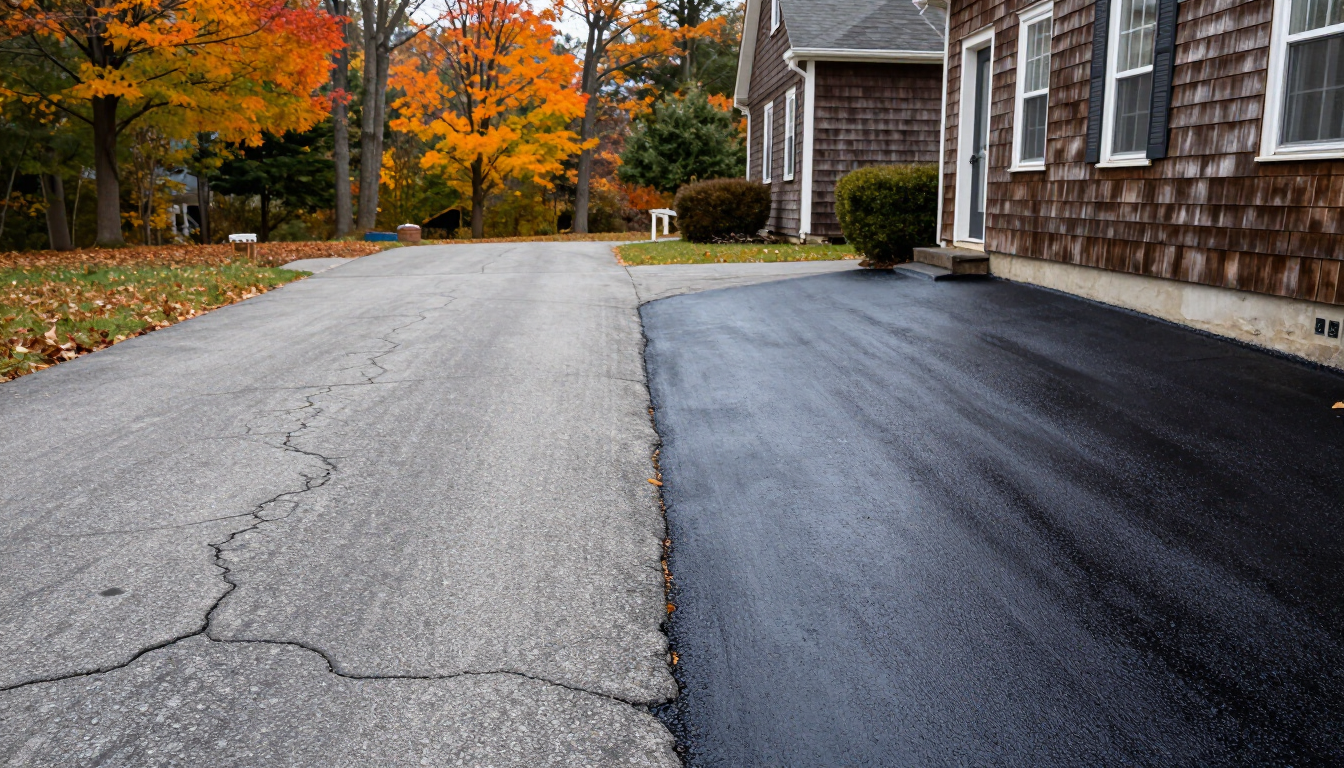
Masonry Repair vs. Replacement: What Farmingville Homeowners Should Know
Masonry repair Farmingville NY homeowners often start with a simple question: can this be fixed, or does it need to be rebuilt? Cracked brick, loose pavers, leaning retaining walls, worn mortar, and uneven stoops can all look minor at first.
However, masonry problems can spread quickly when water, soil movement, and seasonal temperature changes are involved.
For homeowners in Farmingville and across Suffolk County, the right answer depends on more than the visible damage. A small crack may only need repointing, while a sinking walkway or bulging retaining wall may point to a deeper issue under the surface.
Understanding the difference can help you avoid unnecessary replacement, repeated patch repairs, and long-term hardscape problems around your property.
Why Masonry Problems Should Not Be Ignored
Masonry is built to last, but it still depends on proper installation, stable ground, good drainage, and suitable materials. When one of those elements fails, the surface often begins to show signs of movement.
A cracked stoop, loose patio stone, or uneven walkway may not seem urgent. Yet small openings can allow water to enter the joints. Once water gets behind or beneath masonry, it can weaken the base, widen cracks, and create movement during freeze-thaw cycles.
Common masonry problems include:
- Cracked mortar joints
- Loose bricks, stones, or pavers
- Uneven walkways and steps
- Leaning retaining walls
- Sinking patio sections
- White staining or moisture marks
- Poor drainage around hardscapes
The earlier these issues are checked, the easier they usually are to manage. Waiting too long can turn a small masonry repair into a full masonry replacement.
Common Signs Your Masonry May Need Repair
Some masonry issues are cosmetic, while others suggest movement beneath the surface. Knowing the difference helps you decide when to call a masonry contractor Farmingville homeowners can rely on for a proper inspection.
Small Cracks in Mortar or Stone
Small cracks do not always mean a structure is failing. Mortar can wear over time, especially in areas exposed to rain, snow, and changing temperatures. If the crack is thin, isolated, and not spreading, masonry repair may be enough.
However, cracks should not be ignored if they widen, travel across several stones or bricks, or appear near steps, retaining walls, or foundation-adjacent masonry. These signs may point to movement, pressure, or drainage issues.
Loose Pavers, Bricks, or Stones
Loose materials are often a sign that the base underneath has shifted. This can happen when the ground was not compacted properly, water washed away bedding material, or the area was not built for the level of use it receives.
For example, paver repair may be simple if only a few units have shifted. The affected pieces can sometimes be lifted, the base corrected, and the pavers reset. If large sections are moving, the issue may be deeper.
Uneven Stoops or Walkways
Uneven stoops, steps, and walkways are more than appearance issues. They can become trip hazards and may continue to sink if the base is unstable.
Stoop repair may involve resetting stone, repairing mortar, correcting drainage, or rebuilding part of the structure. If the stoop is pulling away, settling heavily, or cracking repeatedly, replacement may be the safer long-term option.
White Staining or Water Marks
White staining on brick, stone, or concrete is often caused by moisture moving through the masonry and leaving mineral deposits behind. This is commonly known as efflorescence.
The staining itself may be cleaned, but the more important question is why moisture is moving through the area. If water is trapped behind a wall, draining toward a patio, or collecting under a walkway, the issue should be corrected before the surface gets worse.
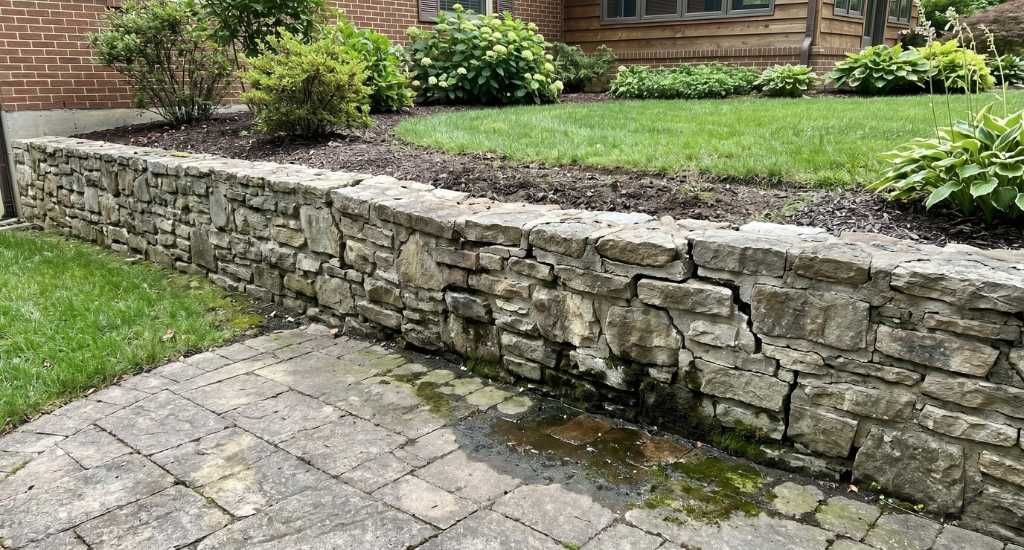
Leaning or Bulging Retaining Walls
A leaning retaining wall is one of the more serious masonry warning signs. Retaining walls hold back soil, which means they deal with constant pressure. When drainage behind the wall is poor, water adds even more force.
Retaining wall repair may be possible if the movement is minor and the structure is still stable. If the wall is bulging, separating, or leaning noticeably, replacement may be needed to rebuild it with proper base preparation, drainage, and support.
When Masonry Repair Is Usually Enough
Masonry repair is often the right choice when the damage is limited and the structure underneath is still sound. In many cases, a skilled contractor can restore the affected area without tearing everything out.
Repair may be enough when:
- Damage is limited to a small section
- Mortar joints are worn but the structure is stable
- A few pavers, bricks, or stones need resetting
- Cracks are minor and not spreading
- Drainage can be corrected early
- The base remains firm
- The surface is mostly level
For example, a walkway with several loose pavers may only need localized hardscape repair. A patio with a few settled stones may be lifted and reset if the surrounding base is still stable. Worn mortar around brick or stonework may be repaired through repointing.
The key is understanding whether the visible problem is isolated or connected to a bigger issue. Repair works best when the cause of the damage is addressed at the same time.
Why Drainage Matters in Masonry Repair
Drainage is one of the biggest factors behind masonry damage. Many cracks, sinking areas, and wall failures begin because water is not moving away from the structure properly.
When water collects under a patio or walkway, it can soften the base and cause sections to settle. When water collects behind a retaining wall, it creates pressure that pushes against the wall. During cold weather, trapped water can freeze, expand, and make cracks worse.
Good drainage planning may include:
- Proper grading away from the home
- Drainage stone behind retaining walls
- Correct base preparation under pavers
- Downspout redirection
- Stable edge restraints
- Open joints or suitable drainage paths
- Avoiding low spots where water can sit
For Long Island masonry, drainage matters because outdoor surfaces deal with rain, moisture, winter conditions, and seasonal ground movement. Even durable stone, brick, and pavers can fail if water is trapped in the wrong place.
How a Masonry Contractor Assesses the Problem
A professional masonry contractor does more than look at the crack or loose stone. The goal is to understand what caused the issue and whether the structure is still stable.
An inspection may consider:
- Where water flows during rain
- Whether the base has settled
- How large and deep the cracks are
- Whether the wall, stoop, or patio is moving
- Soil conditions around the area
- Age and condition of the materials
- Safety risks
- Whether repair will hold long term
For homeowners dealing with cracked stonework, shifting pavers, stoop damage, or retaining wall concerns, working with a local masonry contractor in Farmingville, NY can help determine whether repair or replacement is the better long-term option.
This matters because the cheapest fix is not always the most cost-effective one. A small repair is useful when it solves the problem. However, if the base or drainage has failed, a surface patch may only hide the issue for a short time.
Masonry Repair Cost Factors in Farmingville, NY
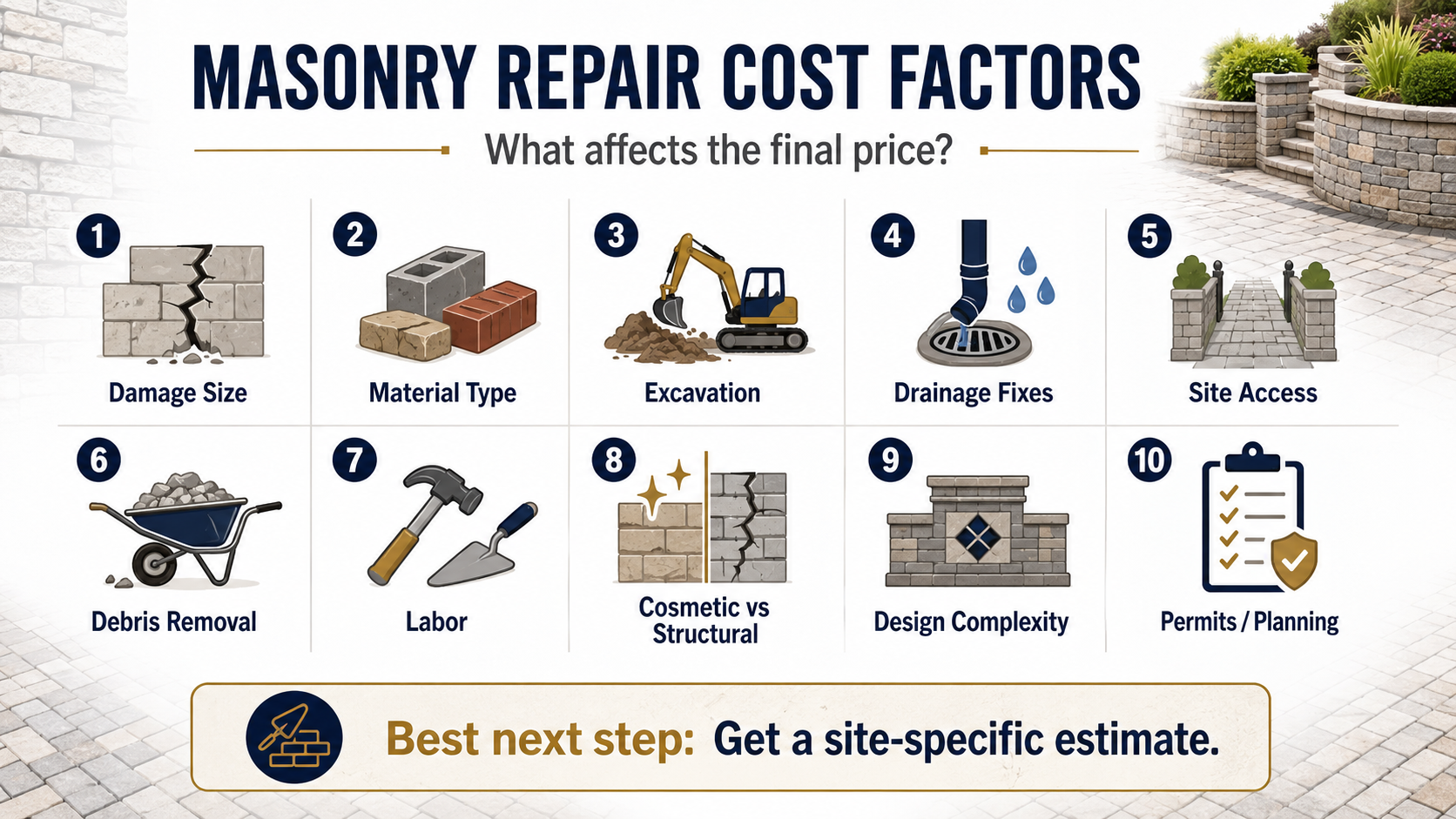
The cost of masonry repair Farmingville NY homeowners may need depends on the type of problem, the materials involved, and how much preparation is required. Small mortar repairs usually cost less than rebuilding a retaining wall or resetting a large paver area.
Several factors affect pricing:
- Size of the damaged area
- Type of masonry material
- Depth of excavation needed
- Drainage corrections
- Access to the work area
- Removal of damaged materials
- Labor required
- Whether the issue is cosmetic or structural
- Complexity of the design
- Whether permits or additional planning are needed
A small paver repair near a walkway may be straightforward. A leaning retaining wall, sunken patio, or damaged stoop may require more work because the contractor must address the structure behind or beneath the visible surface.
The best approach is to get a site-specific estimate. Photos can help start the conversation, but masonry often needs an in-person inspection to understand the cause of the damage.
How to Prevent Future Masonry Damage
Good maintenance can help extend the life of masonry surfaces. While not every problem can be prevented, regular checks can catch early warning signs before they become larger repairs.
Homeowners can help protect outdoor masonry by:
- Watching for pooling water after rain
- Keeping joints clear of weeds
- Redirecting downspouts away from hardscapes
- Repairing small cracks early
- Avoiding heavy loads on surfaces not built for vehicles
- Cleaning surfaces with suitable methods
- Checking retaining walls for leaning or separation
- Calling a contractor when movement first appears
It is also important not to rely on quick patching when the same problem keeps returning. Repeated cracks, sinking areas, and loose stones usually mean there is a deeper issue that needs to be corrected.
Get the Right Masonry Fix Before the Problem Gets Worse
Masonry repair and replacement are not one-size-fits-all decisions. A cracked joint, loose stone, or uneven paver may be simple to fix if the structure underneath is stable. However, leaning walls, sinking sections, poor drainage, and repeated cracking often need a deeper solution.
If your masonry is shifting, cracking, sinking, or starting to separate, Stonerock Paving & Masonry can inspect the issue and explain whether repair or replacement makes more sense for your Farmingville property. A proper assessment helps you avoid temporary patchwork and choose a solution built for long-term use.
For masonry repair Farmingville NY homeowners can approach with confidence, contact Stonerock Paving & Masonry today to schedule a free estimate
Can cracked masonry be repaired?
Yes, cracked masonry can often be repaired if the damage is small and the structure underneath is stable. If cracks are spreading, widening, or linked to movement, a contractor should inspect the area before patching or repointing is done.
How do I know if my retaining wall needs replacement?
A retaining wall may need replacement if it is leaning, bulging, separating, or allowing soil to wash through. These signs often point to drainage pressure or structural movement that simple patching may not solve safely or permanently over time.
Why do masonry surfaces sink over time?
Masonry surfaces often sink because the base was not compacted properly, water washed out support material, or soil shifted underneath. The surface problem is usually a sign of movement below, so resetting alone may not always fix it.
Is masonry repair cheaper than replacement?
Masonry repair is usually cheaper when the damage is small and the structure is still sound. Replacement may be better value if the same issue keeps returning or the base, drainage, or wall structure has already failed badly.
When should I call a masonry contractor?
Call a masonry contractor when cracks grow, stones loosen, steps become uneven, or walls begin to lean. Early inspection can prevent a small repair from becoming a larger replacement project and help you understand the safest next step.
Our Recent Articles