Why June Is a Good Time to Upgrade Walkways and Front Steps
June is a practical month to look at the parts of your home that people use first. Walkways, front steps, porch landings, and entry paths often take daily wear, but many homeowners only notice them when a crack spreads or a step starts to shift.
By June, winter damage is easier to see. Spring rain has already shown where water collects, weeds have started growing through gaps, and uneven sections become more noticeable as the front of the home gets more use.
For Long Island homeowners, walkway and front step repair can improve safety, curb appeal, and everyday access before summer visitors, deliveries, outdoor plans, and family gatherings become more frequent.
Why June Makes Walkway Problems Easier to Spot
June gives you a clearer view of how your front entrance is really performing. The weather is warmer, the ground is drier for longer periods, and plants around the walkway have started filling in.
That makes it easier to notice problems such as:
- Pavers that have shifted out of line
- Cracked concrete or stone
- Loose step edges
- Low spots that hold water
- Weeds growing through joints
- Uneven sections near the driveway or porch
- Edging that has started to separate
These signs may seem small, but they often affect how the entrance feels and functions. A front walkway should guide people safely from the driveway, sidewalk, or curb to the front door. When the surface is uneven or worn, the entrance can feel neglected.
Walkway and Front Step Repair Before Summer Use Increases
Summer usually brings more foot traffic. Guests come over more often, children play outside, delivery drivers use the front path, and homeowners spend more time moving between the house, yard, and driveway.
That extra use can make existing damage worse. A loose paver may shift more. A cracked step may become less stable. A sunken walkway section can hold more water after storms.
Walkway and front step repair is best handled before these problems become larger. When repairs are done early, the work can improve both the look and safety of the front entrance.
A good repair may include:
- Resetting uneven pavers
- Rebuilding loose or damaged steps
- Replacing cracked stone or concrete sections
- Improving the base beneath the walkway
- Correcting drainage around the entrance
- Adding clean edging for better support
Front Steps Affect More Than the First Impression
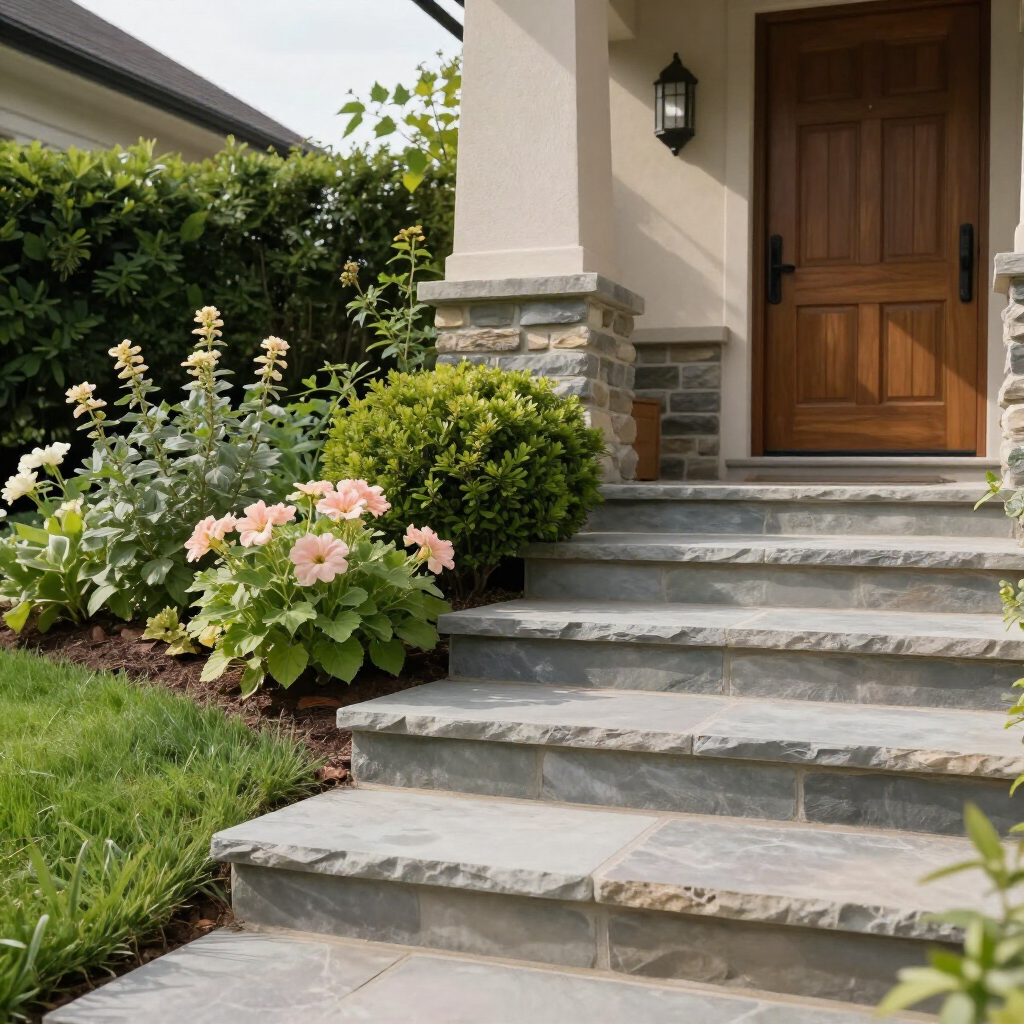
Front steps are one of the most used masonry features on a home. They handle daily foot traffic, packages, weather, and seasonal movement. When they start to crack, tilt, or loosen, the issue affects more than appearance.
Steps need the right height, depth, support, and surface condition. If one step feels uneven, people notice it right away. It can make the entrance less comfortable for older family members, children, or visitors carrying bags.
Common step issues include:
- Loose caps
- Cracked risers
- Worn edges
- Uneven landing areas
- Gaps near the house
- Water sitting on the step surface
- Mortar joints breaking down
June is a good time to repair front steps because the weather usually allows cleaner masonry work. It also gives homeowners time to fix access problems before summer events, holidays, and outdoor gatherings.
How Winter and Spring Weather Leave Damage Behind
Long Island homes deal with changing weather throughout the year. Winter freezing, thawing, snow clearing, rain, and ground movement can all affect walkways and steps
.
During colder months, water can enter small cracks or joints. When temperatures drop, that moisture can expand. Over time, this can push materials apart or weaken the base underneath.
By spring, rain can expose drainage issues. Water may run toward the steps, pool along the walkway, or wash soil away from the edges. By June, the results become easier to see.
Curb Appeal Starts at Ground Level
Many curb appeal updates focus on paint, planting, lighting, or front doors. Those details matter, but the ground surface often has the biggest impact on how finished the home looks.
A cracked walkway or damaged step can make the front entrance look older, even when the rest of the home is well kept. Clean paving and solid masonry help the property feel cared for from the street.
A walkway upgrade can improve curb appeal by adding:
- A neater route to the front door
- Better contrast with the lawn and planting
- A stronger frame for the entrance
- A cleaner transition from driveway to porch
- A more finished look around the home
Stone, pavers, brick, and concrete can all work depending on the property style. The right choice depends on the house, the existing hardscape, the level of use, and the maintenance homeowners want.
For Long Island homes, materials should suit both the look of the property and the weather they need to handle.
Drainage Should Be Part of the Upgrade
Walkway and step problems often come back when drainage is ignored. Water needs somewhere to go. If it sits on the surface or flows toward the foundation, the new work may wear faster than expected.
A proper upgrade should look at how water moves around the entrance. The surface should be graded so rain can drain away from the home and off the walkway.
Drainage issues can show up as:
- Puddles after rain
- Soil washing onto the walkway
- Green growth on damp sections
- Loose pavers near low spots
- Ice forming in the same areas during colder months
- Water collecting near the bottom step
June makes these issues easier to review because summer storms can show how the surface handles sudden rainfall. If water keeps collecting in the same place, the layout, slope, base, or nearby landscaping may need to be adjusted.
Give Your Front Entrance the Attention It Needs
Walkways and front steps work hard every day. They guide people to the home, support daily access, and shape the first impression of the property. When they crack, shift, or hold water, the front entrance can feel less safe and less finished.
June is a smart time to address these issues. The damage from winter and spring is easier to see, the weather is better for masonry and paving work, and summer use has only started to build.
Stonerock Paving and Masonry can help with walkway and front step repair, new walkway installation, masonry repairs, and full front entrance upgrades. If your steps or walkway are looking worn, uneven, or outdated, contact Stonerock today to schedule a quote.
Why is June a good time to repair walkways and front steps?
June usually makes winter and spring damage easier to see. Cracks, loose pavers, drainage problems, and uneven steps become more noticeable before heavy summer use. It is also a practical time for outdoor masonry and paving work.
What are signs my front steps need repair?
Loose caps, cracked risers, worn edges, gaps near the house, and uneven landing areas can all point to repair needs. If the steps feel unstable or collect water, they should be inspected before the damage spreads.
Can uneven walkway pavers be reset?
Yes, uneven pavers can often be lifted and reset when the base is still in good condition. If several areas are sinking or holding water, the base, drainage, or edge support may need more work.
Should I repair or replace my walkway?
Repair may work for small, isolated damage. Replacement may be better when the walkway has widespread sinking, poor drainage, awkward layout, or repeated repair issues. A site inspection can help decide the right option.
What materials work well for front walkways?
Pavers, natural stone, brick, and concrete can all work for front walkways. The best choice depends on your home’s style, budget, drainage needs, daily use, and how much maintenance you want over time.
Our Recent Articles