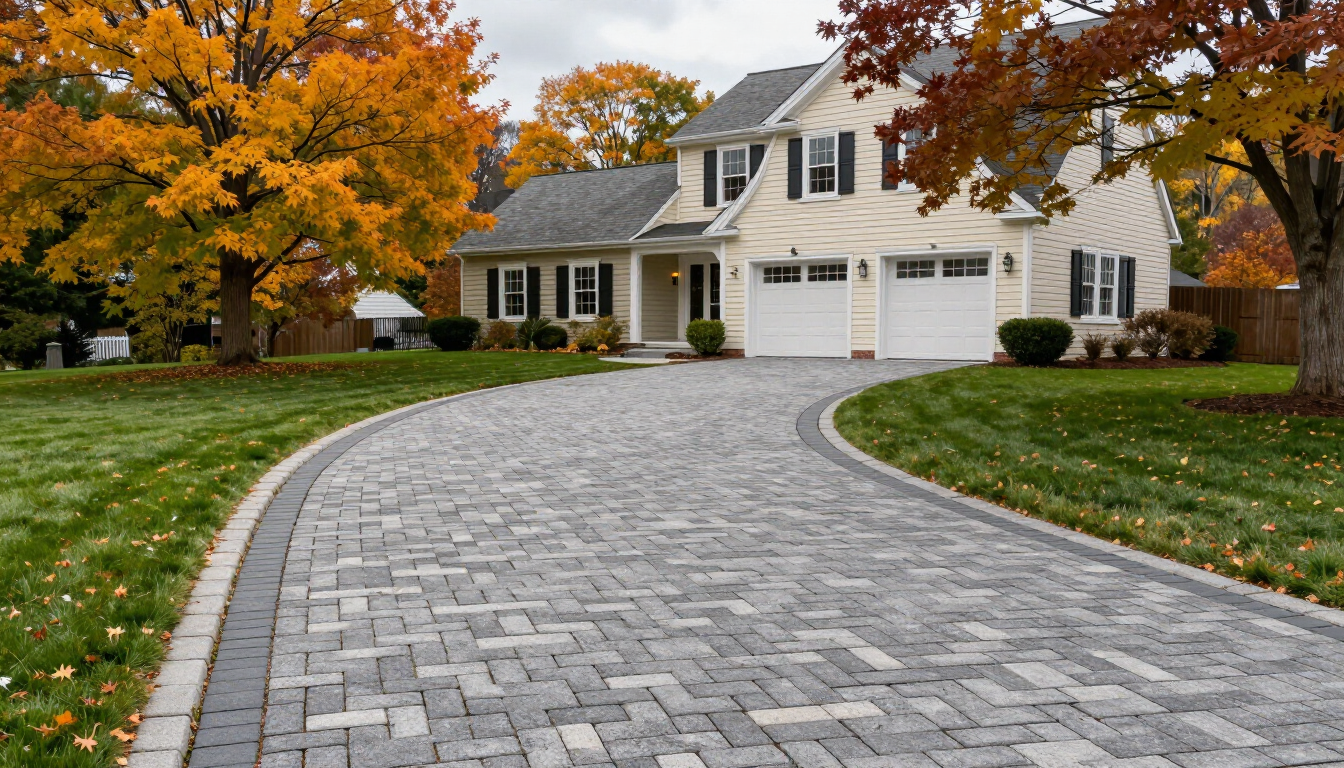
Is Fall a Good Time for Paver Patio Installation on Long Island?
Most patio inquiries arrive between April and June, and most of them come from people who decided last August that they wanted somewhere to sit. The gap between wanting a patio and calling about one costs homeowners an entire season. Fall is a better window than its reputation suggests, and the reasons have more to do with soil and scheduling than with weather comfort.
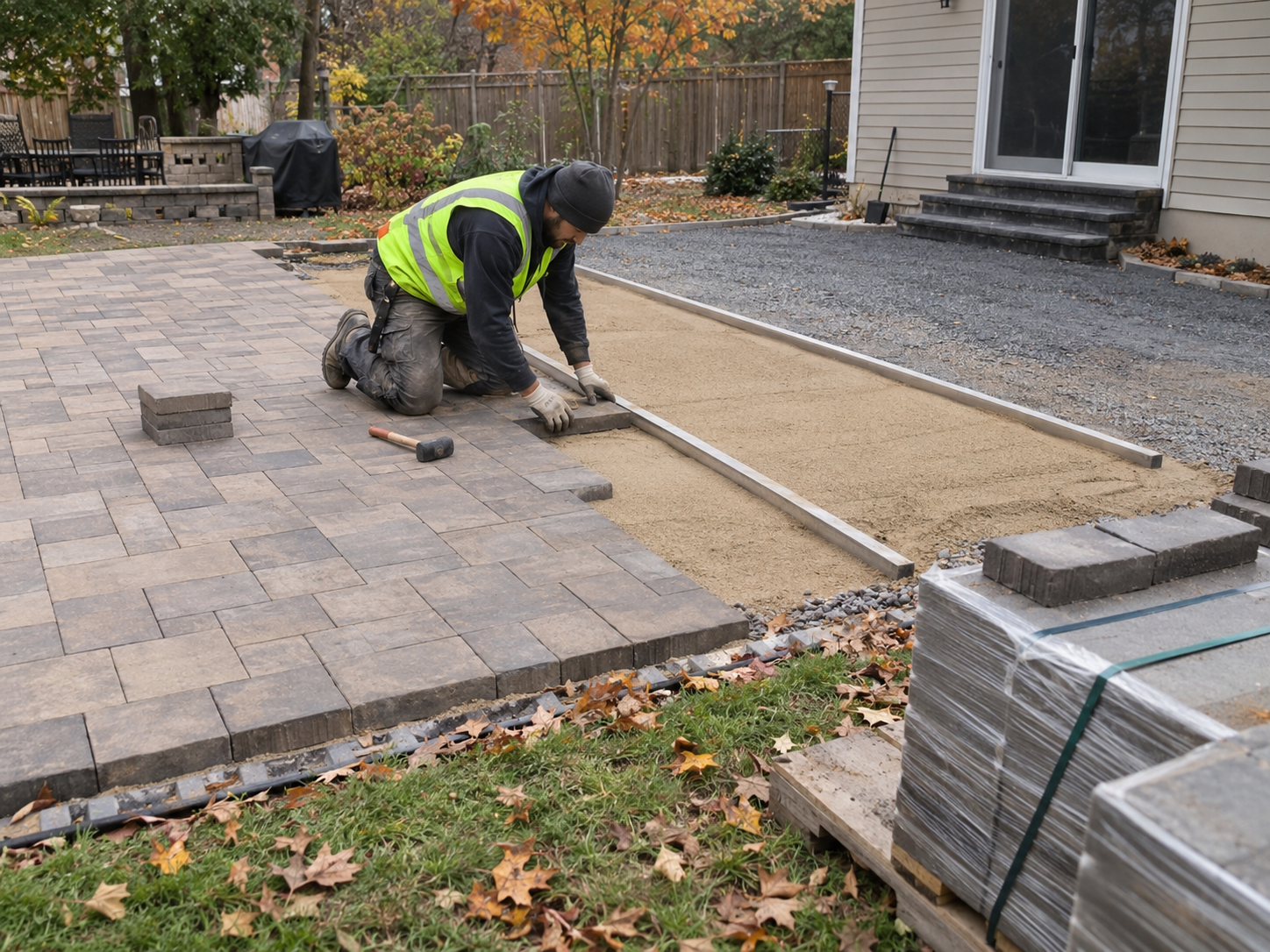
Yes. Early fall is one of the better stretches of the year for installing a paver patio in Suffolk and Nassau County. Ground conditions are typically drier than spring, temperatures suit the work, and crew calendars have opened up after the summer rush.
The limiting factor is not cold air. It is frozen or saturated ground, and that arrives later than most people assume.
Why Fall Conditions Favor Patio Work
Three conditions line up in September and October that rarely appear together at other points in the calendar.
Drier Ground Makes for Cleaner Excavation
Spring ground on Long Island carries months of accumulated snowmelt and rain. Saturated soil is heavier to remove, harder to compact, and more likely to require additional preparation before base material can go down.
By September, the ground has drained through a summer of higher evaporation. Excavation is cleaner, the subgrade compacts more predictably, and there is less chance of discovering a soft area partway through the job.
Cooler Temperatures Suit Both the Crew and the Materials
Patio installation is physical work involving heavy material moved by hand. A crew working in 68 degrees moves faster and more carefully than the same crew in 92 degrees with high humidity.
Materials benefit as well. Polymeric sand, the jointing material used on most paver installations, needs a dry window to activate and cure properly. Fall weather systems tend to move through in identifiable patterns, which makes it easier to schedule that final step with confidence. Summer afternoon thunderstorms are far less cooperative.
The Patio Is Ready When You Want It
A patio finished in October has settled in and is ready for the first genuinely warm weekend in spring. A patio ordered in April is often still a plan in June.
What Fall Does Not Change
Being straightforward matters more than selling the season. Several things are identical regardless of when the work happens.
- Base requirements do not relax. Excavation depth, compaction in lifts, and drainage planning are the same in October as in June. The work that determines whether a patio holds is the base preparation beneath the pavers, and no season shortens it.
- Rain still stops work. Fall brings coastal systems, and base material cannot be compacted properly when saturated.
- Design decisions still take time. Choosing material, pattern, and layout is not a same-week process if you want to be happy with the result.
- Permits and property considerations apply. Setbacks, utility locations, and drainage requirements do not change with the calendar.
How Late in the Year Can a Paver Patio Be Installed?
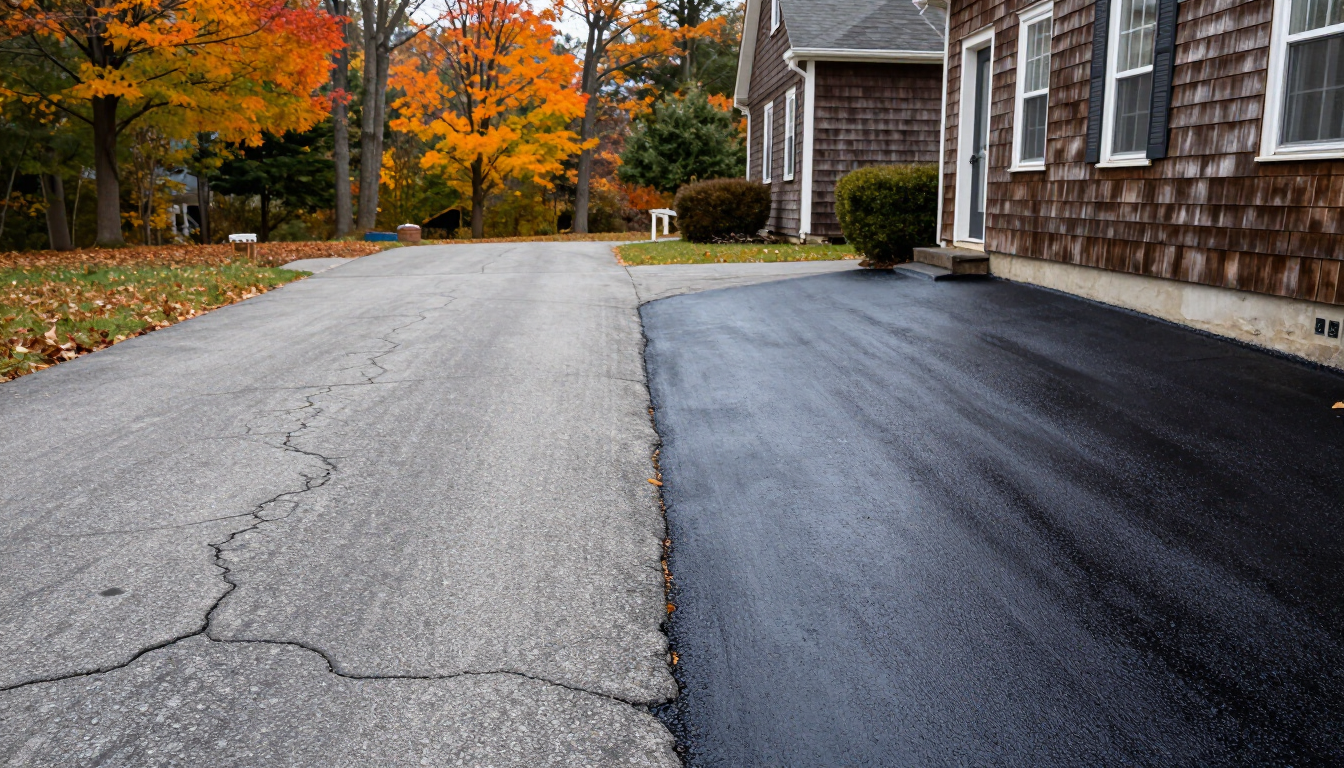
This is where pavers differ meaningfully from asphalt. Hot mix asphalt has a hard temperature cutoff because the material has to be compacted while hot. Pavers have no such constraint. The units are already cured when they arrive.
The real limits are these:
- Frozen ground. Frozen subgrade cannot be compacted reliably. Material placed over it appears solid, then settles when the ground thaws.
- Saturated conditions. Waterlogged soil will not achieve density regardless of how long a compactor runs over it.
- The jointing window. Polymeric sand needs dry conditions and moderate temperatures to set. Late in the season, finding that window becomes the scheduling challenge.
This means paver work often continues later into the year than asphalt paving does. Availability tightens as the season closes, but the material itself is more forgiving.
Choosing a Surface Material
Fall gives you time to think this through rather than deciding under pressure in May. The three common choices behave differently over Long Island winters.
| Concrete Pavers | Natural Stone | Poured Cooncrete | |
|---|---|---|---|
| Freeze-thaw performance | Flexes with ground movement across many joints | Flexes similarly when set on a proper base | Rigid, cracks when the ground shifts |
| Repairability | Individual units can be lifted and replaced | Individual pieces can be reset | Repairs are visible, patching rarely matches |
| Appearance over time | Color options wide, may lighten with sun exposure | Natural variation, weathers gracefully | Uniform, staining and cracking show plainly |
| Surface texture | Manufactured consistency, many finishes | Variation piece to piece | Depends on the finish applied |
None of these is universally correct. A homeowner who wants a specific color and a precise geometric pattern is often better served by concrete pavers. Someone drawn to bluestone's natural variation will not be satisfied with a manufactured substitute.
Layout Decisions Worth Settling Before the Crew Arrives
Changes made on paper cost nothing. Changes made after excavation cost real money.
Size Against Actual Use
Patios are more often built too small than too large. A dining table with chairs pulled out needs considerably more clearance than the table footprint suggests. Walk the space with furniture in mind rather than estimating from a drawing.
How the Patio Connects to Everything Else
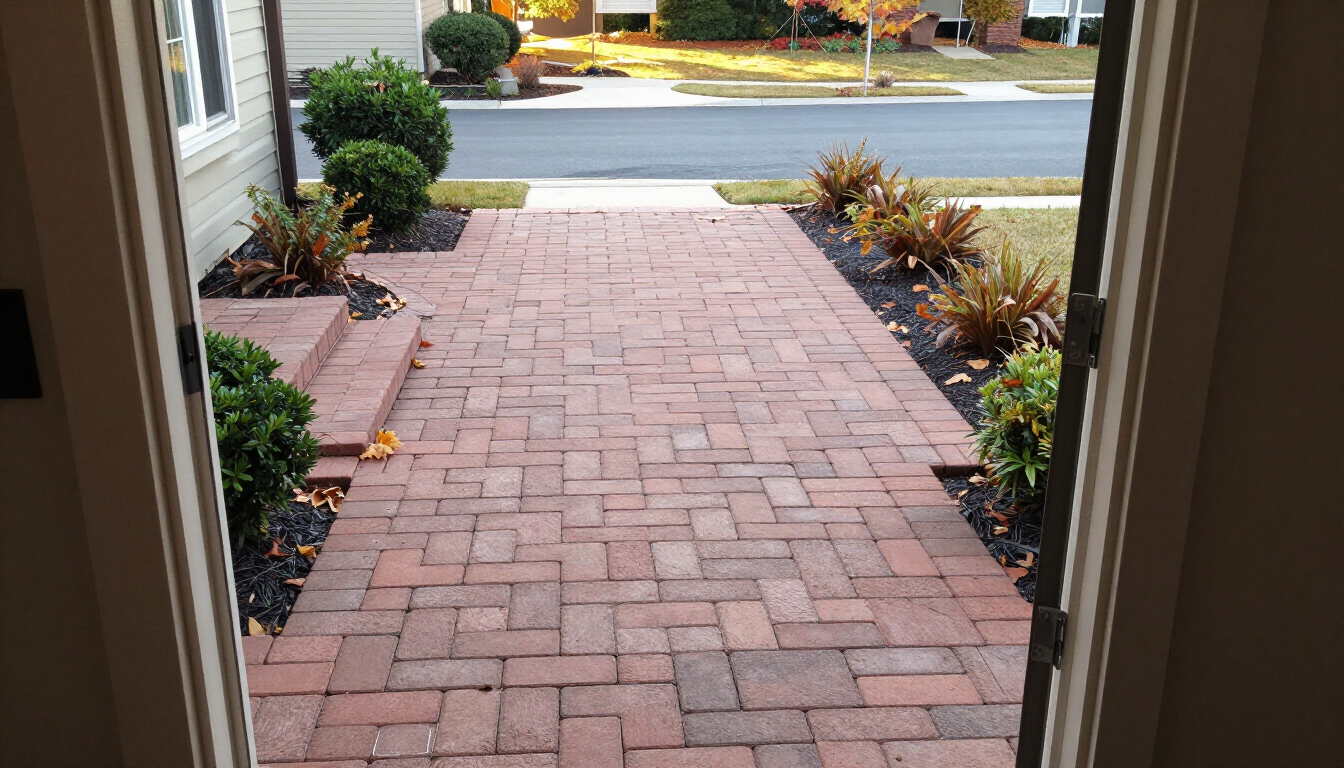
A patio rarely stands alone. Consider how it meets the back door, whether steps are needed, and how people reach it from the driveway or side yard. Connecting walkways and steps built at the same time will match in material and elevation, which is harder to achieve when added a year later.
Where the Water Goes
Every patio needs pitch away from the house. On properties where the yard slopes toward the foundation, that becomes a design question rather than a detail, and it is far cheaper to solve before the base goes in.
Room for What Comes Next
If a firepit, seating wall, or grill area is a possibility in a few years, mention it now. Sizing the base and planning the layout with that future in mind avoids cutting into a finished surface later.
Your Patio's First Winter
A new patio goes into its first cold season shortly after installation, and a few things are worth expecting.
- Minor joint sand settling is normal. Sand compacts into the joints over the first months and may need topping up once.
- A white haze can appear. Called efflorescence, it happens when moisture carries natural salts from within concrete pavers to the surface. It is not a defect and typically weathers away on its own within a year or two, though a specific cleaner will speed the process.
- Be careful with de-icers. Chloride-based rock salt is hard on concrete surfaces, particularly in the first season. Sand for traction is a safer choice, and calcium magnesium acetate is gentler than standard salt.
- Shovel with a plastic blade. Metal edges can chip paver surfaces and scrape joint material out.
Plan Your Patio While the Ground Still Cooperates
Stonerock Paving & Masonry has been building outdoor surfaces across Suffolk and Nassau County for more than 30 years. The team handles layout, drainage, and base work as one plan rather than treating the surface as the whole job, whether that is patio installation services at your property or patio contractors in Medford and surrounding hamlets.
Fall availability narrows as the season progresses. Call (631) 920-3618 or request a free patio estimate to talk through your space.
Frequently Asked Questions
How late in the year can a paver patio be installed?
Later than most homeowners expect. Pavers have no temperature requirement of their own, so the limits are frozen or saturated ground and finding a dry window for the jointing sand. Availability usually closes before the weather does.
Will a new patio settle during its first winter?
Slight joint sand settling is normal and easily topped up. Structural settling is not normal and points to insufficient base depth or compaction. A properly built patio should hold its elevation through freeze-thaw cycles without noticeable movement.
Why does my new paver patio have a white haze on it?
That is efflorescence, natural salts within the concrete carried to the surface by moisture. It appears on new installations, is not a manufacturing fault, and usually fades within a year or two as weather works on it.
Can I use rock salt on a paver patio?
Better to avoid it, especially during the first winter. Chloride-based salts are hard on concrete surfaces over time. Sand provides traction without the chemical exposure, and calcium magnesium acetate is a gentler de-icing option.
Should I install the patio and walkway at the same time?
Where the budget allows, yes. Doing both together means matching materials, consistent elevations, and one mobilization rather than two. Adding a connecting walkway later often results in visible differences in color batch and finish.
Our Recent Articles