Farmingville Driveway Paving Guide: Asphalt Thickness & Base Prep
Why Asphalt Thickness Matters in Farmingville
Driveways in Suffolk County face constant temperature swings. Water seeps into tiny gaps, freezes, expands, and forces the surface apart. That freeze-thaw cycle is one of the main reasons thin driveways fail early.
Think of asphalt like a winter coat. A light jacket works on a cool fall day. It fails in January. The same principle applies to pavement. If the asphalt layer is too thin, it cannot handle vehicle weight or Long Island winters.
For most residential driveways in Farmingville:
- 2.5 to 3 inches compacted asphalt is standard for passenger vehicles
- 3 to 4 inches compacted asphalt is better if trucks, RVs, or heavy equipment are common
Thickness must be measured after compaction, not before. A driveway that starts thick but compacts poorly can still fail.
The Real Foundation: Base Preparation
Asphalt is the visible layer, but the base underneath does most of the structural work. If the base is weak, cracks will form even with thick asphalt.
Proper Excavation Depth
A professional contractor removes unstable soil before building the base. Organic soil, loose fill, and clay pockets must be addressed. Skipping this step is one of the biggest causes of early driveway cracking.
Stone Base Installation
A typical Farmingville residential driveway requires:
- 6 to 8 inches of compacted crushed stone for standard use
- 8 to 12 inches for heavy-use driveways
The stone must be compacted in layers. Dumping it all at once and rolling over it is not enough.
Proper Grading and Drainage
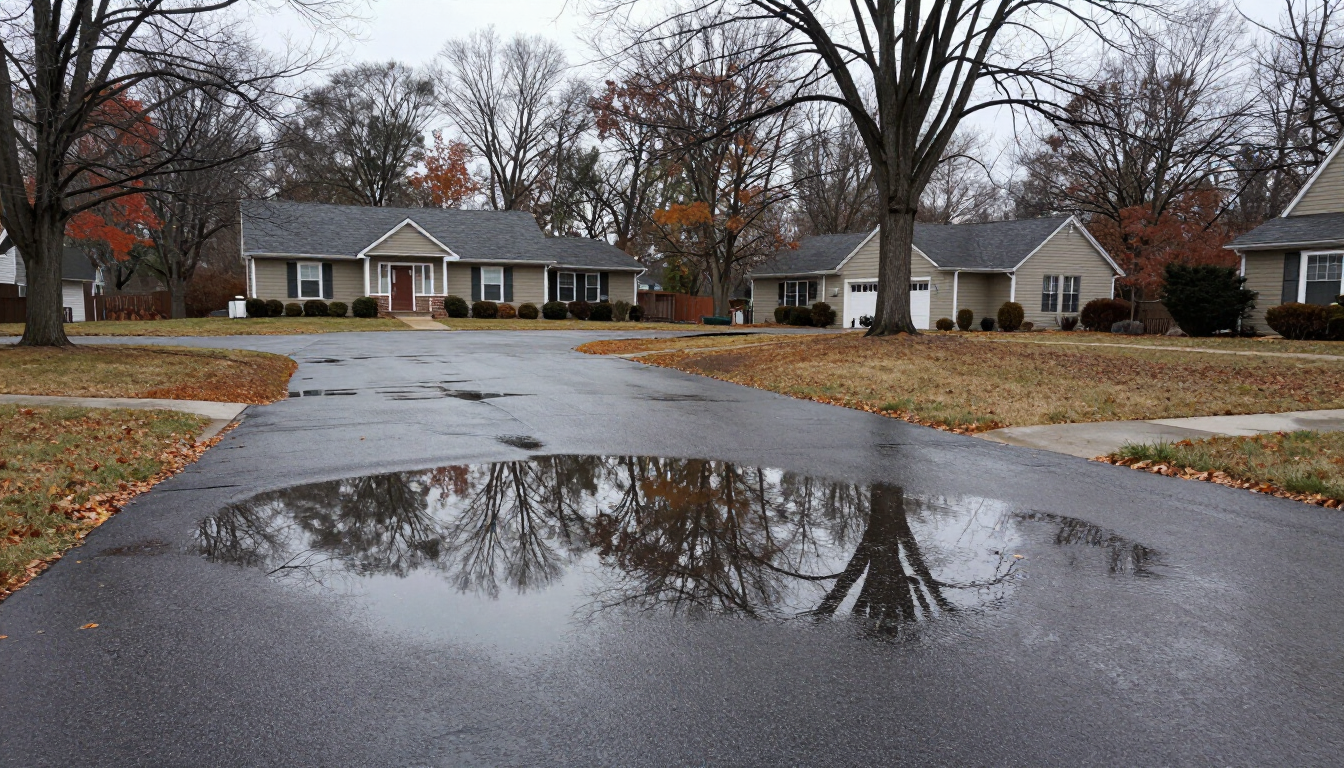
Water is asphalt’s worst enemy. If water pools along the surface or underneath the base, cracks and potholes follow.
Driveways should be graded so water flows away from:
- The home’s foundation
- Garage floors
- Low-lying yard areas
Without proper slope, even thick asphalt will break down.
How Early Cracking Starts
Early cracking usually appears within the first one to three years. That is a red flag. A well-built driveway should last 15 to 20 years with maintenance.
Common causes of early cracking include:
- Insufficient asphalt thickness
- Weak or thin stone base
- Poor compaction
- Water drainage problems
- Heavy vehicles parked in the same spot daily
When asphalt cools, it hardens. If the base shifts beneath it, the surface cannot flex enough to compensate. The result is linear cracks, edge cracking, or spiderweb patterns.
Edge Support: The Overlooked Detail
Driveway edges fail first. Without proper edge support, asphalt begins to crumble along the sides.
Professional installers often:
- Extend the base slightly beyond the asphalt edge
- Compact soil tightly along both sides
- Install Belgian block or concrete borders for added stability
Edge failure spreads inward over time. Protecting the perimeter protects the entire driveway.
The Role of Compaction
Compaction is where many driveways fail quietly. Even good materials can underperform if not compacted properly.
Compaction should happen:
- On the subgrade soil
- On each layer of stone base
- On the hot asphalt immediately after installation
If compaction is rushed, air voids remain. Those voids collect water. Water leads to cracking.
Sealcoating: When and Why It Helps
Sealcoating is maintenance, not a structural fix. It does not correct thin asphalt or poor base preparation.
However, sealcoating can:
- Protect against UV damage
- Slow oxidation
- Reduce water penetration
New asphalt should typically cure for several months before the first sealcoat application. Applying it too soon can trap oils and affect performance.
How Long Should a Farmingville Driveway Last?
With proper installation:
- Residential asphalt driveway lifespan: 15 to 20 years
- With strong base and light use: up to 25 years
The difference between 7 years and 20 years usually comes down to thickness and base work. Cutting corners during installation saves money upfront but costs more in early replacement.
Signs Your Driveway Was Installed Too Thin
Homeowners often notice warning signs early, especially within the first year or two after installation. Thin asphalt may look fine at first, but it begins to show stress once it goes through a full summer and winter cycle.
Common red flags include:
- Tire marks that remain visible
If your driveway holds tire impressions long after a vehicle moves, the asphalt may lack the structural depth to resist weight. Properly installed asphalt should rebound, not “remember” where your car was parked. - Soft areas in hot weather
Asphalt naturally softens in high heat, but it should not feel spongy underfoot. If you can press into it easily or see surface distortion during summer, the layer may be too thin to handle normal vehicle loads. - Cracks forming within the first winter
Freeze-thaw cycles put stress on pavement. However, cracking in the first winter often signals insufficient thickness or weak base support beneath the asphalt. - Edges breaking apart
When the asphalt layer is too thin, edges crumble first. Without enough structural depth, the sides cannot support the load and begin to crack or chip away.
If you see these signs within the first year or two, the issue is usually structural rather than cosmetic. Surface sealers will not correct the problem. In most cases, the thickness or base preparation underneath the asphalt was not adequate for Farmingville conditions.
Why Professional Installation Makes a Difference
Hiring an experienced contractor reduces the risk of early cracking. Proper grading, material selection, and compaction require skill and equipment.
Stonerock Paving & Masonry has over 30 years of experience serving Farmingville and surrounding Long Island communities. Their team focuses on correct base depth, drainage planning, and proper asphalt thickness to ensure long-term performance.
A professionally installed driveway is like a well-built road. You do not see what is underneath, but that hidden structure determines how long it lasts.
What Farmingville Soil Conditions Mean
Parts of Suffolk County contain sandy soils, while other areas have clay-heavy sections. Sandy soil drains well but shifts more easily. Clay holds water and expands during freezing temperatures.
That is why base thickness and compaction must match site conditions. One-size-fits-all installation does not work in real neighborhoods.
Visual Example: Asphalt Layers Explained
These images show:
- The layered structure of a driveway
- Proper stone base installation
- Asphalt compaction during installation
- Edge cracking caused by poor support
Understanding these layers helps homeowners see why base prep matters as much as surface appearance.
Budgeting for Proper Installation
Driveway costs in Farmingville vary based on:
- Excavation requirements
- Base thickness
- Asphalt thickness
- Driveway size and layout
- Drainage corrections
Cheaper bids often reduce stone depth or asphalt thickness. That decision usually leads to cracking within a few winters.
Investing in correct base prep protects your property value and prevents premature replacement.
How to Avoid Early Cracking
To summarize the key prevention steps:
- Ensure 2.5 to 4 inches of compacted asphalt
- Install 6 to 12 inches of properly compacted stone base
- Confirm proper grading for water runoff
- Avoid parking heavy vehicles in the same spot
- Sealcoat at appropriate intervals
A driveway should not feel soft in summer or crack after one winter. If it does, something beneath the surface was skipped.
Get Expert Farmingville Driveway Paving

If you are planning an asphalt paving in Farmingville or replacing a failing one, focus on structure before surface appearance. Thickness and base prep determine lifespan more than color or finish.
Stonerock Paving & Masonry provides professional Farmingville driveway paving services backed by decades of local experience. Our team of professional installers evaluates soil conditions, drainage patterns, and vehicle load requirements before installation begins.
A properly built driveway should feel solid, drain correctly, and stay crack-free for years. If you are investing in Farmingville driveway paving, make sure what is beneath the surface is done right.
Request a consultation to ensure your driveway is built to last through Long Island winters.
Our Recent Articles