Fall Asphalt Paving in Suffolk County: Why September Is the Smart Booking Month
Most homeowners think about their driveway twice a year: once in spring, when the winter damage is impossible to ignore, and once in fall, when they decide it can wait until spring. That second decision costs more than the first one saves. September gives Suffolk County property owners a short, favorable stretch of paving weather, and the calendar closes on it faster than most people expect.
Asphalt Is a Temperature-Sensitive Material
Paving is not a job that can happen on any dry day. Hot mix asphalt is a material with a working clock, and temperature controls how much time the crew gets before that clock runs out.
How Hot Mix Behaves After It Leaves the Plant
Asphalt arrives on site somewhere near 275 to 300 degrees Fahrenheit. From the moment it is spread, it starts cooling, and compaction has to be finished while the mat is still hot enough to move under the roller. Once it drops below roughly 175 to 185 degrees, the aggregate locks in place and the rollers stop achieving real density.
Density is what makes a driveway last. An under-compacted mat holds more air voids, water finds those voids, and freeze-thaw cycles pry them open into cracks. The surface can look perfectly fine in November and start failing by March.
Why Ground Temperature Matters as Much as Air Temperature
Air temperature gets all the attention, but the ground underneath pulls heat out of a fresh mat faster than the air above it does. Pour hot coffee into a cold ceramic mug and it cools far quicker than the same coffee in a warm one. A driveway base works the same way.
In September, Suffolk County soil is still holding summer warmth. By late November that same base has cooled substantially, and a crew that had twenty minutes of rolling time in September may have half of that. Thin lifts cool fastest, which is why late-season overlay work is the first thing experienced contractors start declining.
What Makes September a Strong Month to Pave
Several conditions line up in September that rarely appear together at any other point in the year.
- The base is still warm. Soil temperatures lag air temperatures by several weeks, so early fall ground behaves much more like August than the thermometer suggests.
- Humidity drops. Drier air helps the surface set cleanly and reduces the tacky, slow-curing finish common in humid midsummer conditions.
- Rain windows are more predictable. Summer afternoon storms scatter schedules. Early fall weather systems tend to move through in identifiable stretches, which makes it easier to book a firm date.
- Crew availability improves. The summer rush thins out after Labor Day, before the pre-winter scramble begins.
- The surface cures before it gets tested. A driveway installed in September has weeks of moderate weather to harden before the first hard freeze arrives.
That last point matters most. Asphalt continues to firm up for months after installation, and giving it a gentle first season is the difference between a driveway that ages well and one that scars in its first winter.
Fall Paving Compared With Waiting for Spring
Both seasons can produce good work. The difference is in what happens to your existing surface in between, and what the schedule looks like when you finally call.
| Factor | Paving in September | Waiting until Spring |
|---|---|---|
| Base temperature | Still warm, generous compaction window | Cold and often saturated from snowmelt |
| Subgrade moisture | Typically drier and more stable | Frequently soft, sometimes requiring extra prep |
| Existing damage | Removed before winter can widen it | Another freeze-thaw season of growth |
| Scheduling | Moderate demand, firmer dates | Peak demand, longer waits |
| First season of use | Cures through mild fall weather | Cures into summer heat |
Cracks that measure a quarter inch in September routinely open wider by April. Water enters, freezes, expands, and thaws repeatedly through a Long Island winter. Each cycle does a little more work on the same crack. Waiting rarely leaves the problem where you found it.
Signs Your Driveway Should Not Face Another Winter
Some surfaces can reasonably hold for another year. Others are already past the point where patching makes sense. Look for these before deciding to wait.
- Cracks wide enough to fit a pencil, especially interconnected patterns resembling reptile skin
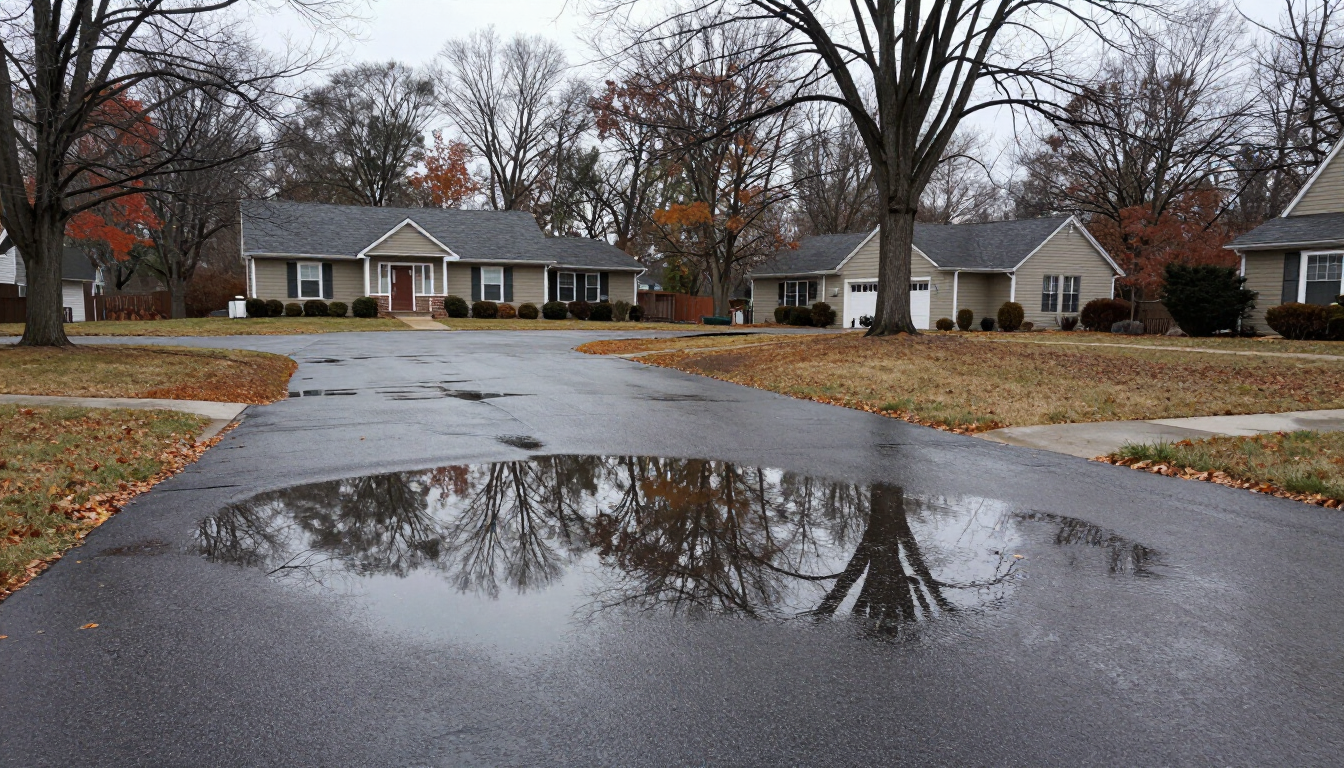
- Depressions holding water for more than a day after rain
- Edges crumbling away where the asphalt has no support
- Potholes that have been patched more than once in the same spot
- Areas that feel soft or flex noticeably under a vehicle tire
- Water running toward the garage or foundation rather than away from it
Any two of these together generally point to a base problem rather than a surface problem, and base problems do not improve on their own.

What a Fall Driveway Installation Involves
Understanding the sequence helps explain why quotes differ and why timing matters. A complete asphalt driveway installation usually follows these stages.
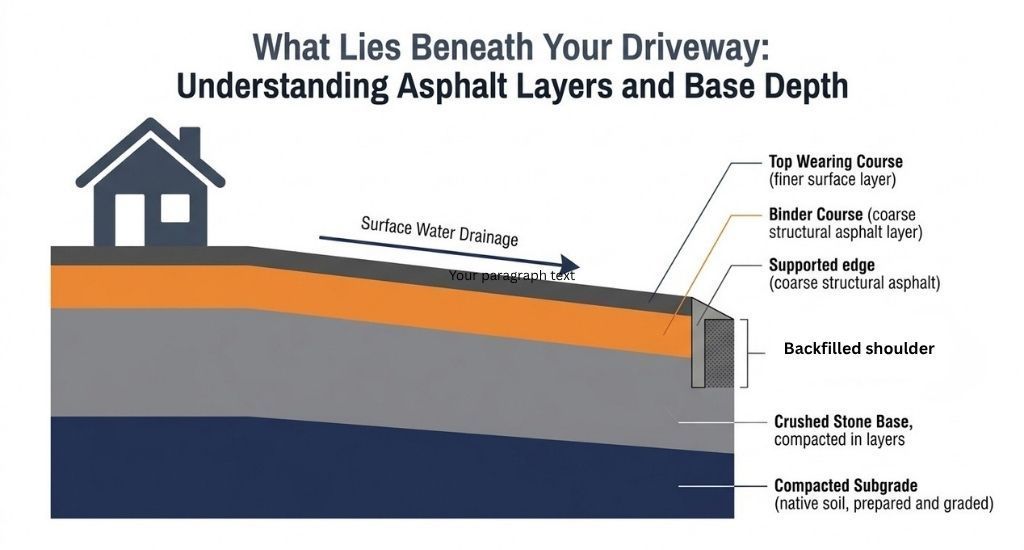
- Assessment and grading plan. The contractor checks pitch, drainage direction, and how the driveway meets the road and garage apron.
- Removal and excavation. The old surface comes out, and the area is dug to the depth the new build requires.
- Base installation. Crushed stone is placed and compacted in layers. This step carries the load and does the most to determine lifespan.
- Binder course. A coarser asphalt layer goes down as the structural body of the driveway.
- Top course. The finer wearing surface is placed and rolled while hot.
- Edge work and cleanup. Shoulders are backfilled so the edges have support instead of dropping off into open soil.
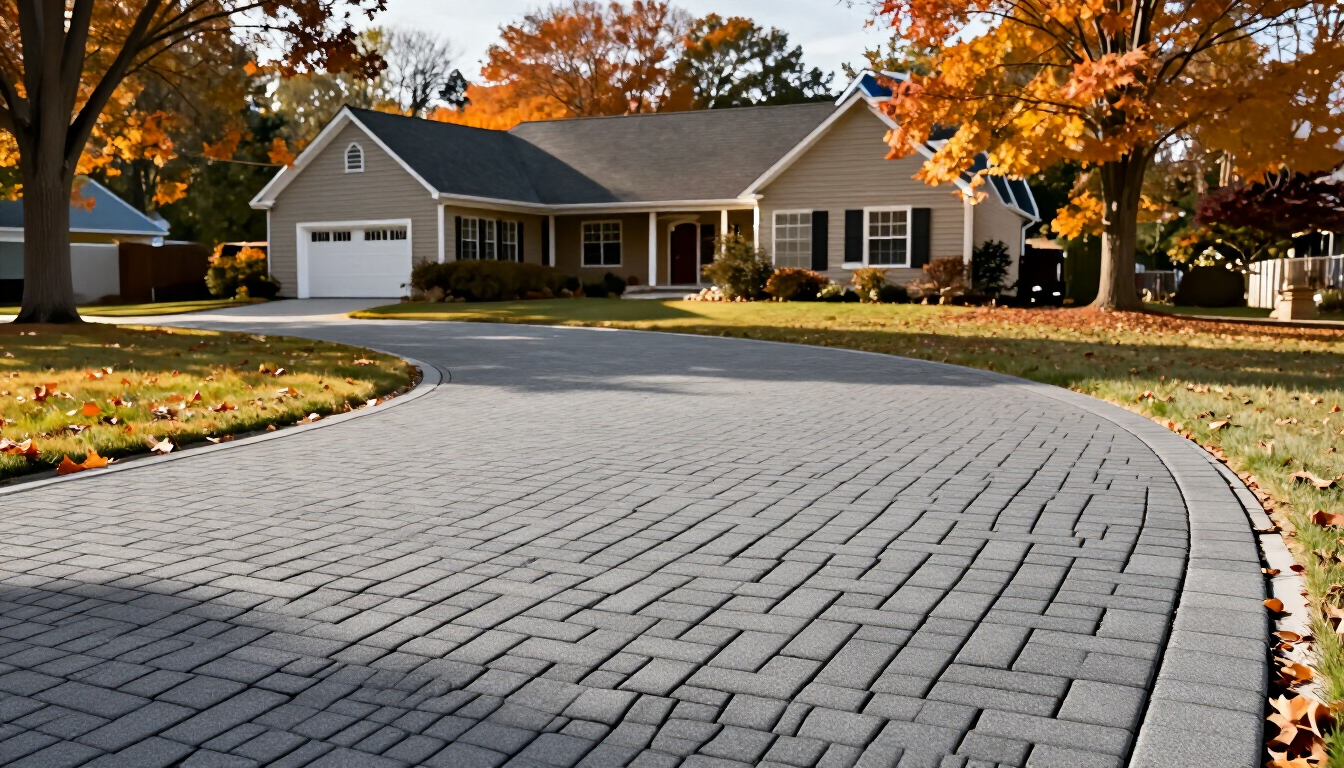
Homeowners weighing surfaces sometimes compare this process against paver driveway options, which follow different base requirements and a different installation rhythm. Both benefit from fall conditions for similar reasons.

Caring for New Asphalt Through Its First Cold Season
A new driveway needs a short period of restraint. Cooler weather actually helps here, since the surface firms up faster than it would in August heat.
- Keep vehicles off for at least 24 to 72 hours, following the timeline your contractor specifies
- Avoid parking in the same spot repeatedly for the first several weeks
- Keep sharp objects, kickstands, and trailer jacks off the surface without a plate underneath
- Wait until the following season before considering sealcoating, since fresh asphalt needs time to release its oils
- Plow with a rubber-edged blade or raised shoes through the first winter
Questions Worth Asking Before You Book
Late-season scheduling rewards specific questions. These separate contractors managing the season properly from those simply filling a calendar.
- What base depth are you installing, and how many lifts will it be compacted in?
- What is your cutoff date for placing hot mix this year?
- How will water be directed away from the house and garage?
- Will the edges be backfilled and supported?
- What does the schedule look like if weather pushes my date?
Any paving contractor should answer these without hesitation. Vague responses about depth or drainage tend to predict vague results.
Schedule Your Suffolk County Driveway Before the Season Closes
Stonerock Paving & Masonry has been installing and repairing driveways across Suffolk and Nassau County for more than 30 years, including asphalt paving in Holtsville and driveway paving in Medford. The team looks at grading, drainage, and base condition before recommending a plan, so you learn whether your driveway genuinely needs replacement or whether a smaller repair will carry it through.
Fall dates fill in the order they are booked. Call (631) 920-3618 or request a free paving estimate to get on the schedule while the weather still cooperates.
Frequently Asked Questions
How late in the year can asphalt be paved on Long Island?
Most contractors stop placing hot mix once daytime temperatures stay below roughly 50 degrees, which typically lands in late fall. Regional asphalt plants also reduce production in winter, so material availability closes before the weather technically does.
Will a new asphalt driveway cure properly in cooler weather?
Yes, and often better than in peak summer. Cooler air helps the surface firm up sooner, reducing the soft, easily marked stage that follows a hot-weather installation. Full hardening still continues gradually over the following months.
Is Fall paving more expensive than DIs fall paving more expensive than Spring paving?
Season alone does not set the price. Driveway size, existing conditions, excavation depth, and access all matter more. What fall does affect is availability, since fewer working days remain and dates get harder to secure as the season ends.
How long should I stay off a driveway installed in September?
Follow your contractor's guidance, generally 24 to 72 hours before driving on it. Avoid heavy vehicles and repeated parking in one spot for the first few weeks while the surface continues gaining strength.
Can my old driveway be paved over instead of removed?
Sometimes. An overlay works when the base is sound and drainage is correct. If the surface shows soft spots, standing water, or widespread interconnected cracking, the problem sits underneath and an overlay will simply repeat it.
Our Recent Articles