Farmingville Patio Ideas for Long Island Winters
Building a patio in Farmingville is different from building one in a mild climate. Long Island winters bring freezing temperatures, snow, ice, and constant freeze-thaw cycles that test every joint, paver, and base layer.
If a patio is installed without proper planning, cracks, heaving, and pooling water can appear within a season.
This guide covers practical patio ideas for Farmingville homes, focusing on materials that hold up, drainage that prevents damage, and layouts that make sense for Suffolk County properties.
Why Long Island Winters Damage Poorly Built Patios
Before choosing materials or patterns, it helps to understand what actually causes patio failure in our area.
Farmingville winters often drop below freezing, then warm slightly, then freeze again. When water seeps into small gaps and freezes, it expands. According to the U.S. Geological Survey, water expands about 9% when it freezes.
That expansion pushes against pavers and concrete like a bottle cap being forced off from the inside. Over time, this movement creates cracks and uneven surfaces.
Snow itself is not the main problem. Trapped moisture beneath the patio is.
A patio built for Long Island must account for:
- Freeze-thaw cycles
- Snow accumulation
- Ice melt products
- Heavy rain in spring
- Clay-heavy or poorly draining soil
This is where material choice and proper installation matter most.
Best Patio Materials for Farmingville Homes
Material selection affects durability, maintenance, and long-term performance. Some materials simply perform better in Suffolk County’s climate.
Concrete Pavers
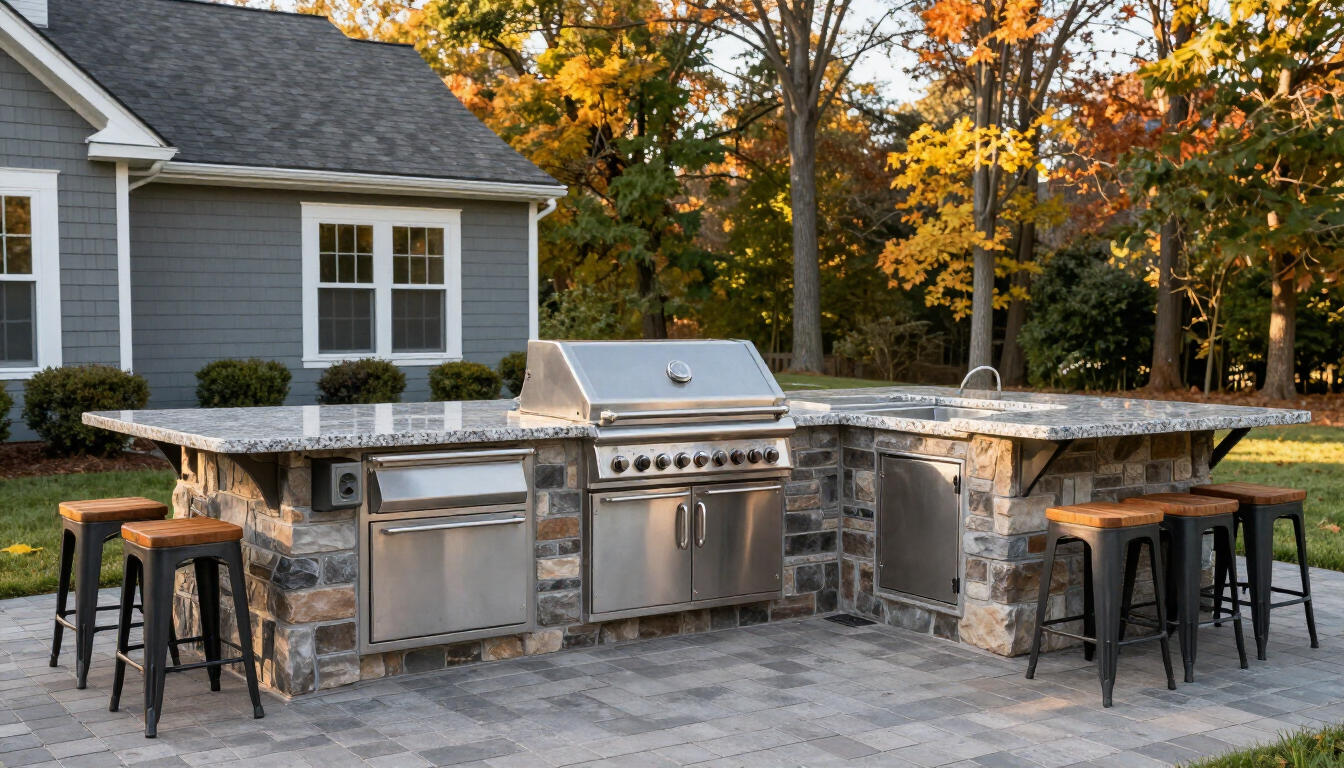
Concrete pavers are one of the most reliable options for Farmingville patios. They are manufactured to handle pressure and temperature changes. Unlike poured concrete, pavers have joints between them. These joints allow slight movement during freeze-thaw cycles without cracking the entire surface.
Advantages:
- Flexible system
- Easy repairs if one section shifts
- Wide design options
- Good traction in winter
When installed over a properly compacted base, pavers resist heaving better than solid slabs.
Natural Stone
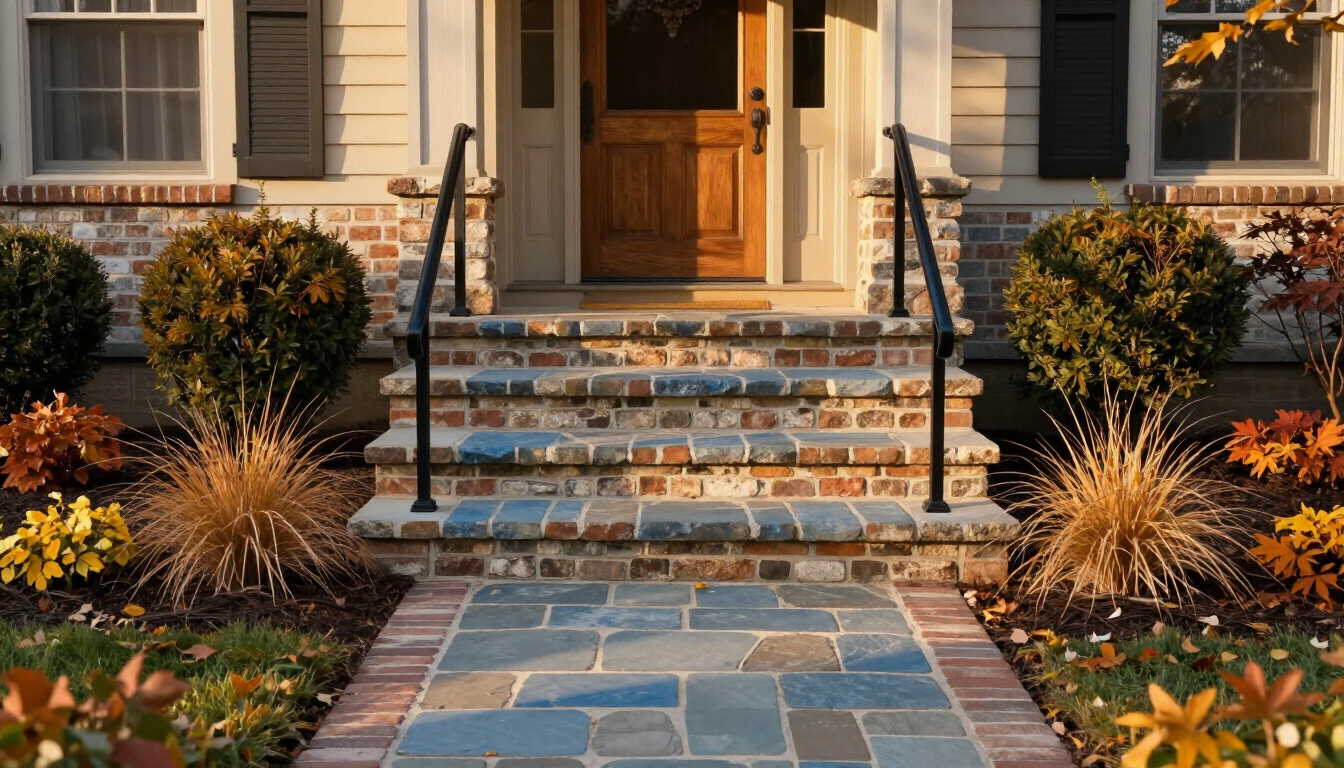
Bluestone is especially popular across Long Island. It handles cold well and offers a clean, classic look. Its dense structure helps resist water absorption compared to softer stones.
However, natural stone requires careful installation and sealing, depending on the type. A poorly installed stone patio can shift just like any other surface.
Poured Concrete
Standard concrete slabs are common but less forgiving in freezing climates. Without proper expansion joints and reinforcement, cracks are likely.
If choosing concrete:
- Use air-entrained concrete for freeze resistance
- Include control joints
- Ensure strong base preparation
In Farmingville, poured concrete must be installed correctly to avoid early cracking.
The Most Important Factor: Proper Base Installation
Many patio failures are caused by what you cannot see. The base beneath the patio determines how well it performs.
A durable Farmingville patio typically includes:
- Excavation below frost line depth when needed
- Compacted sub-base
- Crushed stone base layer
- Proper leveling layer
- Edge restraints
If water sits beneath the patio, freezing will cause upward pressure. That is how patios become uneven. A properly graded and compacted base prevents that issue.
At Stonerock Paving & Masonry, projects are built with long-term winter performance in mind, not just appearance. Base preparation is treated as structural work, not an afterthought.
Drainage Tips That Prevent Winter Damage
Drainage is what separates a patio that lasts five years from one that lasts twenty.
1. Slope the Patio Correctly
A patio should slope slightly away from the home. The typical recommendation is about 1/4 inch per foot. This small slope is barely noticeable but keeps water from pooling.
2. Install Permeable Options When Possible
Permeable pavers allow water to pass through the surface into a drainage layer below. This reduces standing water and ice formation.
3. Add French Drains or Channel Drains
In yards with heavy clay soil or low spots, subsurface drainage systems can move water away from the patio area.
4. Extend Downspouts
Roof runoff is a major contributor to patio damage. Downspouts should direct water away from paved areas.
When drainage is ignored, even the best pavers can fail.
Smart Patio Layout Ideas for Farmingville Yards
Layout affects both function and winter durability.
Keep It Away From Problem Areas
Avoid placing patios in natural drainage paths. If your yard slopes toward one corner, that area may need grading before installation.
Consider Multi-Level Designs
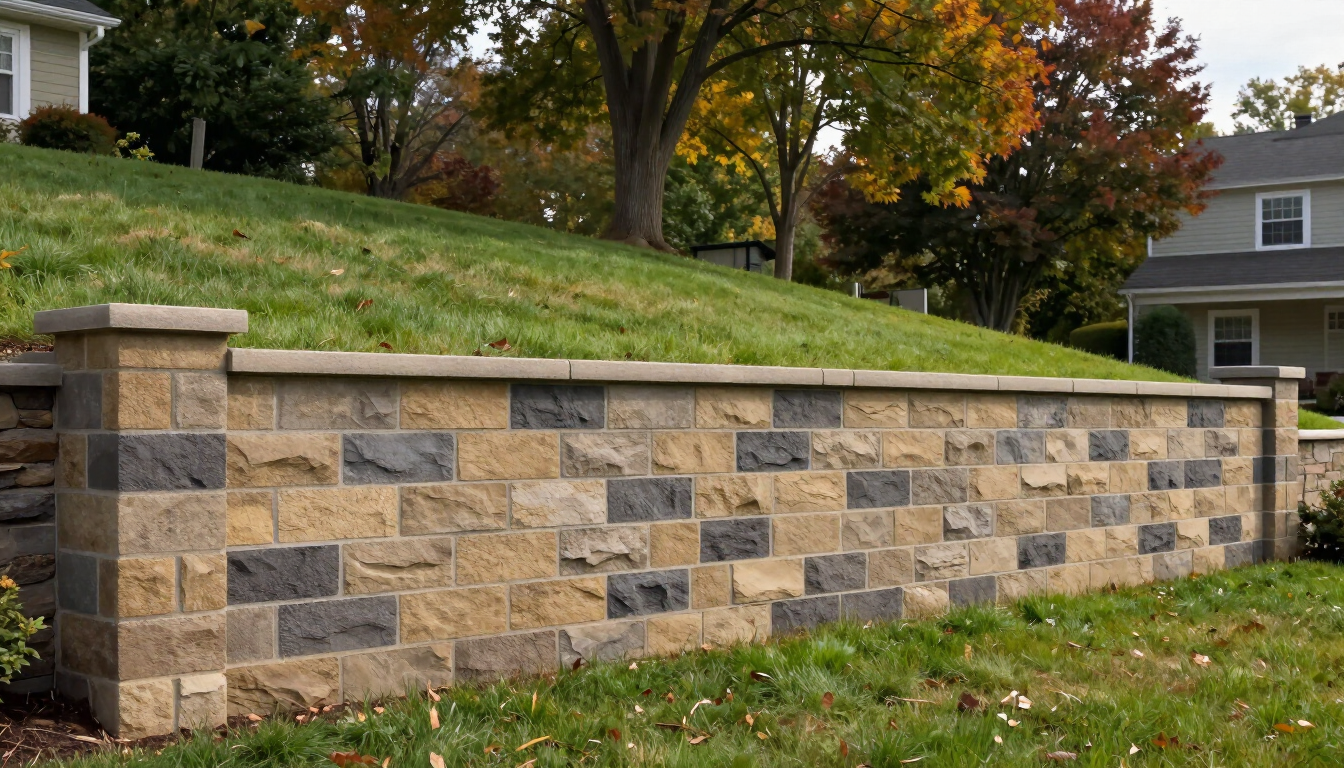
If your property has elevation changes, multi-level patios can improve drainage and usability. Retaining walls can manage slope and prevent soil movement.
Add Winter-Friendly Features
- Built-in fire pits for cold months
- Seating walls that double as snow boundaries
- Textured surfaces for better grip
A patio should feel usable beyond summer. In Farmingville, fall and early winter gatherings are common, so design matters.
What About Ice Melt and Snow Removal?
Winter maintenance affects patio longevity.
Avoid rock salt when possible. It can weaken concrete and certain stones over time. Calcium chloride products are generally safer for many paver systems.
Use plastic shovels instead of metal blades to avoid surface damage.
If snow removal equipment is used, ensure it is appropriate for the surface type.
Common Patio Mistakes in Suffolk County
Homeowners often encounter the same problems:
- Skipping proper excavation
- Using too thin of a base
- Ignoring drainage
- Installing patios flush with the home without slope
- Choosing decorative stone without checking freeze durability
These mistakes may not show up immediately. They often appear after the first serious winter.
Why Local Experience Matters
Building a patio in Farmingville requires knowledge of local soil conditions, frost depth, and municipal guidelines.
Farmingville homes often sit on mixed soil types, including sandy layers and clay pockets. This affects drainage planning.
Suffolk County properties may also require permits depending on size and design.
With over 30 years of experience, Stonerock Paving & Masonry understands these local factors. Each patio project is approached with durability, drainage, and long-term performance in mind.
Should You Repair or Replace an Existing Patio?
If your patio has minor shifting or joint erosion, repairs may be possible. Paver systems allow sections to be lifted and reset.
However, widespread heaving, cracking, or drainage issues often signal base failure. In those cases, replacement is usually the better long-term solution.
A professional evaluation can determine whether the issue is surface-level or structural.
Final Thoughts on Building a Winter-Ready Patio in Farmingville
A patio must be built to handle freeze-thaw cycles, moisture, and shifting soil. Material choice matters. Drainage matters even more. Base preparation matters most.
When properly installed, a patio can withstand Long Island winters year after year. When shortcuts are taken, winter exposes every weakness.
For patio services in Farmingville, work with a professional contractor who understands Suffolk County conditions and builds with winter performance in mind.
Stonerock Paving & Masonry provides patio design and installation services across Farmingville and surrounding Long Island communities.
Contact the team to schedule a consultation and build a patio that stands up to every season.
Our Recent Articles